Blog
27 Seconds That Won Russell the 2026 Austrian GP
 123Helmets Editorial Team
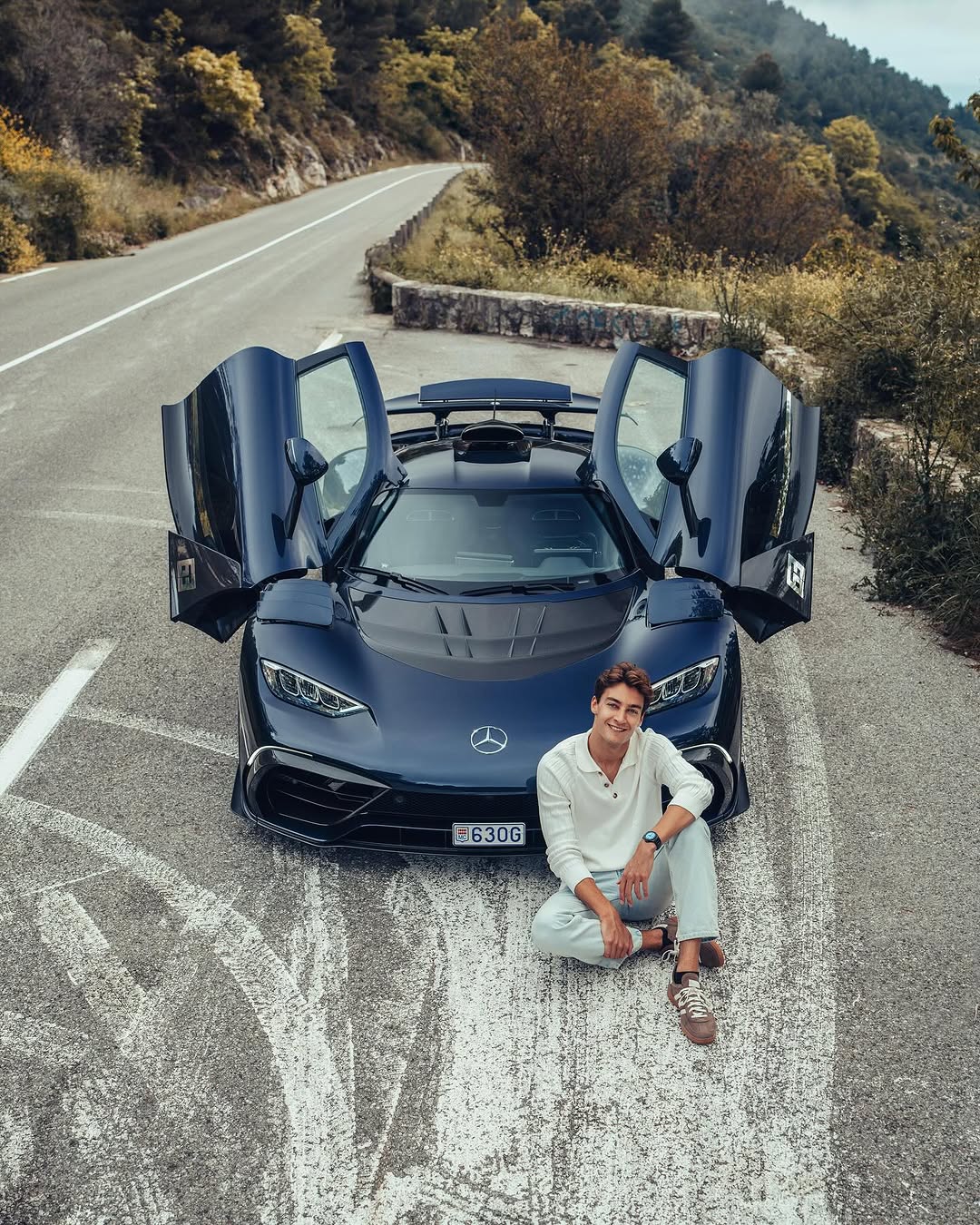
George Russell’s 2026 Austrian Grand Prix victory was sealed not at the chequered flag but during a 27-second window in Saturday qualifying, when Max Verstappen’s high-speed crash at Turn 9 triggered yellow flags that reshuffled the entire starting grid.
Key Takeaways
A 27-second yellow-flag window in qualifying, triggered by Verstappen’s Turn 9 crash, was the decisive moment of the entire Austrian Grand Prix weekend.
Russell controlled an 86-minute race from the front, converting pole into victory with the kind of measured pace that makes his helmet and livery a collector focal point for the 2026 season.
The Red Bull Ring podium backdrop — vivid Austrian alpine scenery against Mercedes silver — produced some of the most photographically striking helmet and livery imagery of 2026 so far.
Full-size 1:1 display replicas of Russell’s 2026 Austrian GP helmet capture the exact livery worn during a race decided by one of qualifying’s most dramatic half-minutes in recent memory.
The 27-Second Window That Changed Everything
A 27-second stretch of Saturday qualifying determined the outcome of the 2026 Austrian Grand Prix before a single race lap was completed. Max Verstappen’s high-speed crash at Turn 9 during that window immediately produced yellow flags across that sector, forcing drivers on flying laps to lift — and in doing so, scrambling the natural order of the front rows.
For George Russell and the Mercedes camp, the timing was everything. Russell had already committed his final hot lap before the yellow flags propagated to his sector, meaning his time stood clean and unaffected. Drivers who had not yet reached Turn 9 were forced to abort, losing any chance of improving on their provisional banker laps.
Those 27 seconds compressed what would have been a conventional qualifying battle into a lottery of timing. Whoever happened to be ahead of Verstappen’s stricken car on circuit kept their lap; whoever was behind did not. Russell was ahead. That distinction, measurable in nothing more than track position at a single moment, sent him to pole and ultimately to the top step of the Austrian podium roughly 24 hours later.
Verstappen’s Turn 9 Crash: What Happened
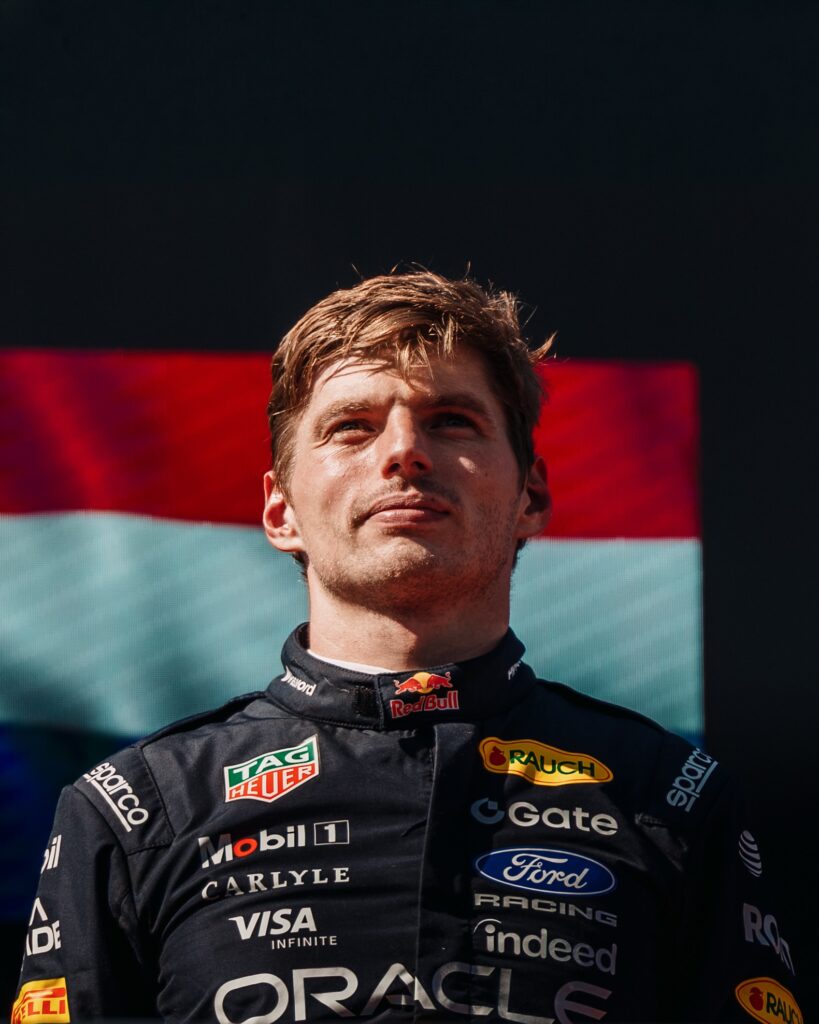
Verstappen’s crash at Turn 9 of the Red Bull Ring was a high-speed, high-impact incident that ended his qualifying session on the spot and brought out yellow flags within seconds of the car leaving the tarmac. Turn 9 at the Red Bull Ring is one of the circuit’s fastest and most unforgiving corners, a point where even small errors translate instantly into barrier contact.
The Verstappen incident froze the session’s competitive picture at the worst possible moment for the drivers behind him on the road. Under yellow-flag conditions, competitors are required to demonstrably reduce speed through the affected zone — any lap time set in those conditions is subject to deletion. Drivers who were mid-lap when the flags appeared faced an immediate choice: complete the lap knowing it would likely be scrubbed, or abandon it entirely.
For Red Bull, the crash cost Verstappen not just qualifying position but also the strategic freedom that a front-row start at the Red Bull Ring — their home circuit — would have provided. The ripple effects of that 27-second incident ran through every subsequent race strategy calculation on Sunday.
86 Minutes of Control: Russell’s Race
George Russell converted pole position into a race victory across an 86-minute Austrian Grand Prix that he managed with consistent front-running pace rather than dramatic overtaking. Starting from pole at the Red Bull Ring, Russell built an early gap and then matched pit-stop timing with his rivals to ensure the net lead never changed hands.
The race itself ran to its full distance without a safety car intervention that could have compressed the gaps and restarted the competitive picture — a factor that rewarded Russell’s clean, margin-building approach from lap one. Mercedes’ 2026 livery, a continuation of the silver-and-teal scheme introduced at the season opener, remained pristine through the closing laps, which made for unusually clean podium photography at a circuit that often produces dusty, marbled surface conditions.
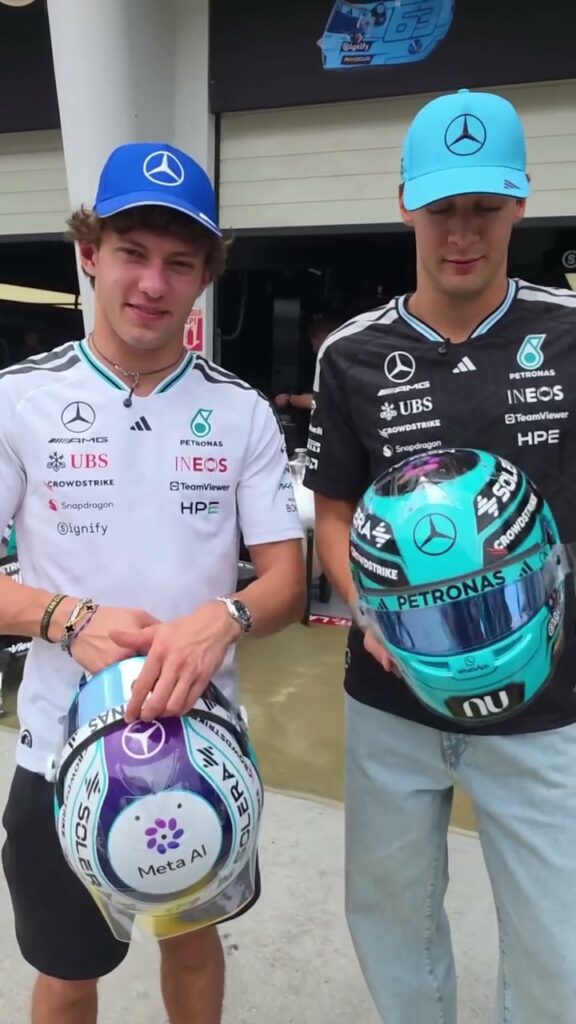
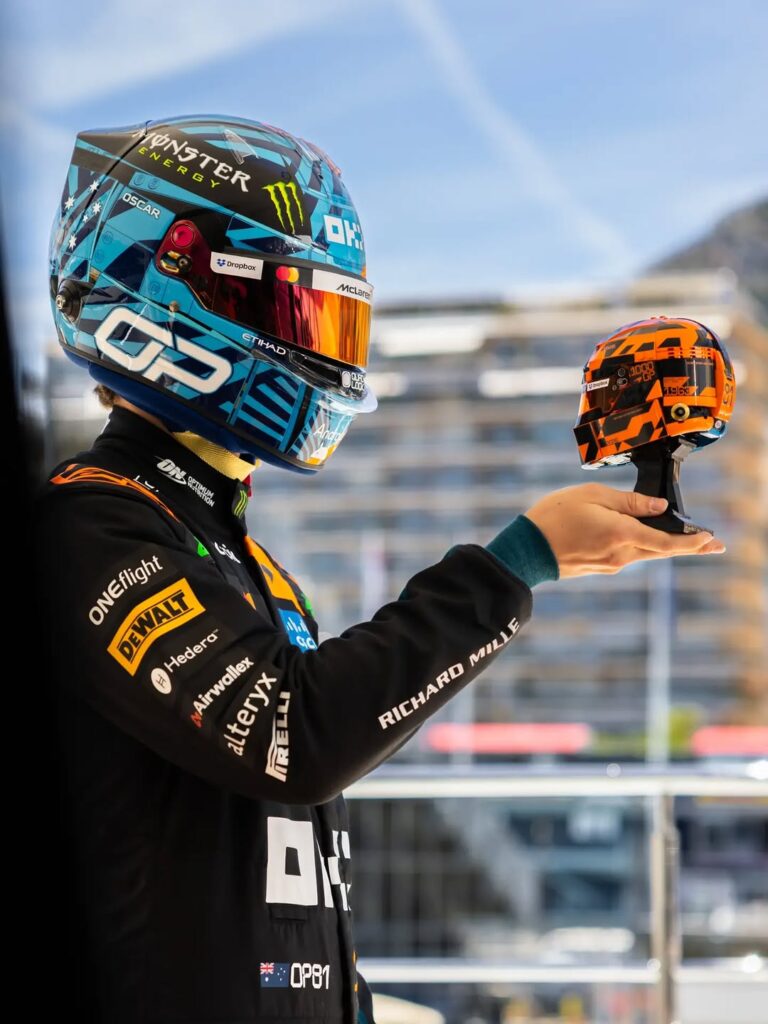
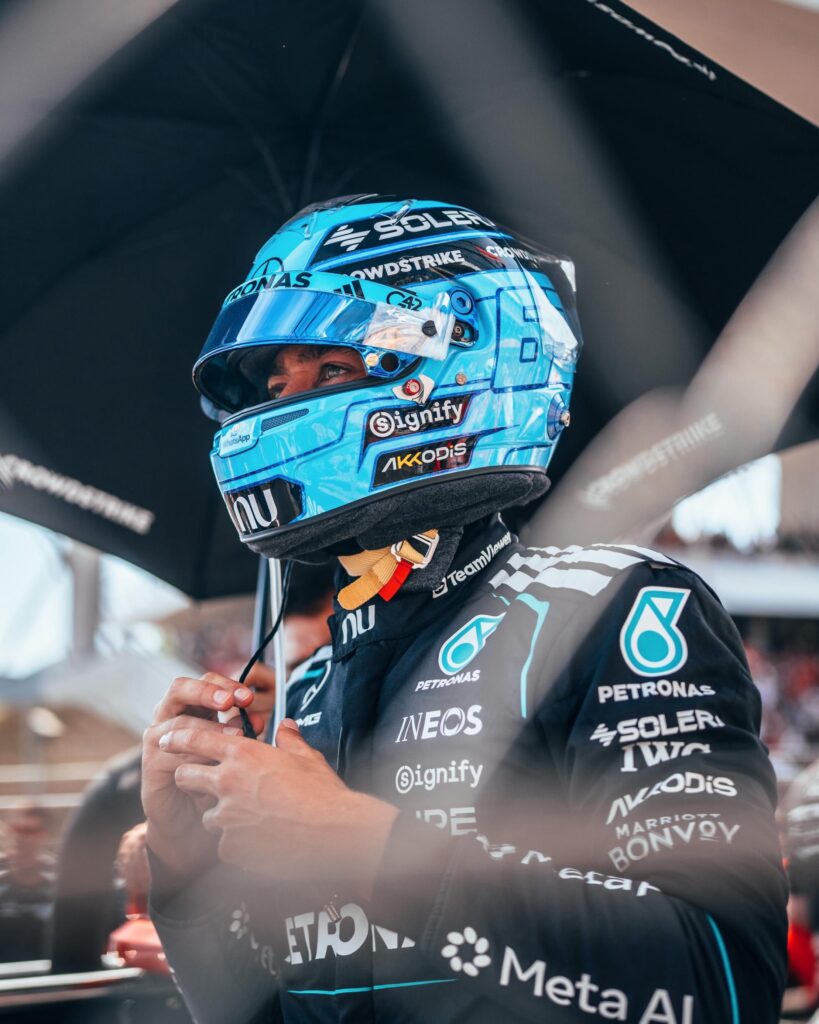
Russell’s helmet for the 2026 Austrian weekend carried his established white-and-teal base design with the Austrian race logo rendered in a dark red accent — a detail that makes the 1:1 display replica of this specific race’s lid instantly distinguishable from his standard-season version. The combination of silver car, white helmet, and the Red Bull Ring’s mountain backdrop produced some of the most photographically composed podium imagery of the 2026 season to date.
Podium Visuals: A Collector’s Perspective
The 2026 Austrian Grand Prix podium stands as one of the season’s most visually coherent moments for anyone focused on helmet and livery presentation. Russell stood on the top step at the Red Bull Ring under clear late-afternoon light, his white helmet facing the cameras at an angle that fully exposed the Austrian race-specific dark red detailing on the left panel — a 29 × 25 × 35 cm graphic area that the factory paint team had prepared exclusively for the Spielberg round.
Podium imagery from Spielberg has a particular quality that collectors and display enthusiasts notice: the circuit sits inside a natural bowl, so the background of every podium photograph compresses the green Austrian hills into a tight band behind the trophy platform. Against that backdrop, the Mercedes silver livery reads with unusual clarity, and Russell’s white helmet registers as a distinct second element rather than blending into the car’s finish.
Full-size 1:1 collector replicas of the 2026 Austrian GP helmet reproduce the 26 mm visor edge detail and the race-specific red accent markings that separated this helmet from the generic 2026 Russell design. Display pieces at 1:1 scale allow the proportions of the visor port and chin vent geometry to read correctly — something that smaller-scale replicas inevitably compress. As a display item, this helmet represents a specific, dateable moment in the 2026 season rather than a generic driver likeness.
What the Austrian GP Means for the 2026 Championship
Russell’s Austrian Grand Prix victory tightened the 2026 Drivers’ Championship picture at a point in the calendar — round 11 by the Red Bull Ring’s position on the 2026 schedule — where consistency of results begins to carry compound weight. A win at Spielberg adds the maximum available points haul and does so at a circuit historically associated with Red Bull, which amplifies its psychological significance beyond the raw number.
For Mercedes as a constructor, the Austrian result continued a mid-season run that had already included at least two other points finishes in the top four. The 2026 regulation cycle, which introduced revised power unit architecture across the grid, has redistributed competitiveness in ways that make each team’s trajectory harder to predict — and Russell’s ability to convert a fortunate qualifying position into a clean race win demonstrated that Mercedes’ 2026 package is capable of capitalising on opportunity rather than merely surviving it.
From a collector standpoint, a race won in circumstances as specific as these — 27 seconds of qualifying chaos, a Verstappen crash at Turn 9, an 86-minute race held without safety car intervention — creates a helmet display piece with a genuinely traceable story. The 1:1 replica of Russell’s 2026 Austrian GP helmet is not simply a likeness of the driver; it is a physical marker of one of the season’s more unlikely and decisive afternoons.
The 2026 Russell Helmet as a Display Piece
Russell’s 2026 Austrian Grand Prix helmet is an exhibition-quality collector item that documents a specific race result through its paint scheme rather than through generic driver branding. The white base coat, teal central stripe, and Austrian-round dark red accent together form a design that exists only for the Spielberg weekend — making it a time-stamped display artefact rather than a seasonal catalogue piece.
Full-size 1:1 collector replicas weigh approximately 1.2–1.5 kg in finished display configuration, replicating the external shell geometry of the race-specification lid without being certified or intended for any protective use. These are display pieces and collector items only — not rated, not wearable, not intended for road or track use of any kind. The scale fidelity at 1:1 means visor dimensions, ventilation port positions, and chin strap anchor points all correspond to the actual race helmet geometry, which is the detail that separates a display replica from a decorative approximation.
Mounted on a standard helmet stand, the 2026 Russell Austrian GP replica presents the race-specific left-panel artwork at eye level — the same angle that appeared in Saturday podium press images taken on 2026-06-28. For collectors building a race-by-race record of the 2026 season, this helmet joins a specific date, a specific circuit, and one of the most consequential 27-second periods in this season’s qualifying history.
“The key pillar of his victory was a 27-second window around 24 hours earlier.”
— Race analysis, 2026 Austrian Grand Prix
“It started with Max Verstappen’s high-speed crash at Turn 9, which immediately brought out yellow flags at that part of the circuit.”
— Race analysis, 2026 Austrian Grand Prix
FAQ
Q: How did George Russell win the 2026 Austrian Grand Prix?
Russell won the 2026 Austrian Grand Prix by converting pole position — secured during a 27-second qualifying window when Verstappen’s Turn 9 crash triggered yellow flags — into an 86-minute controlled race victory from the front.
Q: What happened to Verstappen in qualifying at the 2026 Austrian GP?
Verstappen crashed at high speed at Turn 9 of the Red Bull Ring during qualifying, immediately bringing out yellow flags and preventing drivers behind him on the road from completing valid flying laps.
Q: What makes the 2026 Russell Austrian GP helmet different from his standard helmet?
The 2026 Austrian GP version carries a dark red race-specific accent on the left panel — applied for the Spielberg round only — distinguishing it from Russell’s base 2026 white-and-teal design.
Q: Are the 1:1 Russell Austrian GP helmet replicas safe to wear or use on track?
No. These are display pieces and collector items only, produced at full 1:1 scale for exhibition purposes. They carry no safety certification and are not intended for protective, road, or track use of any kind.
Q: Why is the 2026 Austrian GP considered a significant collector moment?
The race’s outcome turned on a uniquely traceable 27-second qualifying incident, making the helmet from that weekend a time-stamped display artefact linked to a specific, documented event rather than a generic season piece.
Browse F1 Helmet Collection — find full-size 1:1 display replicas of the 2026 season’s most defining race moments, including the Austrian Grand Prix, at 123Helmets.com.
Display and collector replicas only. Not certified for protective use. Full-size 1:1 scale.
This article was written with the help of AI tools. Editorial policy