Blog
McLaren Trials Upside-Down Wing at 2026 Austrian GP
 123Helmets Editorial Team
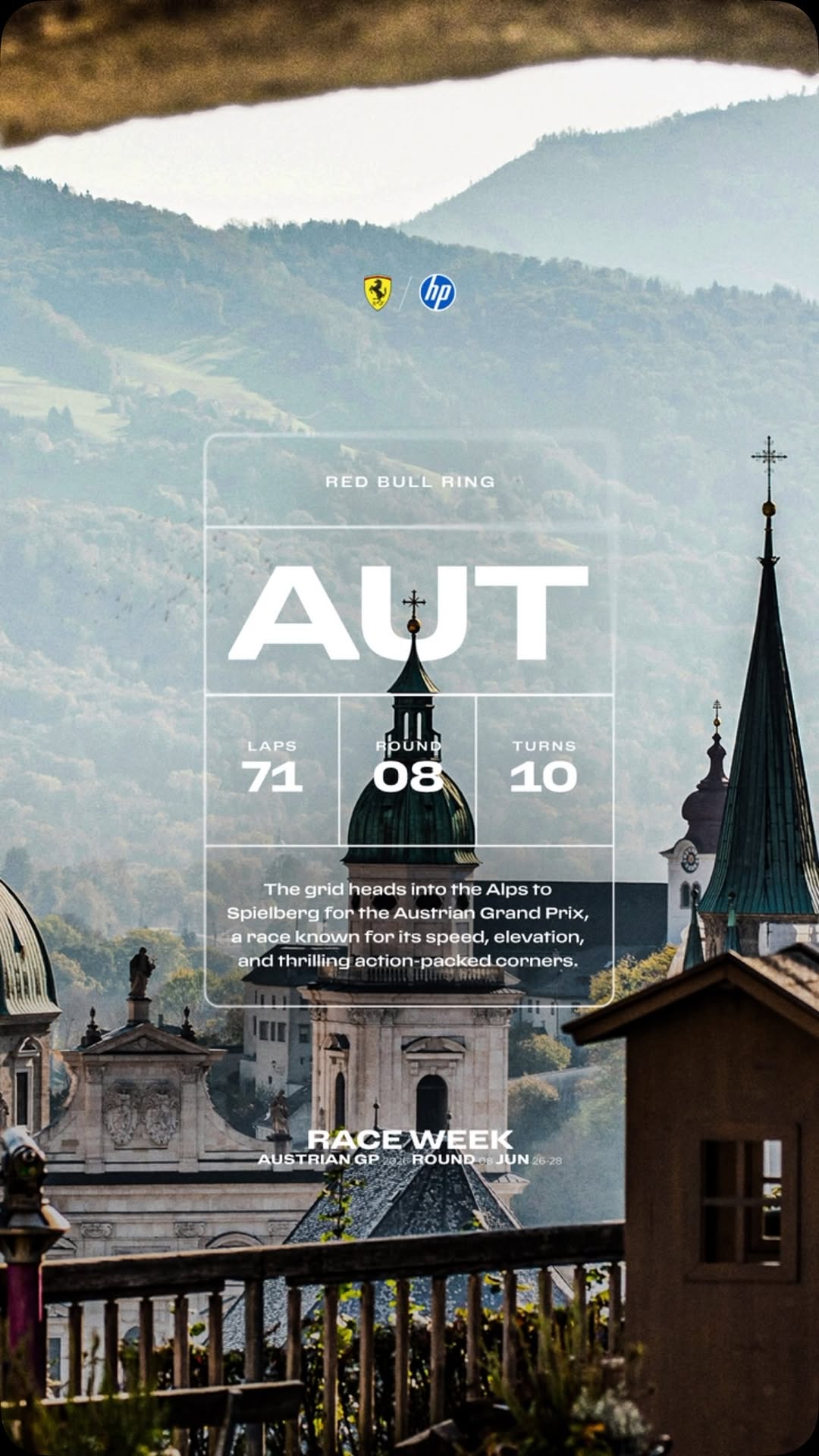
McLaren rolled out an experimental upside-down rear wing during Friday practice at the 2026 Austrian Grand Prix, a concept Ferrari pioneered in winter testing. Here is what the technical battle means for the championship fight — and why the helmet and livery moments from Red Bull Ring are worth owning as display pieces.
Key Takeaways
McLaren labelled its Austria test item an ‘experimental rear wing’ — understood to be an upside-down design first shown by Ferrari in 2026 winter testing.
The wing ran only during Friday Free Practice sessions and is not expected to race in Austria; factory analysis will determine if a variant returns later in 2026.
Ferrari shocked the paddock when it rotated its rear wing 180 degrees in straight mode during pre-season, forcing rivals Red Bull (Miami) and now McLaren (Austria) to develop their own versions.
Lewis Hamilton’s maiden Ferrari GP win in Barcelona broke a streak of consecutive Mercedes victories, making the 2026 Scuderia livery one of the most display-worthy in recent seasons.
Ferrari’s Upside-Down Wing: Where It All Started
Ferrari introduced the upside-down rear wing concept during 2026 winter testing, becoming the first team to rotate a rear wing 180 degrees when straight-line mode was engaged. The design stunned engineers in the paddock because it inverted the conventional relationship between drag reduction and downforce delivery, prompting immediate rival interest. Red Bull responded with their own interpretation at the 2026 Miami Grand Prix, though that design operated on a different mechanical principle. McLaren’s version, trialled at the Red Bull Ring on Friday, 2026-06-20, is now the third distinct upside-down wing concept seen this season.
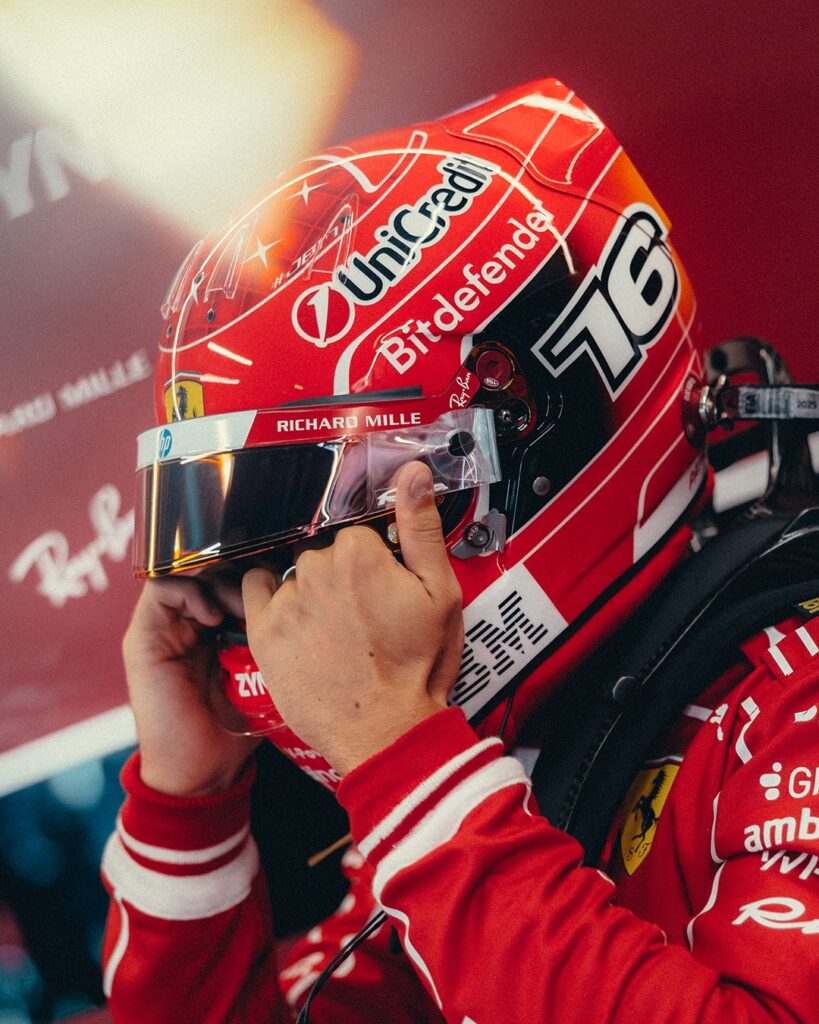
For Ferrari fans and collectors, the winter-testing reveal was a visual landmark. The Scuderia’s 2026 livery — paired with the helmets worn by its drivers in Barcelona and beyond — has become one of the most photographed paddock presentations of the year. A full-size 1:1 display replica of a Ferrari race helmet from this period captures that pioneering moment in miniature, sitting on a shelf exactly as the wing sat on the car: quietly rewriting the rules.
McLaren’s Experimental Wing in Austria Practice
McLaren confirmed the upside-down rear wing as a test item running exclusively through Friday’s Free Practice sessions at the 2026 Austrian Grand Prix, with no plan to race the design at the Red Bull Ring. The team framed it carefully in their Austria race preview, describing it as ‘an experimental rear wing’ alongside minor detail refinements to the MCL40’s rear corners. Technical director Neil Houldey was direct about the intent: ‘We’re always looking to make refinements that add performance and lap time to the car.’
Houldey added that the overall upgrade package for Austria is lighter than those seen in Miami and Canada, where McLaren focused on larger aerodynamic updates that helped the team close on championship leader Mercedes. The Austria wing is, in his words, part of ‘our season-long development pathway.’ Following factory analysis of the Friday data, a refined variant of the design could return at a later 2026 round as a genuine performance upgrade rather than a test item.
The MCL40 rear-corner detail work means the car’s visual profile in Austria differs subtly from its Canada specification — a small detail that display-focused collectors track closely, since the livery and bodywork changes between rounds define the exactconfiguration a replica helmet corresponds to.
Hamilton’s Barcelona Win and the Ferrari Helmet Story
Lewis Hamilton’s maiden Ferrari Grand Prix victory in Barcelona in 2026 is the single most significant helmet moment of the current season. That win broke a run of consecutive Mercedes victories and announced that Ferrari — and Hamilton specifically — is a genuine title threat. The red-and-white helmet Hamilton wore on the Barcelona podium has already become one of the most searched collector references of 2026.
For display purposes, the Barcelona race configuration is worth noting precisely: Hamilton stood on the top step with the Scuderia’s 2026 livery showing the aerodynamic package Ferrari had brought to Spain. That package, including the rear wing architecture that started the upside-down conversation in winter testing, was visible on the podium cool-down lap. A 1:1 full-size collector replica helmet representing Hamilton’s 2026 Ferrari season places that exact chapter of the championship on display at home or in an office — exhibition quality, not a toy.
The Ferrari helmet shell used as a display base for 2026 replicas measures 29 × 25 × 35 cm in a standard size and weighs approximately 1.2–1.5 kg without visor assembly — proportions that match a genuine race shell and give the piece its authenticity on a stand.
Red Bull Ring Visuals: Why Austria Produces Display-Worthy Moments
The Red Bull Ring’s tight 4.318 km layout produces some of the most photogenic podium moments on the calendar because the mountain backdrop and compact circuit geometry put cars and helmets in sharp visual contrast. Austria’s bright afternoon light in late June — the 2026 race weekend runs 2026-06-20 to 2026-06-22 — saturates livery colours in a way that translates directly into the reference photography used for high-quality display replicas.
Ferrari’s 2026 Austria race livery carries the same base architecture seen in Barcelona, updated at the rear corners McLaren’s engineers studied closely in Friday practice. The Scuderia’s red against the Ring’s green hillside grandstands is one of the most reproduced images in F1 collector culture. A display replica helmet based on the 2026 Austrian GP configuration captures that specific intersection of circuit, livery iteration, and championship moment.
For collectors who track technical evolution alongside aesthetics, Austria 2026 is particularly layered: three teams running three variants of the same fundamental aerodynamic idea, each wearing a different livery, each helmet on the podium or in the garage representing a distinct engineering philosophy. That is the kind of season-defining context a collector replica can anchor.
Championship Context and What the Wing Battle Means
Mercedes leads the 2026 constructors’ championship heading into Austria, but the gap has narrowed following McLaren’s Miami and Canada upgrade packages. Ferrari’s Barcelona podium confirmed the Scuderia is operating at a level where a single strong weekend can shift the narrative. The upside-down rear wing story is one data point in a season defined by rapid technical convergence at the front of the grid.
McLaren technical director Neil Houldey confirmed that the Austria experimental wing is lighter in performance impact than recent larger updates, framing it as exploratory rather than immediate. If the factory analysis supports the concept, a race-ready variant could appear within the next four to six rounds of the 2026 calendar. At that point, the wing moves from a paddock curiosity to a potential championship factor — and the livery and helmet associated with its race debut become collector reference points.
For Ferrari collectors specifically, the 2026 season is already producing reference moments at a high rate. Hamilton’s win in Barcelona, the winter-testing wing reveal, and the ongoing championship fight mean the Scuderia’s helmet line for 2026 covers a broader range of historically significant weekends than most recent seasons. Display replicas tied to specific races — with the correct livery specification and visor tint for that circuit — give a collection genuine depth rather than generic branding.
Collecting the 2026 Ferrari Helmet: What to Look For
A display-quality 1:1 replica of the 2026 Ferrari race helmet should reflect the specific livery revision current at the time of the race it represents — the winter-testing specification differs from the Barcelona race configuration, which in turn differs from the Austria weekend update. Serious collectors distinguish between these iterations because the aerodynamic bodywork changes Ferrari introduced across the 2026 season are visible in paddock photography and directly inform which helmet configuration belongs to which race.
Exhibition-quality replicas at 1:1 full-size scale replicate the shell geometry, visor thickness (typically 26 mm on collector-grade pieces), and sponsor decal placement of the genuine article. They are display pieces and collector items — not certified for any protective use, road use, or track use. The value is entirely in their accuracy as visual records of a specific season, team, and driver at a specific moment in the championship.
Hamilton’s 2026 Ferrari debut season, anchored by the Barcelona win and the ongoing title fight, is the kind of chapter collectors return to decades later. The helmet worn that season — in its correct 2026 specification, with the Scuderia’s current livery and Hamilton’s personal lid design — is the physical artefact of that chapter. A full-size 1:1 display replica brings it off the screen and onto the shelf.
“We’re always looking to make refinements that add performance and lap time to the car. For this event, we’ve focused on minor detail updates around the car’s rear corners, as well as an experimental rear wing that will run throughout Friday’s sessions.”
— Neil Houldey, McLaren Technical Director, 2026 Austrian GP preview
“While the overall package is lighter than some of our recent updates, these developments are all part of our season-long development pathway, and we’re continuing to look for every lap time opportunity wherever we can.”
— Neil Houldey, McLaren Technical Director, 2026 Austrian GP preview
FAQ
Q: What is the upside-down rear wing concept in F1 2026?
The upside-down rear wing rotates the wing element 180 degrees relative to its conventional orientation when straight-line mode is engaged, altering how drag reduction and downforce interact. Ferrari first demonstrated the concept in 2026 winter testing; Red Bull developed a different version for the 2026 Miami Grand Prix; McLaren then trialled its own interpretation during Friday practice at the 2026 Austrian Grand Prix.
Q: Will McLaren race the experimental rear wing in Austria 2026?
No. McLaren confirmed the wing would run only during Friday Free Practice sessions at the 2026 Austrian Grand Prix and is not expected to be used in qualifying or the race. Factory analysis of the Friday data will determine whether a refined variant returns at a later 2026 round.
Q: What was Lewis Hamilton’s first Ferrari Grand Prix win in 2026?
Hamilton took his maiden Ferrari Grand Prix victory in Barcelona in 2026, ending a streak of consecutive Mercedes victories. It is the defining helmet and livery moment of the 2026 Ferrari season so far, and the most referenced race by collectors seeking display replica helmets tied to Hamilton’s Scuderia debut.
Q: Are the Ferrari 2026 helmets on 123Helmets.com for display or racing use?
All helmets on 123Helmets.com are display pieces and collector items — full-size 1:1 scale exhibition-quality replicas. They are not certified for protective use, road use, or track use of any kind. They exist to represent a driver, team, and race season as a physical collector artefact.
Q: How does the 2026 Ferrari Austria livery differ from the Barcelona specification?
Ferrari introduced minor rear-corner aerodynamic refinements between the Barcelona and Austria rounds of 2026, consistent with the team’s ongoing development pathway. The core red-and-white livery base remains the same, but the bodywork geometry at the rear differs — a detail that matters to collectors matching a display helmet to a specific race configuration.
Shop Ferrari Helmets — own a full-size 1:1 display replica from the 2026 Scuderia season, including configurations from Hamilton’s Barcelona win and the Austrian Grand Prix weekend. Exhibition quality. Collector accuracy. Browse the Ferrari helmet collection at 123Helmets.com.
Display and collector replicas only. Not certified for protective use. Full-size 1:1 scale.
This article was written with the help of AI tools. Editorial policy