- Keke Rosberg
- Nigel Mansell
- Jenson Button
- Nico Rosberg
- Gilles Villeneuve
- Mika Hakkinen
- Jackie Stewart
- Charles Leclerc
- Lewis Hamilton
- Max Verstappen
- Lando Norris
- Ayrton Senna
- Michael Schumacher
- Fernando Alonso
- Oscar Piastri
- George Russell
- Kimi Antonelli
- Nico Hülkenberg
- Gabriel Bortoleto
- Pierre Gasly
- Franco Colapinto
- Carlos Sainz
- Oliver Bearman
- Sergio Pérez
- Valtteri Bottas
- Isack Hadjar
- Alain Prost
- James Hunt
Monaco GP Penalty Chaos: The Helmet Moments
Posted by
 123Helmets Editorial Team
123Helmets Editorial Team
Race Recap
The 2025 Monaco Grand Prix will be remembered less for its podium spectacle and more for a pit lane speed limit controversy that penalised five drivers on measurements later found to be inaccurate — leaving Formula 1 with no clean resolution and at least one team appeal already filed.
Key Takeaways
Five drivers received pit lane speed limit penalties based on measurements later found to be inaccurate by the stewards themselves.
Pierre Gasly had both penalties reversed after Alpine’s Right of Review exposed the measurement error; no other penalised driver received the same relief.
George Russell served a drive-through penalty after failing to serve his original time penalty at his pit stop, ending his points-scoring run.
McLaren filed an appeal against the stewards’ selective reversal decision; Mercedes attempted a Right of Review but later withdrew it.
What Actually Happened in the Monaco Pit Lane
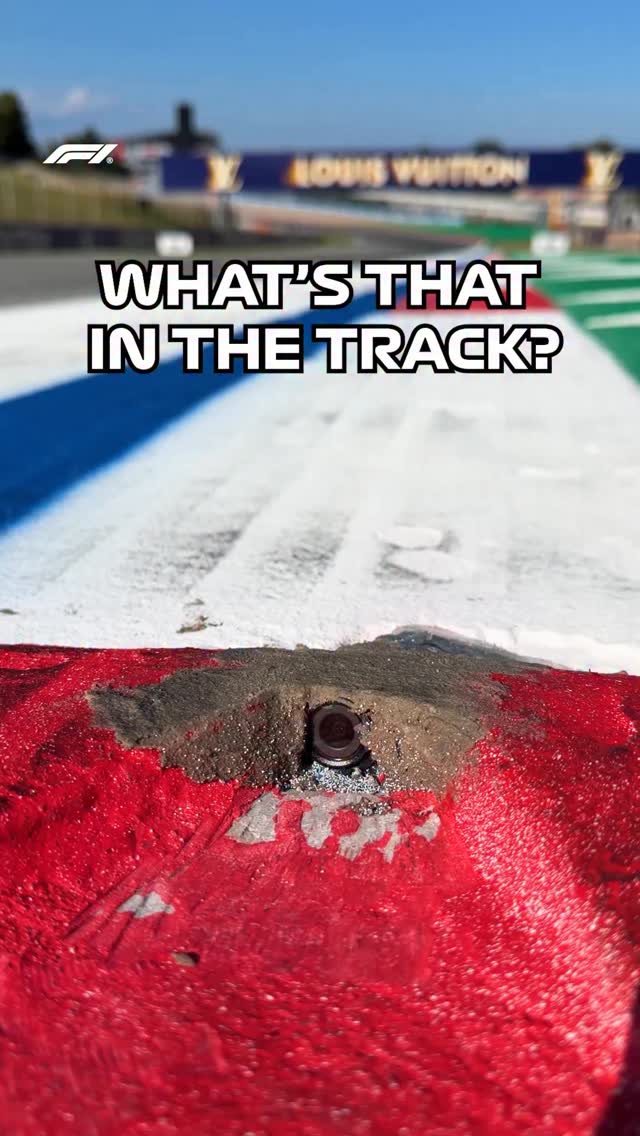
The Monaco pit lane speed limit controversy began when stewards issued multiple penalties during the race for breaches measured at as little as 0.1 km/h over the limit. The stewards later confirmed the pit lane had been measured inaccurately, meaning the reference distance used to calculate speeds was wrong. That error contributed to the transgression readings — though team principals noted that not every penalised team was caught solely because of the measurement fault, since all teams had free practice time to calibrate their pit lane speed limiter and some made adjustments that kept them compliant.
The scale of the problem became clear only after the chequered flag. Five drivers had been penalised during the race, and the penalties had already shaped the finishing order before anyone understood the underlying cause. Monaco’s pit lane is famously short and tight — one of the most technically demanding entry-and-exit sequences on the calendar — which amplifies small measurement discrepancies into significant speed-calculation errors.
From a display-collection standpoint, Monaco always produces some of the season’s most striking helmet and livery moments. The narrow barriers, the low afternoon light through the tunnel, the casino backdrop — every team brings its sharpest visual presentation to the Principality. That visual story was partially overshadowed in 2025 by the penalty timeline unfolding lap by lap on the timing screens.
The Penalty Timeline Lap by Lap
Penalties began arriving during the race itself, which matters legally because a time penalty served during a race cannot be retroactively removed under current regulations. Once a driver pulls into the pit lane, accepts the stop-and-go or time addition, and rejoins the circuit, the penalty is considered legally discharged — it is part of the race record.
George Russell received a penalty that he should have served at his scheduled pit stop but did not. Because he failed to serve it in time, the stewards escalated his sanction to a drive-through penalty, which he did serve. That stop cost him significant track position and ended any realistic chance of finishing in the points at Monaco, a circuit where overtaking is almost impossible and positions are effectively fixed from the moment a driver rejoins after a pit stop.
Pierre Gasly was issued two penalties yet — crucially — served neither of them legally during the race. That distinction became the hinge on which Alpine’s Right of Review turned. Because Gasly’s penalties remained outstanding and unserved at the finish, the stewards had the procedural latitude to review and reverse them once the measurement error was confirmed. The five-second and then ten-second gaps between that outcome and the situation facing other penalised drivers created an obvious inequity in the final classification.
Why Gasly Got Justice and Others Did Not
Pierre Gasly is the only penalised driver whose sanctions were overturned because he is the only one who had not yet legally served his penalties when the Right of Review was heard. The procedural rule is precise: a penalty served during the race is finished business. Reversing it would mean retroactively altering an action the driver already completed on track, which current FIA regulations do not permit.
Alpine’s legal team identified the gap and moved quickly. Their Right of Review request triggered the stewards’ disclosure of the measurement error, which then became the basis for reversing both of Gasly’s outstanding penalties. The decision was legally correct under existing rules, but it produced a result that five teams and drivers experienced as inequitable — four other drivers remained penalised for the same underlying cause that exonerated Gasly.
McLaren confirmed it is appealing the outcome. Mercedes attempted to bring its own Right of Review request but subsequently withdrew it. The divergence in outcomes — one driver exonerated, four still carrying race-result penalties — is the core of the controversy that has followed Monaco 2025 into the weeks after the race.
The Podium Visuals Worth Preserving
Despite the off-track noise, Monaco 2025 delivered podium imagery that collectors and display enthusiasts will recognise as some of the season’s finest. The Principality’s backdrop — harbour, historic façades, tight barriers — frames a podium ceremony unlike any other round on the calendar. Helmets photographed on the Monaco podium carry an inherent visual authority; the setting has been hosting Formula 1 since 1950.
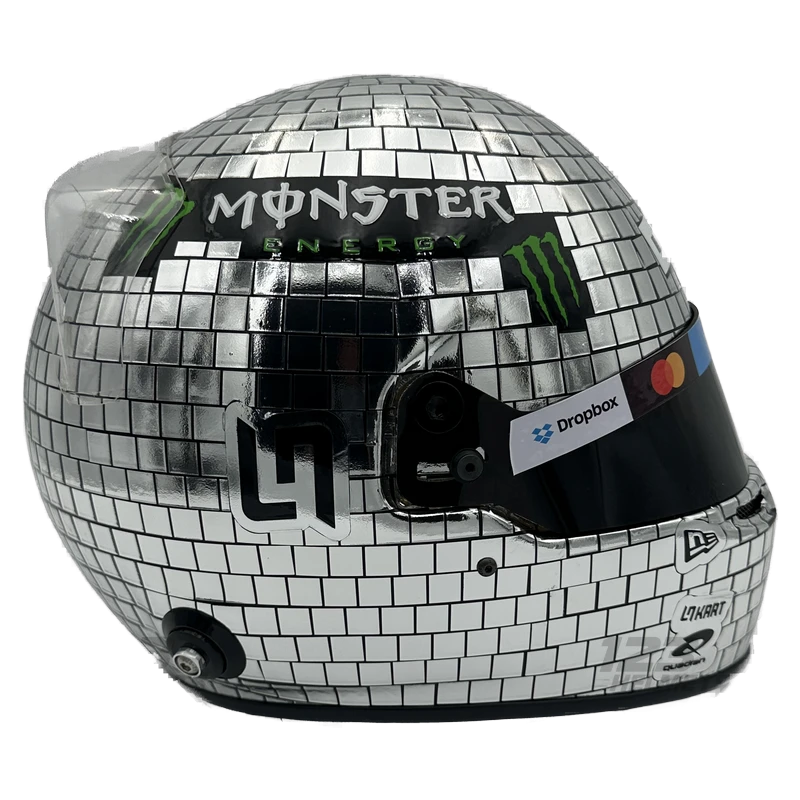
Full-size 1:1 replica helmets representing the Monaco livery variants that teams and drivers run for the street circuit round are among the most sought-after display pieces in any collector’s setup. The scale matters: a proper exhibition-quality replica at 1:1 replicates the exact shell geometry, vent positioning, and visor depth of the race-worn original. A standard full-face F1 shell spans approximately 27 × 35 cm at its widest points, and the visor aperture on a replica of this class typically features a 3 mm thick tinted lens that mirrors the visual profile of on-track photography.
Monaco helmets from seasons that later became controversial — 1984’s famous rain-shortened race, 1996’s attrition-heavy running — tend to appreciate in collector significance over time precisely because the race itself left a lasting mark on the sport’s history. The 2025 edition, with its measurement controversy and split penalty outcomes, is already in that category.
What Makes a Monaco Race Helmet Distinct
Several drivers and teams produce Monaco-specific livery variants or helmet designs that reference the Principality’s iconography — the red and white of the Monegasque flag, the ACM crest geometry, or the circuit’s landmark corners. These limited-context designs make full-size display replicas tied to a specific Monaco edition identifiably unique on a shelf or in a framed exhibition context, compared with a standard-season helmet from a generic round.
Is Any Fair Resolution Actually Possible?
No fully fair resolution exists within current FIA regulations, because the procedural asymmetry between served and unserved penalties cannot be bridged retroactively. The stewards themselves acknowledged the measurement error, but acknowledging it does not create a mechanism to undo completed race actions. The legal architecture of the sporting regulations draws a hard line at the moment a penalty is served.
Several theoretical remedies have been discussed. Reversing all five penalties would require overriding the served-penalty rule, which sets a precedent that could destabilise future race management. Reinstating all five penalties — including Gasly’s reversed ones — would require overturning the Alpine Right of Review outcome, which was itself procedurally correct. A financial penalty or points restitution framework for affected drivers does not currently exist in the regulations. A points redistribution across the five affected entries would require the FIA to construct a remedy that has no precedent in modern F1 jurisprudence.
McLaren’s appeal, if it proceeds to the International Court of Appeal, could set new case law on how measurement errors are treated when penalties have already been served. That outcome — whatever it is — will shape how stewards and teams approach similar disputes from 2025 onward. For now, the Monaco 2025 result stands as a contested classification, with at least one team’s legal challenge formally on the record.
What the episode does confirm is that Monaco’s physical infrastructure — its compressed pit lane, its measurement reference points, its unique geometry — places demands on officiating that no other circuit replicates. The FIA’s technical team will need to re-survey and re-certify the Monaco pit lane measurements before the 2026 edition to prevent the same problem recurring.
What Collectors Take Away from a Contested Race
Historically controversial races produce display helmets with lasting narrative weight. A full-size 1:1 exhibition replica tied to the 2025 Monaco Grand Prix carries the context of one of the sport’s most disputed classifications in recent memory — which, for serious collectors, adds a layer of historical reference that a routine race cannot. Display pieces work best when they anchor a specific moment, driver, or event in the sport’s timeline.
The drivers most directly affected — Russell, Gasly, and those whose penalties stood throughout — each have helmet designs from this season that reference their Monaco weekend. George Russell helmets from the 2025 season already carry the context of a difficult Monaco that reshaped his championship weekend. Alpine team livery pieces from Monaco 2025 carry the unusual distinction of representing the team that successfully overturned its penalties through a Right of Review — a rare procedural win that will be cited in motorsport legal discussions for years.
For anyone building a display that tells the story of a Formula 1 season, Monaco 2025 is one of those rounds where the on-track visual spectacle and the off-track controversy intersect in a way that makes the associated helmet and livery items genuinely meaningful as collector-grade exhibition pieces. A properly scaled 1:1 replica — with accurate shell geometry, correct livery colours, and exhibition-quality finish — is the most compact and displayable way to hold that specific moment in a collection.
“Five drivers were incorrectly issued penalties for speeding in the pit lane, yet only one has received justice by having them overturned.”
— Race analysis, Monaco Grand Prix 2025
“All teams had the opportunity to evaluate their pit lane speed during practice and some made adjustments to avoid a penalty.”
— FIA Stewards’ statement, Monaco Grand Prix 2025
FAQ
Q: Why were drivers penalised for pit lane speeding at Monaco 2025?
Drivers were penalised because the pit lane had been measured inaccurately, causing speed calculations to show breaches as small as 0.1 km/h over the limit. The stewards confirmed the measurement error after the race, but by then most penalties had already been served.
Q: Why was Pierre Gasly’s penalty reversed but not the others?
Gasly’s penalties were reversed because he had not legally served either of them during the race, leaving them procedurally open to review. The other penalised drivers had already served their penalties on track, which under current FIA regulations means they cannot be retroactively removed.
Q: What happened to George Russell at Monaco 2025?
Russell failed to serve his original time penalty at his pit stop, so the stewards upgraded it to a drive-through penalty, which he did serve. That stop cost him his points-scoring position in a race where overtaking is effectively impossible.
Q: Which teams are appealing the Monaco 2025 stewards’ decision?
McLaren confirmed it is appealing the outcome. Mercedes attempted a Right of Review but subsequently withdrew it. The McLaren appeal, if it reaches the International Court of Appeal, could establish new case law on measurement errors and served penalties.
Q: Are Monaco Grand Prix helmets particularly valued as display pieces?
Yes — Monaco helmets are among the most display-significant in any F1 collection because the circuit’s iconic setting and long history give them immediate visual and historical context. Full-size 1:1 exhibition replicas tied to specific Monaco editions, especially from contested or historically notable races, carry additional collector interest beyond standard-season items.
Browse F1 Helmet Collection — find full-size 1:1 display replicas tied to Monaco and every round of the season at 123Helmets.com.
Display and collector replicas only. Not certified for protective use. Full-size 1:1 scale.