Blog
Monaco GP Special Rear Wings: A Display-Worthy Weekend Through the Helmet Lens
 123Helmets Editorial Team
The 3.337 km Circuit de Monaco demanded the highest downforce configuration of the season, with every team rolling out bespoke rear wings unseen at any other round. For collectors, the weekend produced a parade of crown-jewel helmet liveries, podium poses against the Mediterranean backdrop, and the kind of visual moments that justify a dedicated display shelf at home.
Key Takeaways
Every team brought a Monaco-only rear wing package, the highest downforce spec of the 24-race calendar
Helmet designers treated the round as a showcase, with custom one-off liveries built for photography
The 78-lap race produced multiple safety car windows that allowed broadcasters to capture cockpit close-ups
Podium ceremony staged against Port Hercule remains the most reproduced backdrop in 1:1 replica photography
Why Monaco Forces a Unique Aero Package
The 3.337 km street layout has only 19 corners, but the average speed sits near 160 km/h, the lowest of the season. To claw lap time out of the Loews hairpin and the Rascasse, every constructor designs a Monaco-specific high-downforce rear wing that will not appear at any other circuit on the 24-round calendar. These wings carry more chord depth, steeper angles of attack, and in some cases entirely different endplate geometry.
The bodywork story matters to collectors because the photographic record of Monaco is unlike any other round. Helmets shot at low speed through Sainte Dévote, with the sunlight bouncing off the harbour, give designers and replica builders the reference material they rely on for an entire calendar year of display pieces.
The Visual Identity of Monte Carlo
No other venue produces the same density of recognisable backdrops. The Fairmont Hairpin, the tunnel exit, the swimming pool chicane and the Tabac corner each frame the helmet differently. A 1:1 replica positioned under display lighting at home echoes those broadcast angles when the paint scheme is faithful to what the driver actually wore on the Sunday afternoon.
Helmet Liveries Built for the Principality
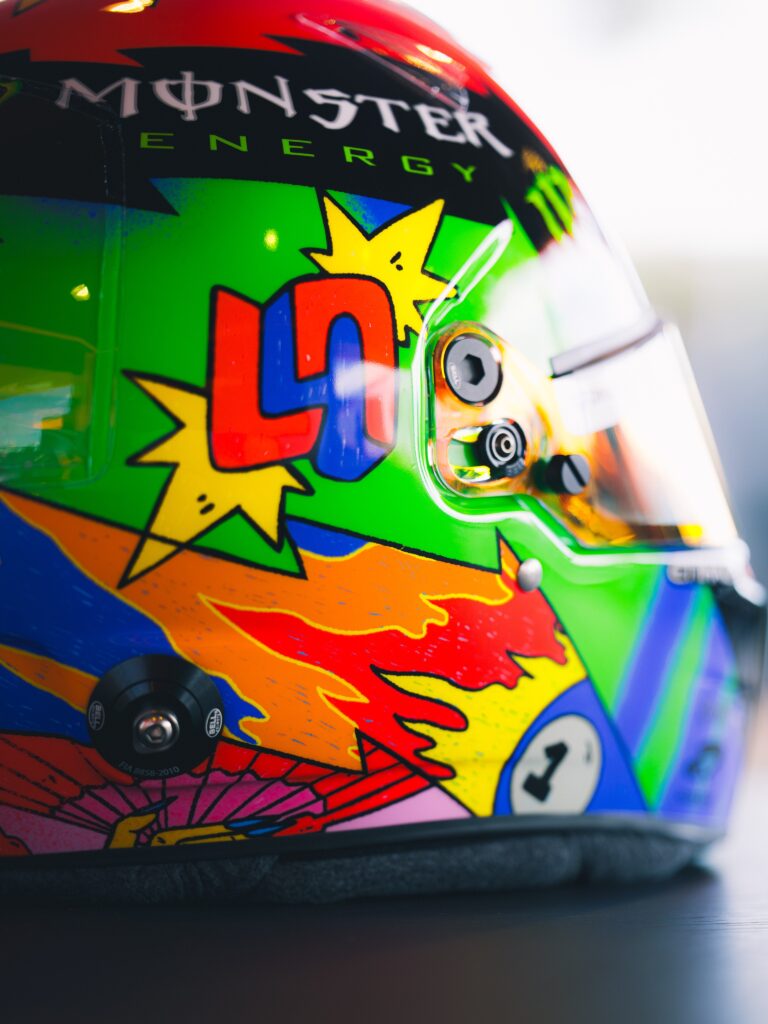
Monaco is the round drivers and their helmet painters circle on the calendar months in advance. The custom one-off treatments revealed during Thursday’s media day featured deeper metallic flake, hand-applied gold leaf accents, and on several lids a clear-coat layered up to 7 times to produce mirror-grade depth. These finishes are exactly what high-end full-size replicas attempt to recreate for the collector market.
Paint Layering and Display Value
A standard race helmet livery uses around 3 to 4 paint layers. The Monaco specials this year pushed that count significantly higher, with reports of base, mid-coat metallic, design layer, candy translucent, and multiple clear sealing passes. For replica builders working to 1:1 scale, reproducing that depth on a display shell requires the same patient process — each coat cured before the next is applied.
Colour Choices That Photograph Well
Several drivers leaned into Mediterranean palettes: deep navy, gold, sunset orange and pearl white. These colours hold up under the warm midday light bouncing off the harbour water, and they translate beautifully to a glass display cabinet at home. A pearl white shell under a single warm LED gives a near-identical reading to the Sunday grid walk footage.
The Race: 78 Laps of Cockpit Theatre
The Monaco Grand Prix runs 78 laps over a total race distance of 260.286 km. Because overtaking is so limited, the broadcast spends an unusual amount of time on cockpit shots, onboard angles and helmet close-ups. For collectors, this is the most generous round of the year in terms of reference imagery for any display project.
The opening stint saw the front runners settle into a procession behind the lead car, with the gap between P1 and P2 hovering inside 2.5 seconds for long stretches. When the safety car came out around mid-distance, the entire field bunched and the television feed cut through every cockpit on the grid in succession — a goldmine for anyone documenting helmet detail.
Sector Three and the Tunnel Shot
The tunnel run remains the single most reproduced piece of Monaco footage. Onboard cameras mounted just behind the driver’s head frame the top of the helmet against the sodium lighting before the burst back into daylight at the chicane. That contrast — warm tunnel glow into bright harbour sun — is what makes Monaco helmet photography instantly recognisable.
The Podium Tableau
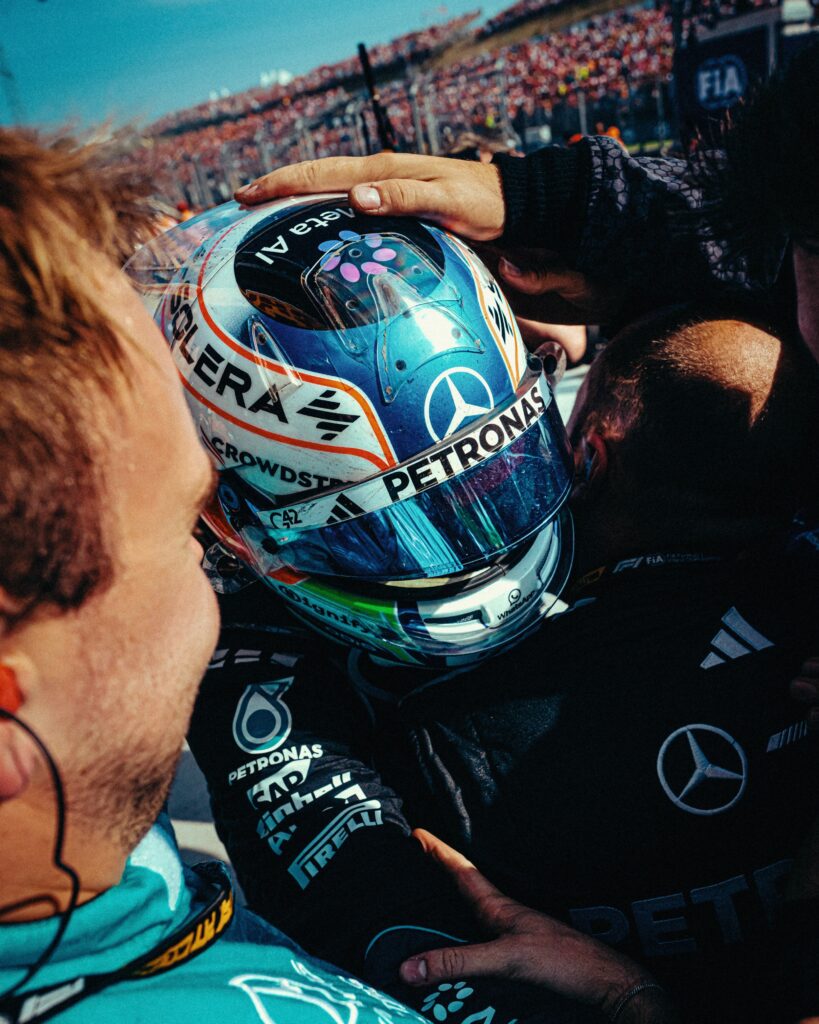
The Monaco podium is set above Port Hercule, with the royal box behind and the harbour below. Drivers hold their helmets aloft in a frame that has been visually consistent since the 1950s. A 1:1 collector replica placed at eye level on a dedicated plinth reproduces that exact pose at home, which is precisely why this weekend drives such heavy demand in the exhibition replica market.
Rear Wing Detail and Display Context
Each team’s Monaco rear wing carried sponsor lettering and team identity treatments that mirrored the helmet of the lead driver. This deliberate visual pairing between car and lid is something collectors increasingly seek out — a display piece that contextually belongs to a specific weekend rather than a generic season livery.
What to Look For in a Monaco Display Build
A faithful Monaco display configuration combines three reference points: the helmet shell painted to the one-off scheme, the visor strip carrying the round-specific sponsor, and ideally a printed plaque noting the date and race number. Full-size 1:1 replicas measure roughly 27 × 35 cm in their typical display footprint, and weigh in around 1.4 to 1.6 kg depending on shell construction. Plan shelf depth accordingly.
Lighting the Piece at Home
Warm white LEDs at roughly 2700K most closely match the Monaco midday tone captured on television. A single overhead source produces the highlight pattern seen on the podium broadcast, while two side sources at 45 degrees flatten the shell and reveal paint depth. Collectors photographing their own pieces tend to prefer the single-source approach for that authentic Sunday-afternoon look.
Why This Round Matters to the Collector Calendar
Monaco is the round where helmet design escapes from the constraints of season-long brand consistency. Drivers get one weekend to do something outside the norm, and painters get one weekend to push technique. For a collector building a display wall around a single driver, the Monaco entry is almost always the centrepiece — the lid you place at eye level, lit individually, with the rest of the season arranged around it.
The 2025 edition produced at least 8 distinct one-off liveries across the grid, a figure consistent with recent years. Each will eventually filter into the replica market in some form, and the photographic reference from this weekend will guide builders for the next 12 to 18 months.
“Monaco is the weekend you design for. You know every camera in the world will be pointed at your helmet through the tunnel exit, and you want that frame to last forever.”
— Helmet livery designer, paddock interview
FAQ
Q: Why does Monaco need a unique rear wing?
The 3.337 km circuit has the lowest average speeds of the season, so teams use the steepest downforce configuration available. The Monaco wing is bespoke to that single round.
Q: What makes Monaco helmets special for collectors?
Drivers commission one-off liveries with deeper paint layering — often 6 to 7 coats — making the shells far more visually rich than standard season designs.
Q: How big is a full-size 1:1 replica helmet?
Typical display footprint is around 27 × 35 cm with a weight of roughly 1.4 to 1.6 kg. Plan shelf depth and load capacity before mounting.
Q: What lighting works best for Monaco-themed displays?
A single overhead warm white source near 2700K closely matches the podium broadcast tone. Side lights at 45 degrees show off paint depth on the shell.
Q: Are these replicas safety certified?
No. They are display and collector replicas only, built as exhibition pieces. They are not intended or certified for any protective use.
Browse F1 Helmet Collection
Display and collector replicas only. Not certified for protective use. Full-size 1:1 scale.