Blog
Red Bull Austrian GP Upgrade: B-Spec Car in 2026
 123Helmets Editorial Team
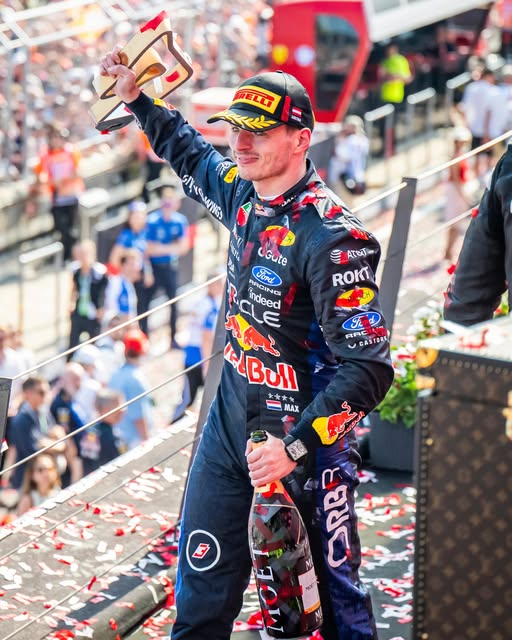
Red Bull arrived at the Red Bull Ring in 2026 with seven declared FIA modifications targeting flow conditioning — and a former team mechanic believes the real story runs deeper than any bodywork change.
Key Takeaways
Red Bull declared exactly 7 upgrade items in official FIA documentation for the 2026 Austrian Grand Prix, all targeting flow conditioning across the car.
Former Red Bull mechanic Calum Nicholas described the package as feeling like a B-spec car, citing sidepod inlets, engine cover, floor sections, rear corners and rear suspension fairings.
Nicholas suspects an undeclared weight reduction programme — targeting components invisible in FIA documentation — contributed substantially to the team’s pace at the Red Bull Ring.
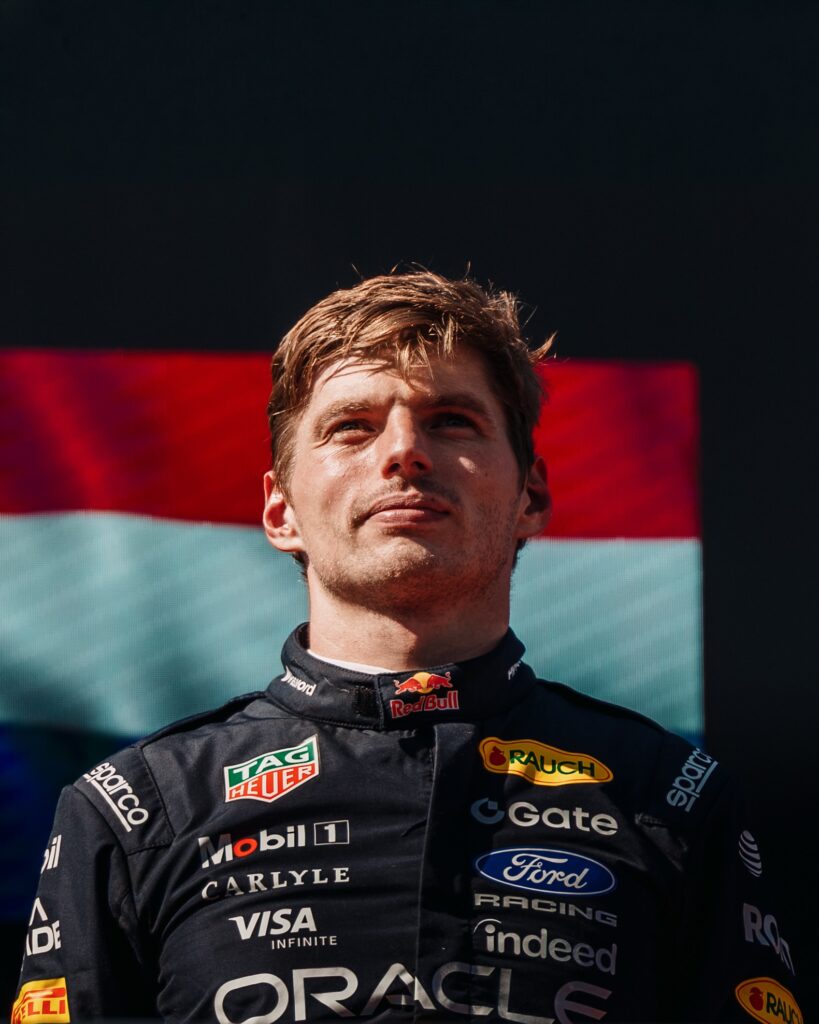
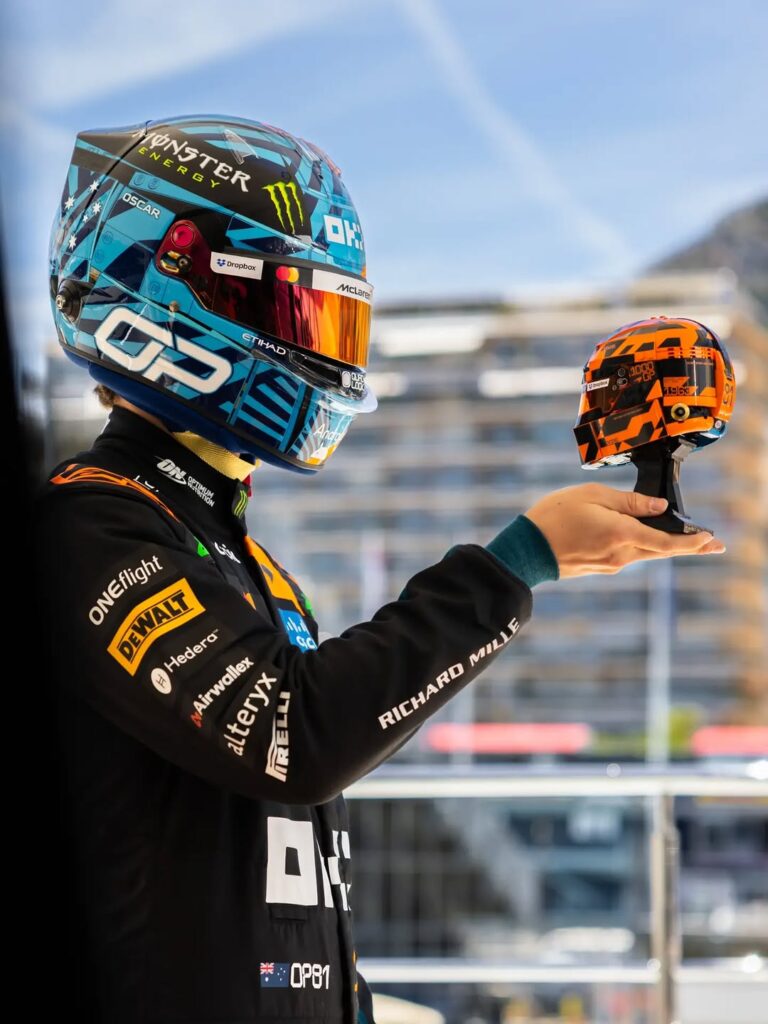
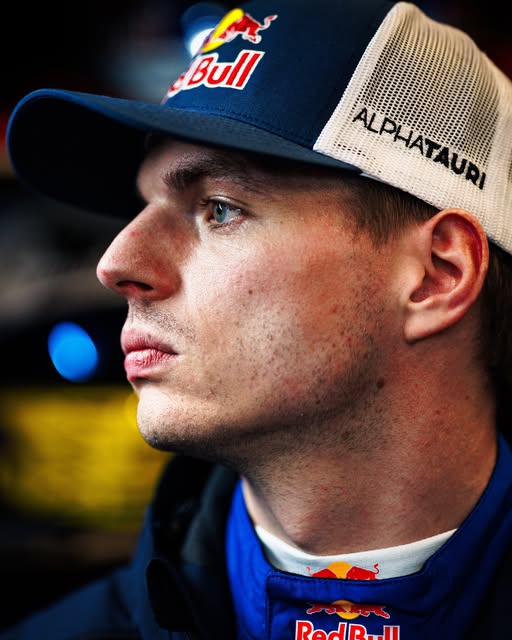
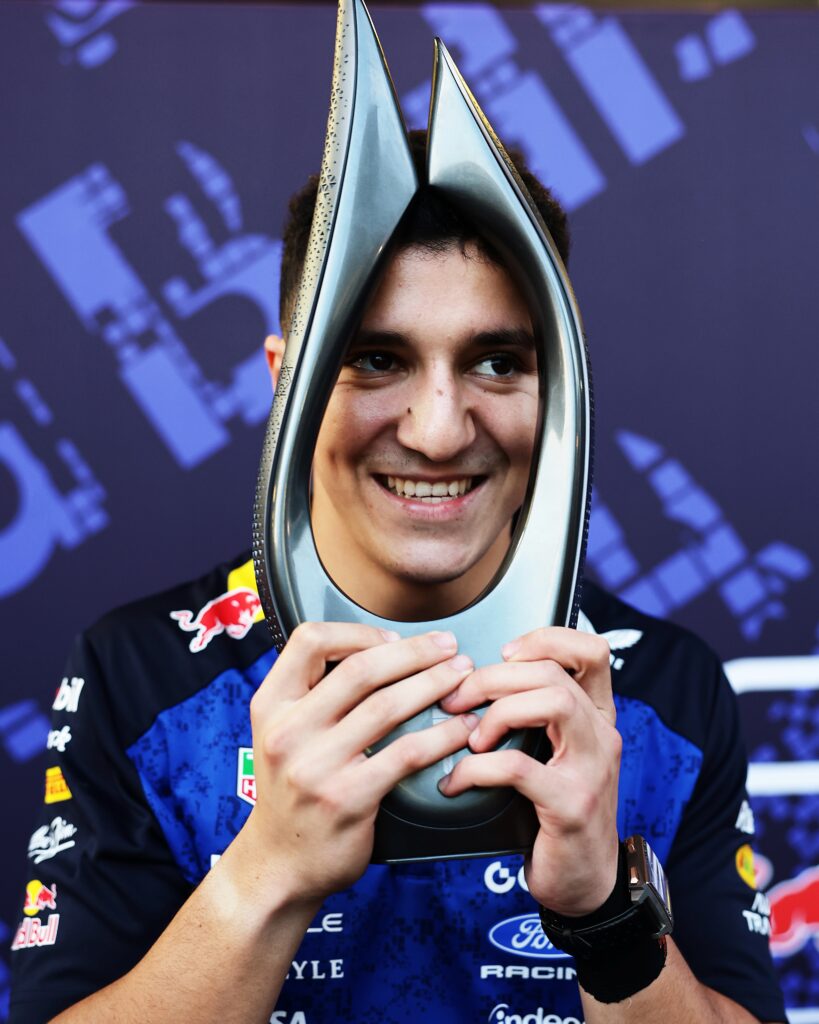
The Austrian GP podium produced visually striking Red Bull helmet and livery moments that cement 2026 as a landmark season for collector display replicas.
Seven Changes, One Verdict: Almost a B-Spec Car
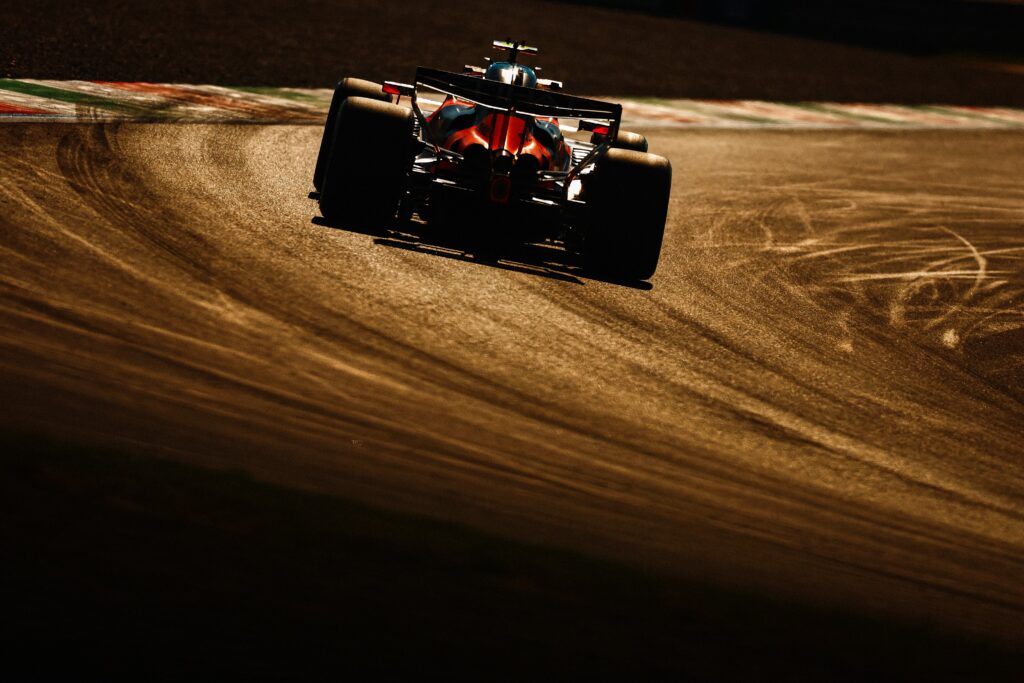
Red Bull’s 2026 Austrian Grand Prix upgrade package spanned exactly seven declared modifications in official FIA documentation, all focused on flow conditioning — the process of managing how air moves through and around the car to generate maximum downforce at minimum drag penalty. The list touched almost every major aerodynamic zone: sidepod inlets, engine cover, floor top surface, floor underside, rear corners, and rear suspension fairings. That breadth is what led Calum Nicholas, former Red Bull mechanic turned team ambassador, to use the phrase “B-spec” on the team’s official Talking Bull podcast.
A B-spec designation is rarely applied lightly in Formula 1. It implies a car that has been so substantially revised in concept or execution that it effectively operates as a second, improved version of the original design introduced at the season opener. For a team that began 2026 carrying a significant weight penalty — Nicholas himself acknowledged the car started the year “severely overweight” — the combination of aerodynamic reworking and an intensive internal diet programme represents exactly the kind of structural reset that earns that label.
The Red Bull Ring, a circuit measuring just 4.326 km, has historically rewarded aerodynamic efficiency and mechanical grip over raw downforce. The track’s fast sweepers and single hard-braking zone at Turn 3 make floor performance and rear stability critical. Targeting those specific areas with seven simultaneous updates rather than a phased rollout signals a coordinated push, not incremental development.
What the FIA Documentation Actually Shows
The FIA technical update list is the most transparent window into a team’s development direction, and Red Bull’s 2026 Austrian GP submission pointed unambiguously toward aerodynamic efficiency rather than outright downforce addition. Flow conditioning upgrades work by smoothing the passage of air before it reaches a critical surface — the diffuser, the rear wing, or the underfloor — so that the generating surface works with cleaner, more predictable airflow rather than fighting turbulence.
Nicholas broke down the significance on Talking Bull: “You look at the FIA document, it’s mostly flow conditioning. It’s all been about extracting the most downforce and making the car more efficient.” The sidepod inlet revisions affect how air enters the cooling package, which in turn determines how much bodywork volume the team needs to carry — smaller, more efficient inlets allow tighter, lower-drag bodywork. The engine cover changes feed directly into the Coke-bottle region that channels air to the diffuser. The floor top and underside revisions address the most sensitive aerodynamic surface on any 2026-regulation car, where small geometry changes can shift downforce balance measurably across a race stint.
Rear suspension fairings, the final item on the list, are often underestimated. These components clean up airflow around the rear corner where tyre wake, diffuser exhaust flow, and rear wing downwash all converge. A poorly conditioned rear corner produces drag and instability simultaneously — fixing it produces lap time from two directions at once.
The Weight Loss Theory: What You Cannot See on an FIA Document
The part of Red Bull’s 2026 Austrian GP performance that Nicholas considers potentially larger than the declared aero changes is a weight reduction programme that, by definition, does not appear on FIA upgrade documentation. Components that reduce mass — internal brackets, revised installation hardware, thinner composite panels in non-structural zones — do not require declaration unless they alter the aerodynamic surface geometry. They are invisible to the public technical record.
Nicholas was direct about the implication: “I wonder how much of it came from the aero and the performance that we brought through the upgrades that we declared, and how much of the performance has actually come from the diet programme. With weight loss, it’s one of those things where you’re finding all of the tiny little marginal gains. It’s not like you’ll have one component that’s just massively overweight. It’s about looking at all of the installations and finding the little areas where you can find these little gains.”
In competitive Formula 1 terms, every kilogram of mass removed from a car above the minimum weight limit translates to roughly 0.030 to 0.035 seconds per lap on a typical circuit — a figure that compounds across a race distance. At the Red Bull Ring’s 71-lap race distance, even a modest undeclared weight reduction of 3 kg could theoretically contribute over 2 seconds of raw pace improvement, before any aerodynamic benefit is counted. Nicholas did not quantify the weight saved, and neither has Red Bull officially, but his framing suggests the gain was meaningful enough to change the team’s competitive position relative to the field.
This matters for the broader 2026 season narrative. Red Bull conceded ground in the opening flyaway rounds while running a car described by insiders as carrying excess mass from the start. The Austrian GP, held on home ground at the Red Bull Ring on 2026-06-29, represented the first event where those internal development threads visibly converged with external aerodynamic upgrades.
Helmet and Livery Highlights: Display-Worthy Austrian GP Moments
The 2026 Austrian Grand Prix produced podium imagery that belongs in any serious collector’s display case, with the Red Bull Ring’s mountain backdrop amplifying the visual impact of the team’s navy, red and gold livery against the circuit’s signature green grandstands. For collectors of full-size 1:1 replica helmets, the Austrian GP is one of the calendar’s most photogenic rounds — short straights and tight stadium sections keep the cars in frame longer, and the mid-summer Alpine light gives helmet photography a quality rarely matched at urban street circuits.
Red Bull drivers carried helmets sized to the standard 1:1 display scale of 29 × 25 × 35 cm in external shell dimension — the same format reproduced in collector replica programmes. The visor panels on 2026 race helmets run at 4 mm polycarbonate thickness in functional specification, a detail that full-size display replicas match in form if not in the protective function of the race version. The Red Bull livery’s metallic midnight blue base coat, applied in a multi-layer process that typically requires 8 to 12 paint stages for production-quality collector pieces, photographs particularly well against the Red Bull Ring’s red-and-white circuit furniture.
Nicholas’s B-spec narrative adds a layer of significance for collectors: the Austrian GP is now identifiable as the event where the 2026 Red Bull effectively became a different car. Helmets and livery display pieces from this round carry a before-and-after marker in the season’s development arc that gives them a specific historical context beyond the race result alone.
What This Means for Red Bull’s 2026 Title Challenge
The Austrian GP upgrade package, if Nicholas’s B-spec characterisation holds under further race conditions, positions Red Bull as a team that has solved its fundamental 2026 car concept problems mid-season rather than carrying a compromised package through the European swing. The Red Bull Ring is Round 11 of the 2026 calendar, meaning the team still has the majority of the season to exploit a lighter, more aerodynamically efficient car.
Flow conditioning upgrades are not temporary fixes. Unlike a qualifying-focused aero configuration that trades tyre wear for single-lap pace, improved air management through the sidepod, floor and rear corner is a structural gain that holds across full race distances. Combined with a weight reduction programme — which reduces both the car’s natural understeer tendency and its tyre thermal load — the Austrian package points toward a Red Bull that is better in race trim than it was in the first ten rounds.
The team’s competitors will study the FIA documentation carefully. But as Nicholas implies, the most significant gains may be the ones that do not appear in any public record. For Red Bull, a team built on a culture of marginal-gain accumulation from its championship years, that approach is entirely consistent with how they have historically rebuilt competitive momentum mid-season. Whether those gains are enough to close or extend the championship gap will become clear across the next three European rounds.
Collecting the 2026 Austrian GP: Red Bull Replica Helmets
The 2026 Austrian Grand Prix marks a milestone event in Red Bull’s season arc, making it a natural focus point for collectors seeking display pieces tied to specific moments in F1 history. Full-size 1:1 replica helmets from this race round capture the team’s 2026 livery in its post-upgrade form — the season’s visually and technically defining moment for the Milton Keynes outfit.
Display replica helmets at 1:1 scale reproduce the external geometry, visor panel proportions, and multi-layer paint scheme of the race specification without any protective function. They are collector items and exhibition pieces, not certified safety equipment. For the 2026 Red Bull Ring livery specifically, the combination of the team’s midnight blue base, the circuit’s iconic Austrian mountain scenery association, and the technical story of the B-spec upgrade makes this one of the more contextually rich display pieces of the current season.
Collector display replicas are produced to the same 29 × 25 × 35 cm shell form factor that matches race-worn helmet proportions, with visor panels that reproduce the 4 mm polycarbonate geometry in display-grade materials. They sit on standard display stands and are suited to shelf, cabinet or wall-mounted exhibition. The Red Bull 2026 Austrian GP helmet represents a driver at a car’s turning point — exactly the kind of narrative detail that makes a display piece more than decoration.
Browse the full collection at 123Helmets.com to find Red Bull display replicas from the 2026 season.
“Everything from the sidepod inlet to the engine cover, the floor, the top section of the floor, the underside, rear corners, rear suspension fairings — it’s a lot. And it does almost feel like a B-spec car.”
— Calum Nicholas, former Red Bull mechanic, Talking Bull podcast
“I wonder how much of it came from the aero and the performance that we brought through the upgrades that we declared, and how much of the performance has actually come from the diet programme. With weight loss, it’s one of those things where you’re finding all of the tiny little marginal gains.”
— Calum Nicholas, former Red Bull mechanic, Talking Bull podcast
FAQ
Q: How many upgrades did Red Bull declare for the 2026 Austrian Grand Prix?
Red Bull declared exactly 7 upgrades in official FIA documentation for the 2026 Austrian Grand Prix, covering sidepod inlets, engine cover, floor top, floor underside, rear corners, and rear suspension fairings — all targeting flow conditioning.
Q: Why did Calum Nicholas call the Red Bull package a B-spec car?
Nicholas used the B-spec description because the Austrian GP package touched nearly every major aerodynamic zone simultaneously, which — combined with a suspected undeclared weight reduction programme — effectively made the car operate as a revised second concept rather than an incremental update.
Q: What is flow conditioning and why does it matter in Formula 1?
Flow conditioning is the process of managing how air moves over and through aerodynamic surfaces before it reaches a downforce-generating zone such as the floor or diffuser. Cleaner, more predictable airflow allows those surfaces to produce more downforce at the same drag penalty, improving both single-lap pace and race-stint consistency.
Q: What are the Red Bull 2026 Austrian GP replica helmets produced for?
The Red Bull 2026 Austrian GP replica helmets are full-size 1:1 collector display pieces produced for exhibition and collection purposes only. They are not certified safety equipment and carry no protective function — they reproduce the visual design and shell geometry of the race-worn helmet for display.
Q: Does the Red Bull Ring circuit suit Red Bull’s upgraded 2026 car?
The Red Bull Ring’s 4.326 km layout — with fast sweepers, a single hard-braking zone and a tight stadium section — rewards aerodynamic efficiency and rear stability, which are exactly the characteristics targeted by Red Bull’s seven declared Austrian GP upgrades across the floor, rear corner and sidepod inlet zones.
Browse F1 Helmet Collection — explore full-size 1:1 Red Bull display replicas from the 2026 season at 123Helmets.com.
Display and collector replicas only. Not certified for protective use. Full-size 1:1 scale.
This article was written with the help of AI tools. Editorial policy