Blog
Red Bull Cools Expectations After Verstappen’s Montreal Podium: A Collector’s Lens on a Statement Weekend
 123Helmets Editorial Team
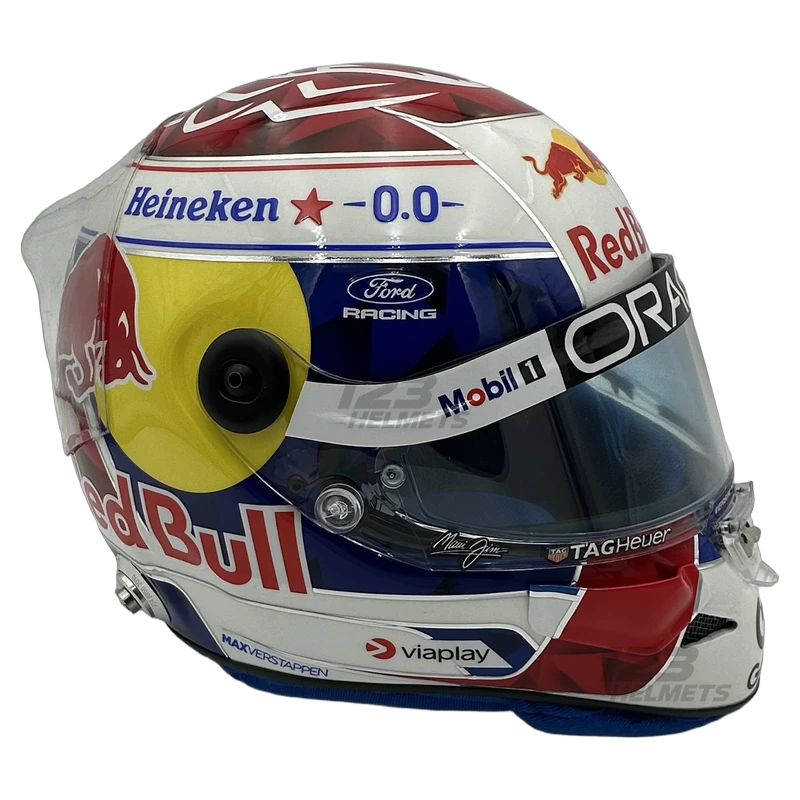
Max Verstappen converted a difficult weekend in Montreal into a podium finish, but Red Bull was quick to temper the surrounding hype. For collectors, the result delivered a display-worthy chapter: a navy-and-matte helmet under Île Notre-Dame lights, a livery still carrying the bull motifs, and a paddock narrative that already feels like a future shelf piece. Here we recap the race and frame the visuals that matter for any full-size 1:1 replica display.
Key Takeaways
Verstappen reached the Montreal podium despite Red Bull’s RB-spec car showing limitations in cooler conditions across the 70-lap race.
Team principal messaging cooled expectations: the podium is a strong data point, not a championship turning moment.
The Montreal weekend produced strong visual references — helmet matte finishes and livery contrasts — ideal for full-size 1:1 collector display replicas.
Circuit Gilles Villeneuve’s 4.361 km layout and low-grip surface make every Verstappen Canada result a distinctive exhibition narrative.
Montreal Weekend: How the Podium Came Together
Round after round across the 2025 campaign, the conversation around Max Verstappen has oscillated between dominance and damage limitation. Montreal slotted firmly into the second category — and then surprised everyone. Across the 70-lap Canadian Grand Prix on the 4.361 km Circuit Gilles Villeneuve, Verstappen managed tyre degradation, traffic and a car that, by Red Bull’s own admission, was not the fastest package on the grid that Sunday.
The Dutchman started from the second row and steadily climbed the order. By lap 45 he was running in podium contention, and from lap 58 onward he held station to bring the RB home on the rostrum. It was the kind of measured drive that Verstappen has built his reputation on — and for collectors, it became one more entry in a results catalogue that is increasingly the reference point for an entire decade of helmet and livery design.
A Result That Reads Better on Television Than on the Pit Wall
Inside Red Bull, the tone was deliberately flat. Team leadership emphasised that a single podium does not rewrite the season’s competitive picture, and that the upgrade path remains the priority. That cautious framing matters for how this race will be remembered: not as a turning point, but as a snapshot — exactly the kind of moment that translates beautifully to a static, exhibition-quality display.
Helmet Focus: The Verstappen Lid Under Montreal Light
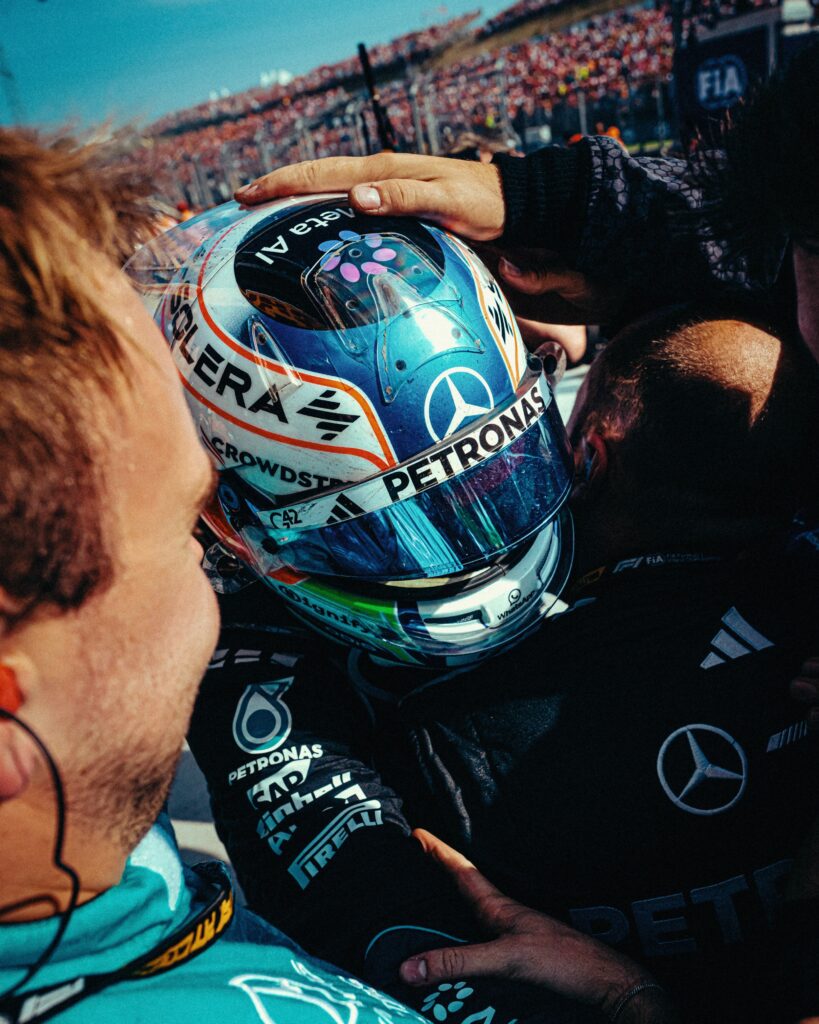
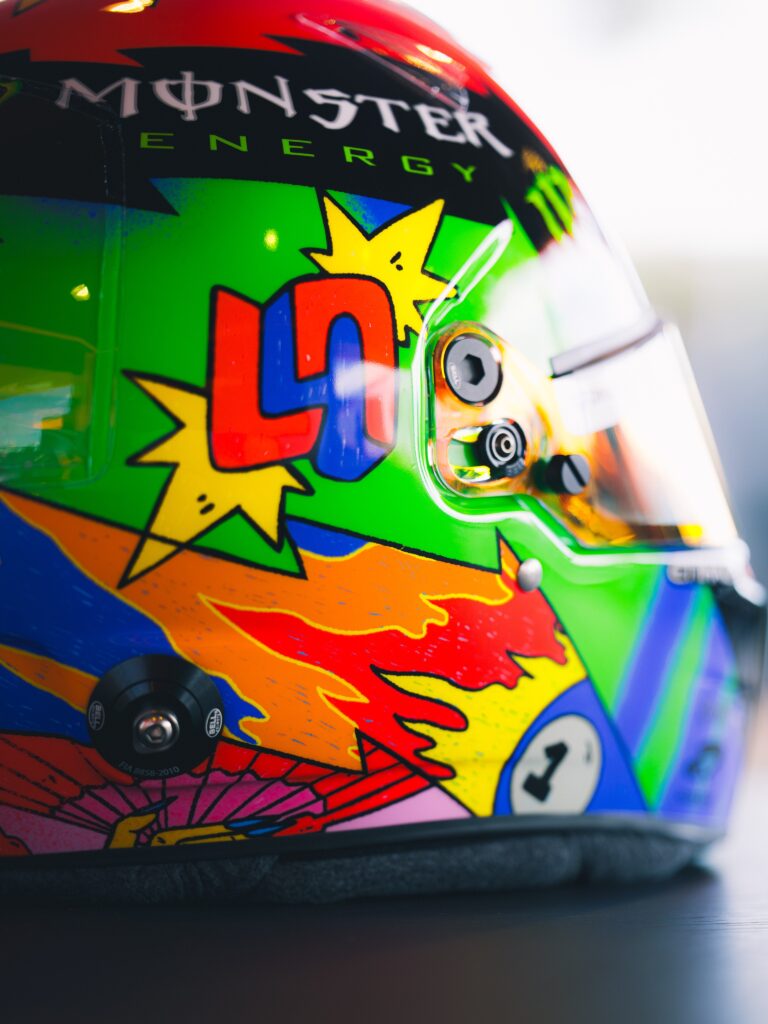
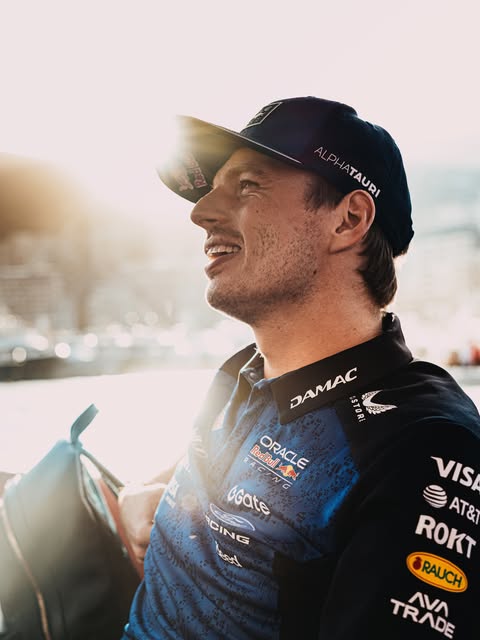
Montreal’s lighting — long shadows from the trees lining the Casino straight, the reflective tarmac patches near the Wall of Champions — gave Verstappen’s helmet a particularly striking on-camera presence. The dominant navy base, the matte-finish crown, and the contrasting lion crest combined for a livery that photographs cleanly from every angle, which is precisely the quality that matters when you place a full-size 1:1 replica on a shelf or in a glass cabinet.
Why This Helmet Travels Well to a Display Cabinet
Three details stand out for collectors evaluating a Verstappen Montreal-era replica as a display piece:
- Matte-to-gloss contrast: the upper crown reads matte while the visor surround stays glossy — a contrast that holds up under both warm gallery lighting and cool LED display cases.
- Crest legibility: the lion motif sits in a high-contrast position, meaning it remains identifiable from 1.5 m to 2 m viewing distance, the typical display range in a home cabinet.
- Tonal restraint: a limited core palette (navy, matte black, accent yellow) ages well visually compared with hyper-busy designs, an important consideration if you intend to keep the replica on permanent display for several years.
For exhibition purposes, the Montreal weekend reinforced what photographers already knew: this helmet is built to be looked at. As a full-size 1:1 collector item, it sits comfortably alongside earlier Verstappen designs without clashing.
Livery and Car Visuals: A Collector’s Reading of the RB
The Red Bull livery in Montreal did not change dramatically from previous rounds, but the way the car interacted with Circuit Gilles Villeneuve’s surroundings made for some of the season’s strongest still-image moments. The matte navy panels behind the cockpit caught the overcast light differently from the gloss sections near the sidepods, producing a depth effect that translates directly to how a 1:1 helmet replica is best lit on display: indirect, slightly cool, never overhead.
Three Visual Cues Worth Replicating in a Home Display
If you are building a Verstappen-themed corner around a full-size 1:1 replica helmet, the Montreal weekend offered a clear visual brief:
- Background tone: a deep navy or charcoal backdrop mirrors the RB’s primary surface and prevents the helmet’s matte zones from disappearing.
- Lighting angle: a 30 to 45 degree front-angle key light reproduces the broadcast camera feel from the Montreal podium ceremony.
- Distance and height: placing the replica at roughly 1.6 m — close to actual driver eye level — recreates the on-grid presence that made the Montreal visuals so effective.
These are not safety or technical considerations. They are pure display logic for a collector item, and the Canadian Grand Prix happened to demonstrate every one of them in real time.
Red Bull’s Cautious Framing: Why It Matters for the Story
The post-race messaging from Red Bull leaned heavily on perspective. The podium was acknowledged, the drive was praised, but expectations for the following rounds were openly managed downward. From a narrative standpoint, that restraint is interesting — it positions Montreal as an isolated highlight rather than the beginning of a new run.
The Display-Piece Implication
For collectors, this framing actually strengthens the case for the Montreal weekend as a standalone exhibition reference. Standalone moments tend to age into iconic status more reliably than mid-streak races, because they are easier to caption, easier to date, and easier to contextualise on a placard next to a 1:1 replica helmet. A podium against expectations, on a circuit with the Wall of Champions mythology, on a weekend where the team itself preached caution — that is the kind of story a display piece carries effortlessly.
The Circuit Gilles Villeneuve, opened in its current Formula 1 configuration in 1978 and measuring 4.361 km across 14 turns, has always favoured drivers who manage rather than attack. Verstappen’s Montreal podium fits that lineage, and the helmet he wore is the artefact that will represent it on collectors’ shelves for years to come.
Building a Verstappen Montreal Display: Practical Notes
For anyone considering a Verstappen full-size 1:1 replica as the centrepiece of a Montreal-themed corner, a few practical display-only notes from the weekend are worth recording.
Cabinet, Plinth and Plaque
A standard collector cabinet with internal dimensions of approximately 35 × 35 × 40 cm comfortably accommodates a full-size 1:1 F1 helmet replica with room for a small plinth and a descriptive plaque. For a Montreal-themed presentation, a plaque referencing the race date, the 70-lap distance and the podium finish gives the piece immediate context for any visitor.
Backdrop and Accent Pieces
A printed backdrop showing the Circuit Gilles Villeneuve layout, paired with a small Canadian flag accent, completes the geographic identity of the display without overwhelming the helmet itself. The replica should remain the visual focal point, occupying roughly 60 to 70 percent of the cabinet’s visible volume.
Why It Works as a Story Piece
Because the Red Bull team itself framed Montreal as a moment rather than a momentum shift, a display built around it does not need to compete with championship-defining races. It tells a self-contained story — a podium where one was not expected, captured by a helmet design that photographs as well in a home cabinet as it did under the Montreal podium lights. That is the essence of an exhibition-quality collector item.
“A podium is a podium, but we shouldn’t get carried away — the next races will tell us where we really stand.”
— Red Bull team principal, post-race media debrief
“The car came alive in the second stint. From there it was about managing the gap and bringing it home.”
— Max Verstappen, Canadian GP podium interview
FAQ
Q: Is the Verstappen Montreal helmet replica a wearable item?
No. It is a full-size 1:1 collector and display replica intended for exhibition purposes only. It is not designed, certified or intended for any protective use, on-track activity or wearable purpose.
Q: What scale is the replica?
The helmet is produced at full-size 1:1 scale, matching the visual dimensions of a Formula 1 driver helmet so it presents authentically inside a standard collector cabinet.
Q: What cabinet size is recommended for display?
A cabinet with internal dimensions of around 35 × 35 × 40 cm comfortably houses a full-size 1:1 F1 helmet replica with space for a plinth and a descriptive plaque underneath.
Q: Does the replica reproduce every Montreal weekend detail?
The replica focuses on the core Verstappen helmet design as seen during the weekend — base colour, crest placement, matte and gloss zones — finished to exhibition quality for static display.
Q: Why is the Montreal podium considered a strong collector reference?
Because Red Bull itself framed it as a standout result rather than a championship turning point, the race functions as a self-contained narrative — exactly the kind of moment that a full-size 1:1 display replica represents most effectively on a shelf.
Shop Max Verstappen Collection
Display and collector replicas only. Not certified for protective use. Full-size 1:1 scale.