Blog
Verstappen: Red Bull Still Have Too Many Issues in 2026
 123Helmets Editorial Team
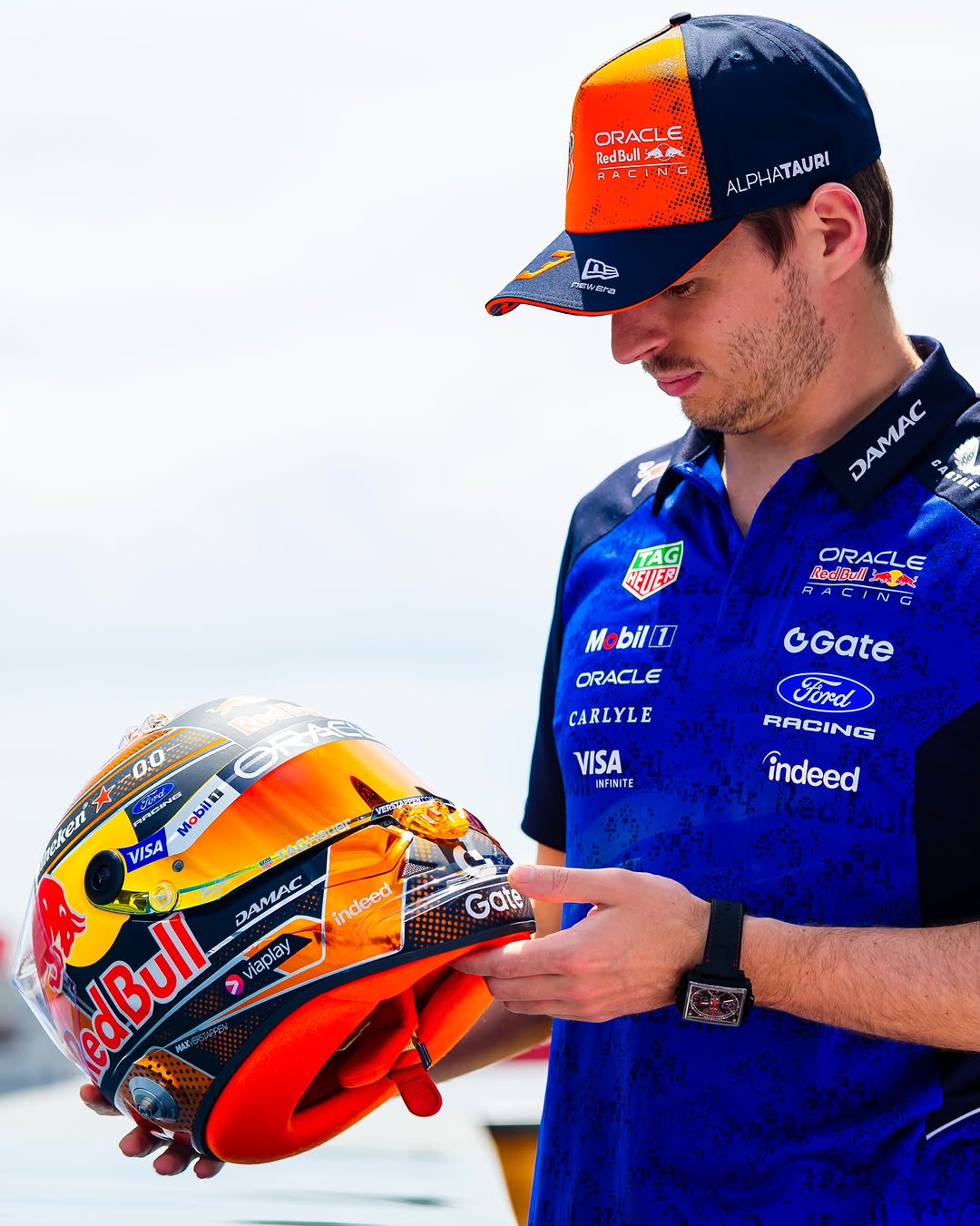
Max Verstappen finished second in the most recent 2026 Grand Prix, within two seconds of race winner George Russell, yet walked away convinced that Red Bull are not yet ready to mount a sustained championship challenge. A rear-axle problem that emerged mid-race robbed him of a genuine shot at victory — and the display-worthy helmet and livery visuals from that afternoon tell a story of near-glory.
Key Takeaways
Verstappen finished second, less than 2 seconds behind race winner George Russell — Red Bull’s most competitive showing of the 2026 season.
A rear-axle problem in the second stint killed his pace and prevented a genuine challenge for the win, despite closing on Russell in the first half.
Red Bull have now recorded two 2026 podiums: Verstappen’s third in Canada and this second place, their first genuine front-running result of the year.
A qualifying spin dropped Verstappen from pole contention to fifth on the grid, making his recovery drive to the podium all the more striking as a display moment.
Second Place, Two Seconds Back — The Raw Numbers
Verstappen crossed the line in second place, less than 2 seconds behind race winner George Russell, the closest Red Bull has been to a Mercedes all season in 2026. He beat championship leader Andrea Kimi Antonelli — in the other Mercedes — to the podium by a narrow margin, collecting valuable points in a campaign that has otherwise been defined by the gap between Red Bull and the front. The result is the team’s second podium of the 2026 season: Verstappen’s third place in Canada remains the other, scored on a day when one of the dominant Mercedes retired from the race.
Those two data points frame Red Bull’s 2026 story so far. Progress is measurable; consistency is not. A qualifying spin on the upgraded car — which had Verstappen looking like a genuine pole candidate before the mistake — left him fifth on the grid, forcing him to spend the opening laps of the race cutting through traffic rather than managing a gap from the front. By the time he had dispatched Antonelli and Charles Leclerc, then worked past Lewis Hamilton in his second stint, he had done enough to stand on the podium — but not enough to make Russell sweat in the final laps.
What Verstappen Said — ‘Something Felt Off on the Rear’
Verstappen identified a rear-axle problem in the second stint as the decisive factor that ended his challenge for the race win. In his own words after the race: “In the middle of the second stint, something happened with the car on the rear axle, which made me lose pace, and that just stayed there until the end.” Before that issue emerged, he described the first half of the race as genuinely encouraging — the first time in the 2026 season he felt he could realistically fight for a victory.
“What was satisfying is that this was the first time I felt like actually I could fight for the win. I do think that the first half of the race we were more competitive because, for whatever reason in the second half, something felt off on the rear of the car. Everything was just extremely difficult, from bumps, kerbs, traction, it was just completely gone.”
That description — bumps, kerbs, traction all suddenly compromised — points to a handling shift rather than a simple tyre management story. Verstappen was closing the gap to Russell after his battles with Hamilton, only to see the pace disappear without explanation mid-stint. “Every time I was catching up. But then in the middle of the second stint, something happened,” he said. “So that’s a bit of a shame.” The four-time world champion was measured in his assessment: satisfied with the first half, honest about the second, and clear-eyed that the underlying problems are not solved.
Red Bull’s 2026 Upgrade Package — Promise and Problems
Red Bull arrived at this race weekend with an upgraded car that showed real pace in qualifying trim — enough to put Verstappen in contention for pole before his late spin dropped him to fifth on the grid. The upgrade is the most significant package Red Bull has brought to the 2026 season, and the race result is the clearest evidence yet that the direction of development is correct. Verstappen acknowledged as much: “To be that close to a win I think is great effort from the team.”
Yet the same weekend also produced a qualifying error and a race-ending rear problem that prevented the result from being even better. That pattern — genuine potential undermined by isolated failures — has defined Red Bull’s 2026 campaign. The team has the infrastructure and the driver to compete; what it lacks is the margin for error that Mercedes currently enjoy. When Verstappen’s car worked cleanly in the first half of the race, he was closing on Russell. When the rear axle issue arrived in the second half, that window closed immediately and permanently.
Verstappen was direct about the broader picture despite the podium: Red Bull still have too many issues to fight for the championship this year. One strong race does not change the structural gap. The upgrade points forward — but the title fight, for now, belongs to others.
The Race as a Visual Record — Helmet and Livery on the Podium
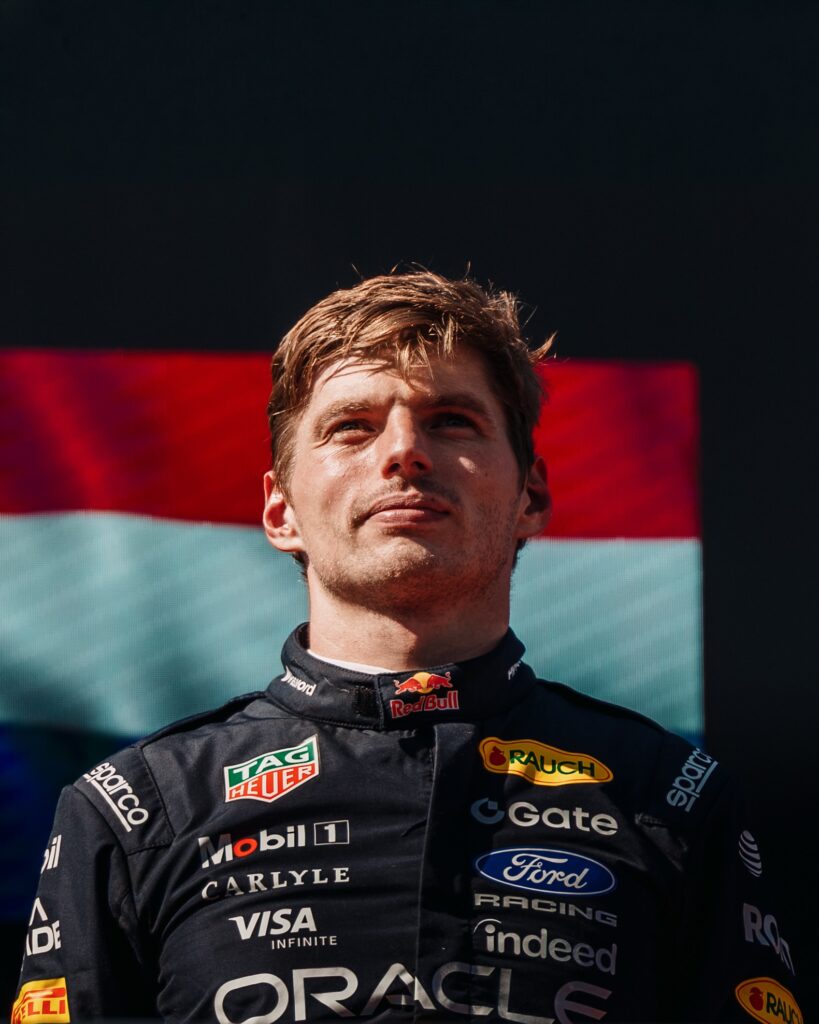
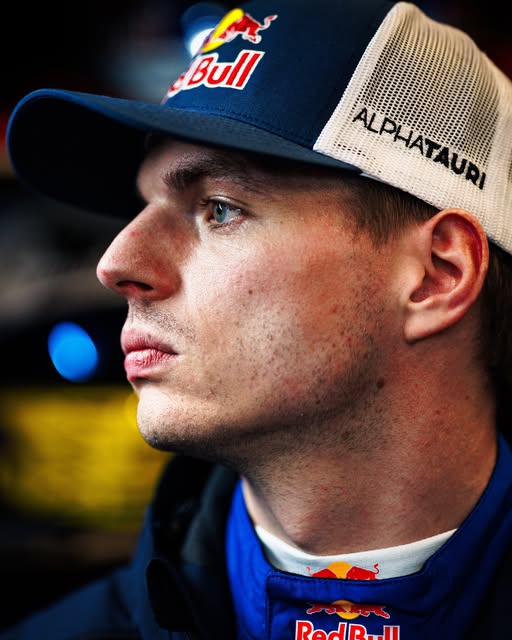
Podium appearances in 2026 are where the visual record of a season gets written — and Verstappen’s second place produced one of the most striking helmet-and-livery combinations of the year. Max Verstappen‘s 2026 race helmet sits in the established Red Bull graphic language: deep navy base, aggressive red geometry across the crown and sides, and the Oracle Red Bull Racing wordmark running along the chin. Under podium lighting, the finish reads as collector-grade even at race distance.
The RB20-series livery that the car carried into 2026 retains the dark navy and matt red split that became synonymous with Verstappen’s championship years, now updated with the new sponsor geometry required by the 2026 regulation cycle. On a podium finish, with Russell’s silver Mercedes to his left and Antonelli just off the rostrum, the contrast is exactly the kind of display-worthy moment that defines a collector replica’s value. A full-size 1:1 replica helmet worn during a race weekend like this one — where Verstappen led the first half of a Grand Prix before a mechanical issue cost him the win — captures a specific chapter of the season rather than a generic trophy moment.
For display purposes, the 2026 podium configuration also places the Red Bull helmet in direct visual conversation with the Mercedes livery that dominated qualifying. The side-by-side of the two most recognisable helmet designs in the paddock, frozen at the moment of a podium ceremony, is the kind of scene that full-size 1:1 collector replicas exist to commemorate. At standard display dimensions — typically mounted at eye level on a 29 × 25 × 35 cm base — the helmet reads correctly from across a room, the same way it reads from the grandstand.
Championship Context — Antonelli Leads, Verstappen Watches
Andrea Kimi Antonelli holds the 2026 championship lead entering this round, and his near-podium finish — beaten to second by Verstappen by a narrow margin — confirms that Mercedes have the fastest package in the field. George Russell’s race win adds to a dominant first half of the season for the Brackley team. Verstappen’s second place is a personal high point of 2026 so far, but the points arithmetic remains unfavourable.
The Canada podium, where Verstappen finished third when one of the Mercedes retired, was opportunistic. This latest result is different: Verstappen earned second place on pace, beating both Mercedes drivers on track at various points before the rear issue intervened. That distinction matters for the championship narrative even if the gap in the standings remains large. A car that can lead the first half of a Grand Prix is a car that is developing in the right direction.
What Red Bull need now — and what Verstappen did not claim to have — is the reliability and the peak-to-peak consistency to string multiple results like this together. In 2026, that has not happened yet. The next race weekends will determine whether this podium was a turning point or an isolated result in a season already tilting toward Antonelli and Mercedes.
Why This Result Belongs in a Display Collection
A 2026 Grand Prix where Verstappen finished second, led Mercedes on pace in the first stint, and personally acknowledged it was the first weekend he felt he could win represents a defined and collectible moment in the season’s timeline. Display replica helmets derive their value from narrative specificity — not from generic ‘champion’ status, but from the precise chapter of a career they capture.
This result is the moment Verstappen went on record confirming Red Bull were competitive enough to fight for wins, even as they acknowledged the car was not yet good enough to do so consistently. That tension — a driver fast enough to lead a Grand Prix, in a car not yet complete enough to win one — is the exact type of sporting moment that full-size 1:1 collector replicas commemorate. A 1.2–1.5 kg display helmet with a 4 mm visor thickness and the 2026 Red Bull livery geometry, displayed at home or in an office, marks this chapter of Verstappen’s four-time world champion career with a concrete, dated artefact.
The 2026 season is still being written. Podiums this early — number two of the year, earned on pace rather than fortune — are where the story is being made, race by race.
“What was satisfying is that this was the first time I felt like actually I could fight for the win. In the middle of the second stint, something happened with the car on the rear axle, which made me lose pace, and that just stayed there until the end.”
— Max Verstappen, post-race 2026
“To be that close to a win I think is great effort from the team.”
— Max Verstappen, 2026 Grand Prix debrief
FAQ
Q: Where did Verstappen finish in the most recent 2026 Grand Prix?
Verstappen finished second, less than 2 seconds behind race winner George Russell. He beat championship leader Andrea Kimi Antonelli — who drove the other Mercedes — to the podium by a narrow margin.
Q: Why couldn’t Verstappen catch Russell in the second half of the race?
A rear-axle problem developed mid-race during Verstappen’s second stint, removing traction, kerb-handling ability and overall pace immediately. He described everything on the rear as ‘completely gone’ from that point until the chequered flag.
Q: How many podiums does Red Bull have in the 2026 season?
Red Bull have two podiums in 2026: Verstappen’s third place in Canada — scored when one of the dominant Mercedes retired — and this second place, which is the team’s first genuinely on-pace podium of the year.
Q: What does a full-size 1:1 replica Verstappen 2026 helmet look like?
The 2026 display replica uses the deep navy and red graphic geometry of the Oracle Red Bull Racing livery updated for the 2026 regulation cycle. Produced at full 1:1 scale and typically weighing around 1.2–1.5 kg, it is a collector and display piece — not certified for protective use of any kind.
Q: Is Red Bull a genuine title contender for the 2026 championship?
Verstappen himself said Red Bull still have too many issues to fight for the title in 2026. Despite this result — their strongest of the season — he was clear that one strong weekend does not close the structural gap to Mercedes, who lead the championship through Antonelli.
Shop Max Verstappen Collection — own a full-size 1:1 display replica helmet from the 2026 season and mark the race weekend where Verstappen went on record saying he could finally fight for a win.
Display and collector replicas only. Not certified for protective use. Full-size 1:1 scale.
This article was written with the help of AI tools. Editorial policy