Blog
Why Verstappen Laughed in the Silverstone Sim
 123Helmets Editorial Team
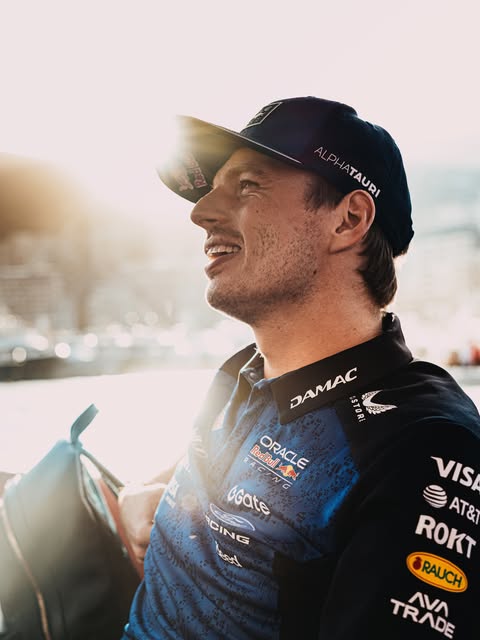
Max Verstappen walked out of a Silverstone simulator session in Milton Keynes laughing — not from joy, but from the sheer strangeness of what the 2026 regulations do to one of the fastest tracks on the calendar. After a podium in Spielberg, the four-time world champion warned that the British Grand Prix will feel like a completely different challenge.
Key Takeaways
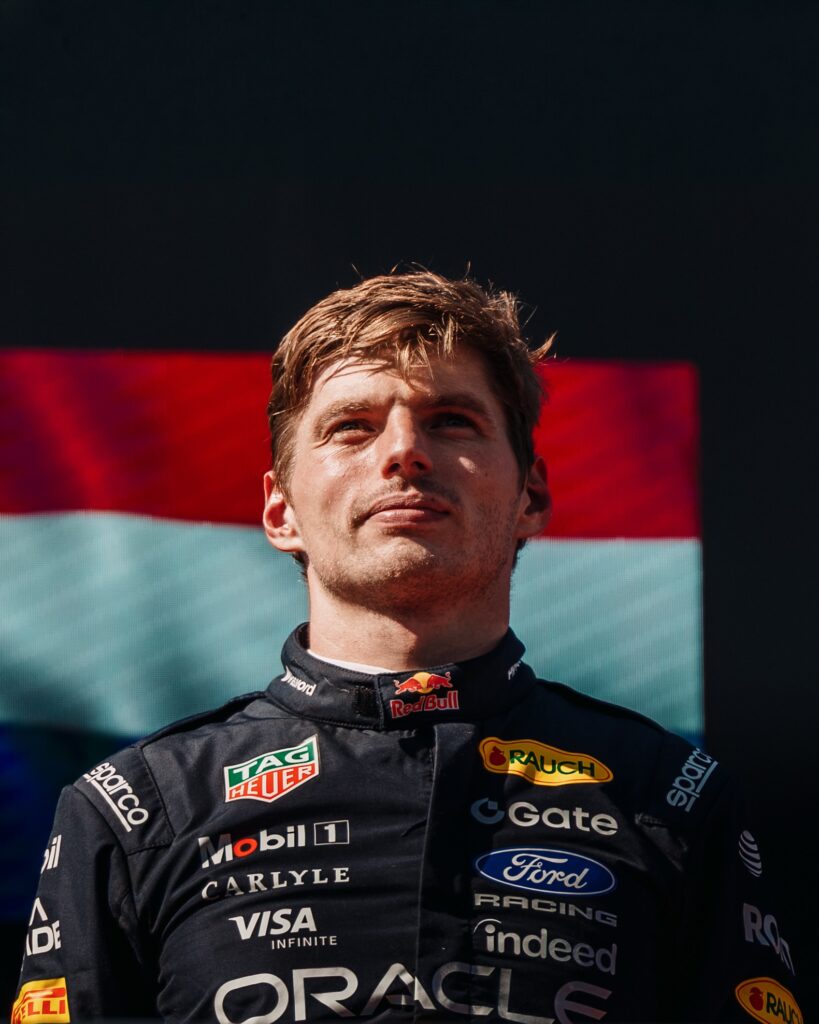
Verstappen secured his second podium of the 2026 season at the Red Bull Ring in Spielberg before heading to Silverstone.
Silverstone’s fast, flowing layout offers almost no heavy braking zones for battery recovery — unlike Monaco or the Red Bull Ring.
The four-time world champion described the 2026 cars as ‘boats’ in slow-speed corners but warned drivers ‘barely have battery around the lap’ at Silverstone.
Podium moments like Spielberg 2026 and the Silverstone livery reveal are exactly the kind of helmet display milestones that define a collector season.
The Laugh That Said Everything
Max Verstappen started laughing mid-lap during his Silverstone simulator runs at the Red Bull factory in Milton Keynes — a spontaneous reaction to how alien the 2026 car felt on one of the fastest circuits on the F1 calendar. The laughter was not amusement. It was the involuntary response of a four-time world champion encountering something genuinely unexpected after several European race weekends that had gradually started to feel more natural.
“Silverstone, I love the track, but I did a few laps on the simulator and I just started laughing,” Verstappen said following his podium finish in Spielberg. “It felt like a different track, to be honest.”
That reaction came directly after Max Verstappen had recorded his second podium result of the 2026 season at the Austrian Grand Prix at the Red Bull Ring — a circuit that, for the new regulations, is actually one of the more forgiving layouts. The contrast Silverstone presented in the simulator was sharp enough to break him mid-run.
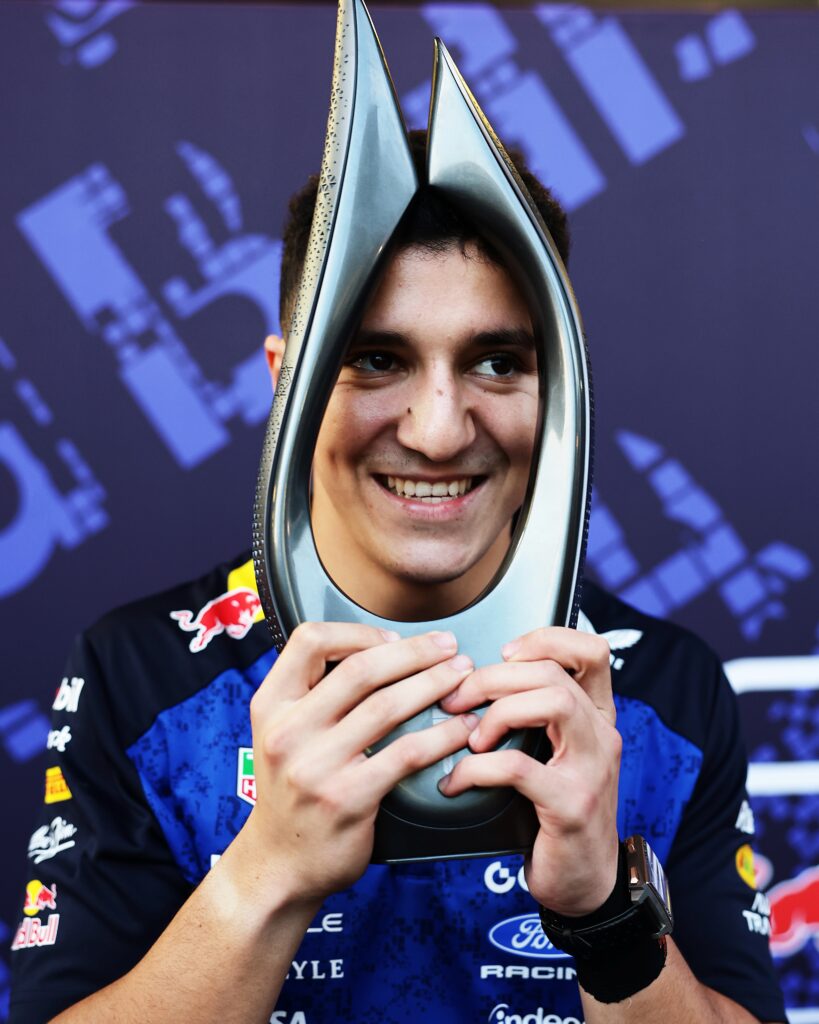
For collectors, that moment — Verstappen on the podium in Spielberg, helmet gleaming under the Austrian sun, already mentally wrestling with what Silverstone would bring — is exactly the kind of crossroads that defines a display-worthy chapter of a season.
Why Silverstone Is a Battery Management Nightmare in 2026
Silverstone drains the 2026 cars’ battery systems lap after lap because its fast, flowing layout provides almost no heavy braking zones where energy can be recovered. This is the core reason the British Grand Prix poses a fundamentally different challenge than every European race that preceded it in the 2026 calendar.
The contrast with Monaco is stark. At the street circuit, drivers could push flat out through qualifying because the abundance of slow corners and braking zones kept energy recovery constant. The Red Bull Ring in the Styrian Alps offered a similar advantage: several hard braking points allowed the hybrid systems to recharge in a relatively natural rhythm.
Silverstone has none of that. Copse, Maggotts, Becketts, Chapel — these are corners taken at speeds that do not generate meaningful regenerative braking. The energy that a driver needs to fire the car out of a corner simply is not being replaced at the rate it is being spent.
Verstappen was direct about what that means in practice: “You barely have battery around the lap. It’s just constant” — a sentence fragment from his post-Spielberg debrief that communicates the relentlessness of the management task more clearly than any lap-time breakdown could. The implication is that Silverstone in 2026 will replay the energy anxiety that characterised the opening rounds of the season, when the new technical regulations were still being understood by every team on the grid.
For Red Bull, that means the specific chassis setup, energy deployment map and tyre strategy chosen for the British Grand Prix will need to account for a near-constant deficit in battery state — something that was simply not true in Austria just one week earlier.
Monaco, Spielberg and the Sliding Scale of 2026 Circuits
The 2026 season has produced a clear sliding scale of circuit difficulty tied entirely to the energy recovery characteristics of each layout, and Silverstone sits at the hardest end of that scale. Monaco sat at the easiest end, where the regulations almost ceased to be a burden in qualifying.
Verstappen himself ranked the circuits explicitly. Monaco first: slow corners and braking everywhere, recovery constant, the car manageable. The Red Bull Ring second: heavy braking at Turn 1 and Turn 3 in particular, enough recovery to keep the systems topped up through the fast middle sector. Silverstone last: a 5.891 km lap of sustained high-speed loading with minimal natural recovery opportunity.
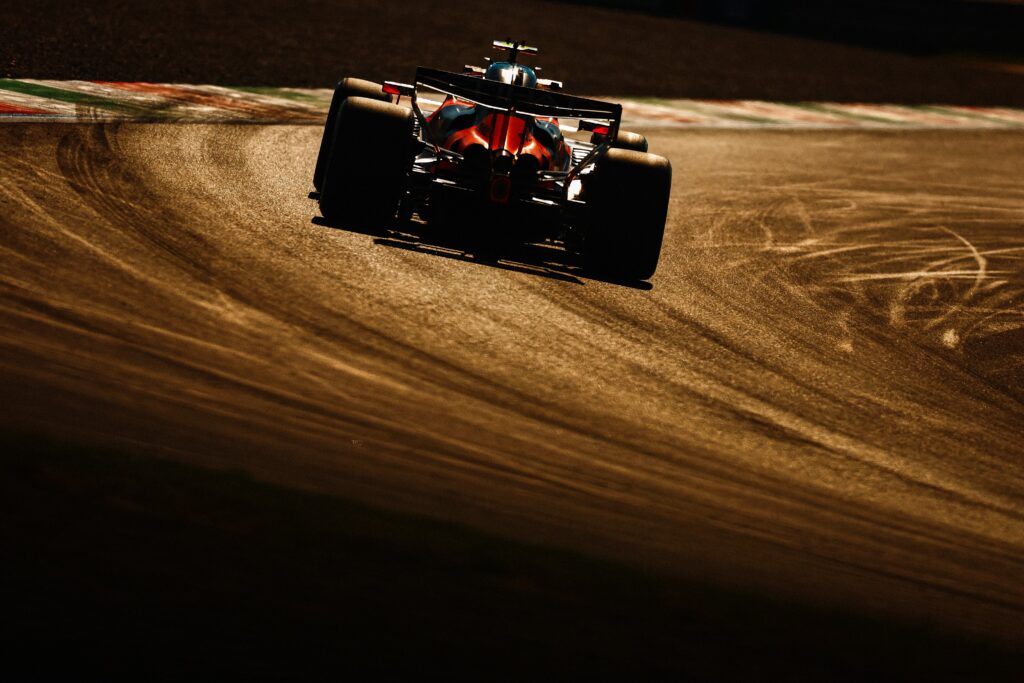
What makes this gradient so relevant to the season narrative is that it directly shapes how drivers appear on track. At Monaco, drivers looked composed. At Spielberg, where Verstappen stood on the podium for the second time in 2026, the cars were more combative but still readable. At Silverstone, the expectation — based on the simulator data — is that the wheel-fighting and speed variation that defined the early rounds of the 2026 season will return at a circuit famous for producing clean, flowing lap imagery.
That duality — Silverstone’s reputation for elegant high-speed corners versus what the 2026 regulations impose on the drivers navigating them — is part of what makes the 2026 British Grand Prix a genuinely distinct visual and sporting event. The helmet liveries and car graphics that complete the podium picture at Silverstone will carry that context for anyone who follows the season closely enough to understand what the drivers were managing.
The 2026 Cars as ‘Boats’ — What Verstappen’s Description Reveals
Verstappen’s description of the 2026 cars as “boats” in slow-speed corners is a direct technical observation, not a dismissal: the new chassis regulations have shifted weight distribution and aerodynamic behaviour in ways that make low-speed handling feel heavy and unresponsive compared to the ground-effect cars of the previous era.
Those ground-effect cars were the opposite in fast corners — planted, predictable, on rails. Drivers and fans alike noted that the sensation of speed was accompanied by a lack of visible struggle. The 2026 regulations have reversed the balance. In slow corners the cars are less agile; in fast corners, where energy management compounds the challenge, drivers are visibly working harder at the wheel.
Many observers within the F1 community have actually welcomed that change on aesthetic grounds. A driver fighting the wheel through Copse at Silverstone is a more striking image than a car that simply follows a groove. The question in 2026 is whether the energy management layer that accompanies that visual drama produces racing that is interesting or merely exhausting to watch.
Verstappen’s simulator laugh is, in a sense, the clearest answer the paddock has offered so far: even for the most experienced driver on the grid, the combination of 2026 chassis behaviour and the specific demands of Silverstone produces a sensation unusual enough to break his concentration mid-lap. That is not a complaint. It is information — and it is the kind of candid technical detail that makes a season’s helmet collection mean something beyond the paint.
Spielberg Podium to Silverstone: The Helmet Collector’s Perspective
Verstappen’s second podium of the 2026 season at Spielberg on 2026-06-22 is a fixed reference point in what is shaping up to be one of the more visually documented seasons in recent memory, and the British Grand Prix that follows is positioned as its contrast — same driver, same helmet livery, completely different racing conditions.
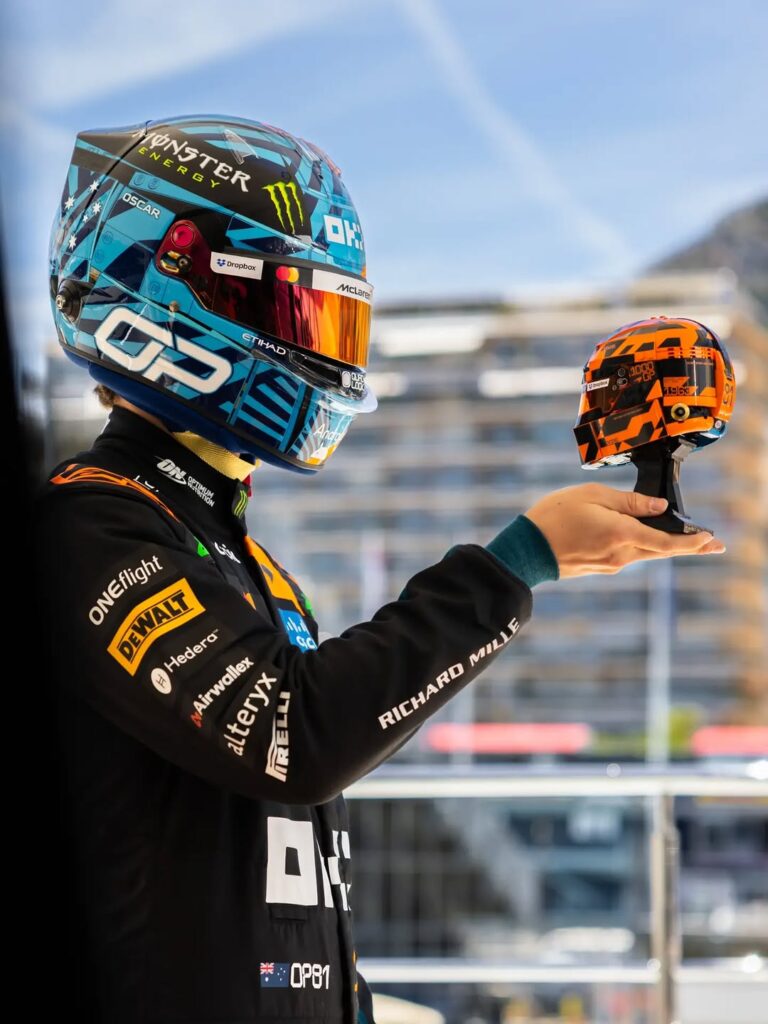
A full-size 1:1 display replica of Verstappen’s 2026 British Grand Prix helmet captures that specific tension: a design worn at the circuit where, in the driver’s own words, the lap felt like a different track entirely. The collector value of a race-era replica is always contextual — it is not just paint and shell, it is the race weekend, the conditions, the results and the quotes that surround it.
At 123Helmets.com, the full-size 1:1 scale replicas are built as display and exhibition pieces — not certified for any protective use, not intended for road or track, but designed to hold the visual identity of a race weekend at collector grade. The Verstappen 2026 livery, rendered at 1:1 scale with the same base geometry as the race original, sits at approximately 29 × 25 × 35 cm in its display orientation, giving it the presence of a genuine paddock artefact on any shelf or stand.
The Spielberg podium and the Silverstone challenge are the two anchor points of this mid-season window for Verstappen collectors. One represents a result already secured; the other represents a test that, even in simulation, made the four-time champion laugh with recognition of its difficulty. Both are worth documenting in replica form — precisely because the 2026 season has produced enough genuine surprises to make each race a distinct chapter rather than a continuation of the last.
Display Quality That Matches the Moment
Exhibition-quality replicas at 1:1 scale preserve the visual record of a season in a way that photographs and broadcast footage cannot. A helmet replica carries the three-dimensional geometry, the colour depth and the physical scale of the real object. For the 2026 British Grand Prix — a race arriving with more pre-event narrative around it than almost any other stop on the European calendar — that physical record matters.
The Verstappen collection at 123Helmets.com covers the full arc of the 2026 season as it develops. Each replica is a display piece and collector item produced to exhibition standards, carrying no certification for safety or protective use, and intended solely for the kind of permanent display that a season this unusual deserves.
“Silverstone, I love the track, but I did a few laps on the simulator and I just started laughing. It felt like a different track, to be honest.”
— Max Verstappen, post-race Spielberg 2026
“You barely have battery around the lap. It’s just constant.”
— Max Verstappen, on Silverstone’s energy management challenge, 2026
FAQ
Q: Why did Max Verstappen laugh during Silverstone simulator runs in 2026?
Verstappen laughed because Silverstone’s fast, flowing layout felt completely alien under the 2026 regulations — the circuit offers almost no heavy braking zones for battery recovery, making energy management a near-constant burden across the entire lap. He described it as feeling like a completely different track.
Q: How many podiums does Verstappen have in the 2026 F1 season before the British GP?
Verstappen had secured two podium finishes in the 2026 season before the British Grand Prix, with his second coming at the Austrian Grand Prix in Spielberg on 2026-06-22.
Q: Which 2026 circuits have been easiest for battery management?
Monaco was the most manageable circuit for battery energy in 2026 because its slow corners and frequent braking zones allow constant recovery. The Red Bull Ring was also relatively straightforward due to its heavy braking zones at Turns 1 and 3.
Q: What size are the Verstappen 1:1 display replica helmets at 123Helmets.com?
The full-size 1:1 scale display replicas measure approximately 29 × 25 × 35 cm in standard display orientation. They are collector and exhibition pieces only — not certified for protective use and not intended for road or track wear.
Q: What does Verstappen mean when he calls the 2026 cars ‘boats’?
Verstappen used the word ‘boats’ to describe how the 2026 cars handle in slow-speed corners — heavy, less agile and less responsive than the ground-effect cars of the previous era, which were planted and predictable through fast sections but are no longer the baseline in 2026.
Shop Max Verstappen Collection
Display and collector replicas only. Not certified for protective use. Full-size 1:1 scale.
This article was written with the help of AI tools. Editorial policy