Blog
Austria 2026 GP: What the Teams Said
 123Helmets Editorial Team
George Russell converted pole position into victory at the 2026 Austrian Grand Prix, holding off Max Verstappen in the closing laps while Kimi Antonelli charged through the field to complete a Mercedes one-three. Here is what the teams said — and why this podium belongs in every serious F1 collector’s display case.
Key Takeaways
George Russell led the 2026 Austrian Grand Prix from pole and held a 10-second lead over Verstappen before managing the gap to the flag for his first win since Australia.
Antonelli ran wide in the opening laps, dropped positions, and had to fight back — yet his raw pace in the final stint brought him to Verstappen’s rear bumper by the closing tours.
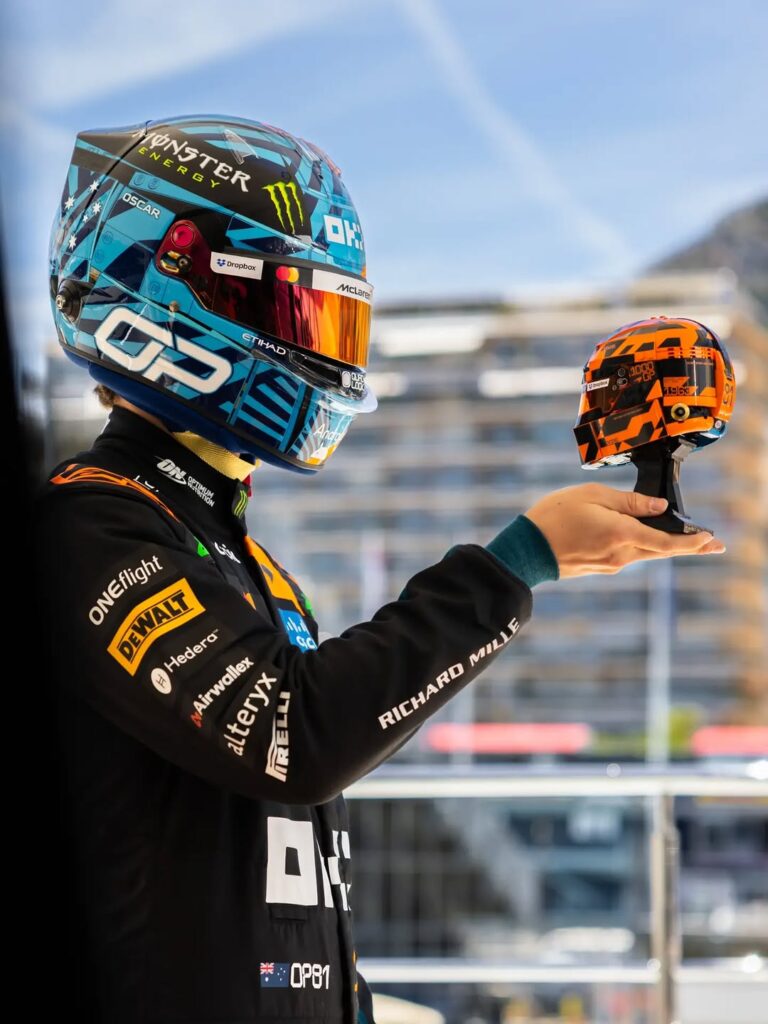
Mercedes placed two cars in the top three, making this one of the most display-worthy podium livery moments of the 2026 season for helmet and replica collectors.
The next round is Silverstone — a sprint weekend — where every team will need to be race-ready from session one, adding further collector context to the Austria helmet designs.
Russell Converts Pole: A Win Built on Margin
George Russell won the 2026 Austrian Grand Prix by converting pole position into a controlled race victory, building a 10-second lead over Max Verstappen before managing the gap to the flag. That kind of structured, pressure-proof drive is exactly what transforms a race weekend into a collector moment — the helmet worn on a dominant pole-to-win Sunday carries a different weight than one from a midfield recovery.
Russell’s race was defined by the first stint. He got off the line cleanly from pole, held his position, and built enough of a buffer to pit on the team’s terms rather than reacting to Verstappen’s timing. Undercut vulnerability — that period where a rival pits first and hunts the leader on fresh rubber — never materialised because the gap was already too large. When the pit cycle cleared, Russell had roughly 10 seconds in hand and a final stint that would test his composure rather than his outright pace.
“I’m really pleased with that result. It’s never straightforward around here and we were under pressure for much of the race, particularly in the final stint, so to convert pole into the win is very satisfying. The team did a great job with the strategy,” Russell said in the team debrief. That satisfaction is readable in the numbers: the first win since Australia, delivered with a clean visor and a livery that never dropped lower than P1 once the lights went out.
For Mercedes collectors, a 2026 Austria race-day helmet replica — representing a pole-sitter who backed it up — sits alongside a very short list of complete weekend statements from this season.
Verstappen: The Dutchman Who Closed But Could Not Pass
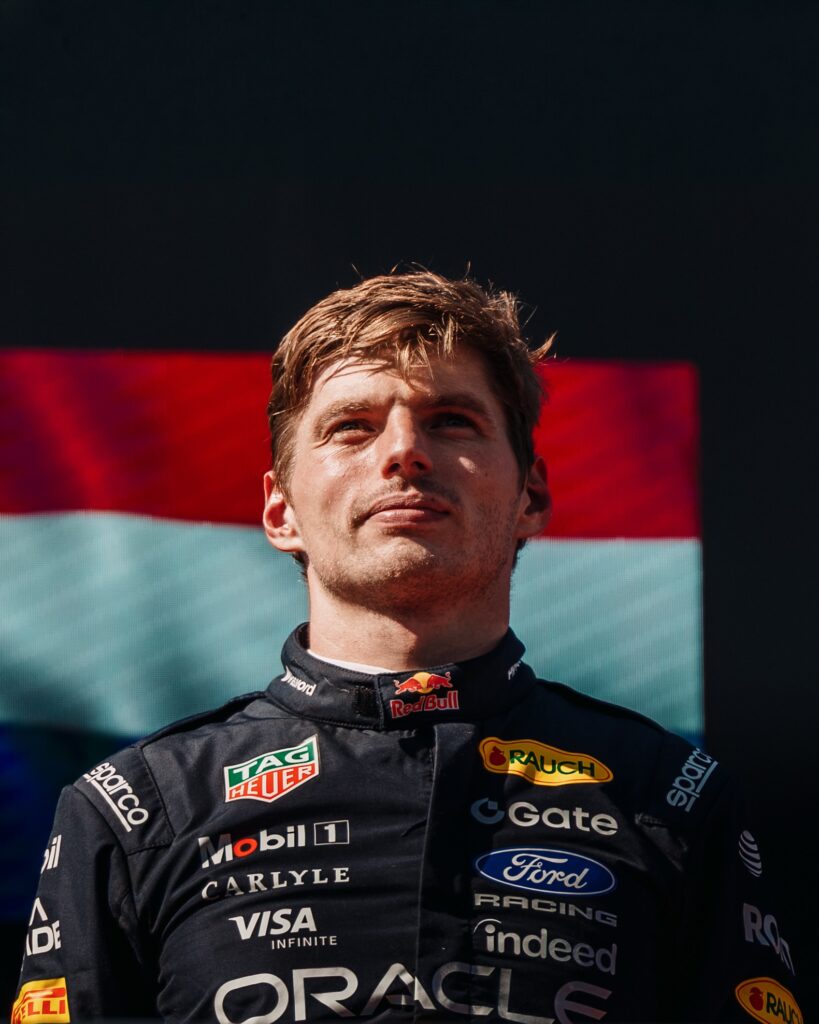
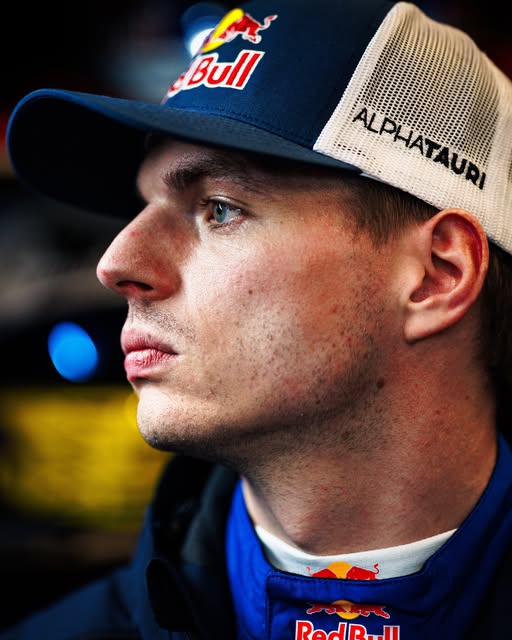
Max Verstappen finished second at the 2026 Austrian Grand Prix, closing on Russell in the final stint but ultimately running out of time and clear air to mount a genuine pass attempt. P2 at a home-adjacent race — Austria sits inside the Red Bull family heartland — still makes the Max Verstappen 2026 Austria helmet one of the standout display pieces of the mid-season run.
The visual story of this race, from a collector’s perspective, is Verstappen in the closing laps: the gap from roughly 10 seconds coming down as Russell managed tyres and track position simultaneously. That pursuit — a two-car story compressed into the final rotation of a grand prix — is the kind of podium narrative that defines why race-day replica helmets hold a different status to generic season-opener designs.
Verstappen’s helmet livery in the 2026 Austrian round carries the added layer of geography. Red Bull Ring is, in organisational and emotional terms, a circuit where Red Bull colour is woven into the infrastructure. A second-place finish there, chasing down the race leader, is a clean visual record of a hard race run without the win — which is, for many collectors, a more honest race story than a comfortable victory.
Antonelli’s Recovery: Podium the Hard Way
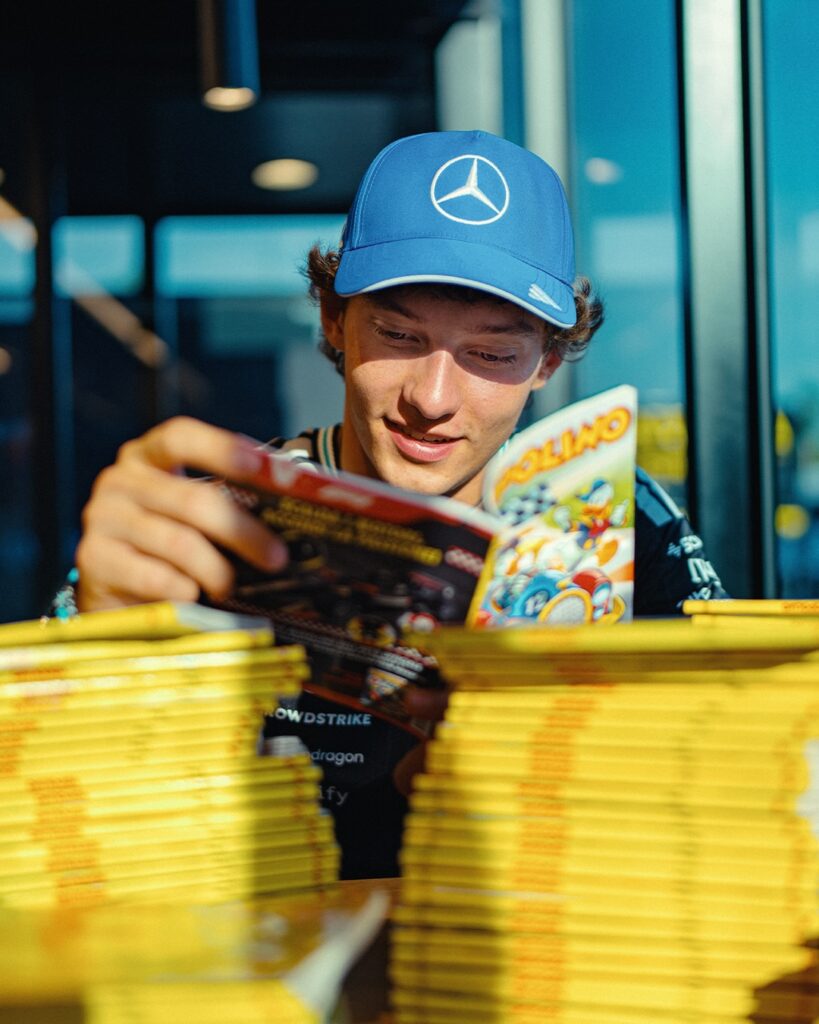
Kimi Antonelli finished third at the 2026 Austrian Grand Prix after one of the more demanding recovery drives of his season to date, losing positions in the opening laps, running long in his first stint, and then posting the pace needed to close right onto Verstappen’s gearbox before the flag.
The Italian ran wide early, which cost him track position and forced a fight back through the field rather than a clean strategy execution. The team left him out longer than ideal in the first stint, which Antonelli acknowledged cost him time in the overall race. What he did in the final stint, however, was the headline: rapid enough to close to within attacking distance of Verstappen for P2, running out of laps before he could put a move together.
“It was not a straightforward race from my side. The first stint wasn’t where it needed to be and I struggled a bit with the brakes early on. After that, the pace was much better and I was able to get back into the fight. I think if we had a few more laps, it could have been an interesting battle for P2 at the end,” Antonelli said. That quote alone — specific, honest, forward-looking — adds context to why the 2026 Austria Antonelli race helmet carries a story worth displaying.
He also pointed ahead: “I’m looking forward to Silverstone. It’s always a special circuit and, with it being a sprint weekend, it will be important to be on it from the first session.” For Mercedes collectors building a chronological 2026 display, the Austria helmet sits directly before what promises to be a packed Silverstone sprint weekend — two very different race formats, two distinct design moments.
“There is still a lot for me to learn, and this weekend has been a good reminder of that. I will take the lessons and come back stronger next weekend,” Antonelli added. That self-assessment, delivered from a podium position, is the kind of line that ages well on a display shelf.
The Podium Livery Frame: What Collectors Are Looking At
The 2026 Austrian Grand Prix podium — Russell, Verstappen, Antonelli — produced three distinct helmet livery stories in one frame, which is the collector calculus that makes a race recap worth cataloguing beyond the raw timing sheets.
Russell’s design represents a complete weekend: pole on Saturday, victory on Sunday, a 10-second lead managed to the flag. That continuity — qualifying colour and race-day wear aligned across a dominant two-day stint — gives the Austria replica a clean single-narrative identity. Full-size 1:1 display replicas at this grade reproduce the livery at genuine race scale, typically with a visor panel running 26 mm in standard collector spec, and the helmet shell sitting at a circumference consistent with the driver’s own head size rather than a scaled-down souvenir format.
Verstappen’s P2 at Red Bull Ring adds the emotional geography discussed above. But it also adds the specific visual of a pursuit: a helmet that spent the closing laps of the race inside the 10-second window, closing. Display context matters here — this is not a win helmet, and collectors who curate by narrative rather than result only will find that distinction valuable.
Antonelli’s third place is perhaps the most visually complex of the three. A rookie — or near-rookie at this level of the 2026 season — posting the fastest pace of the final stint and arriving on the podium after running wide, losing positions, and fighting back: the helmet from that day is a record of a driver learning the race at the highest speed. A full-size 1:1 display piece capturing that moment has a different conversation-starter quality to a clean lights-to-flag result.
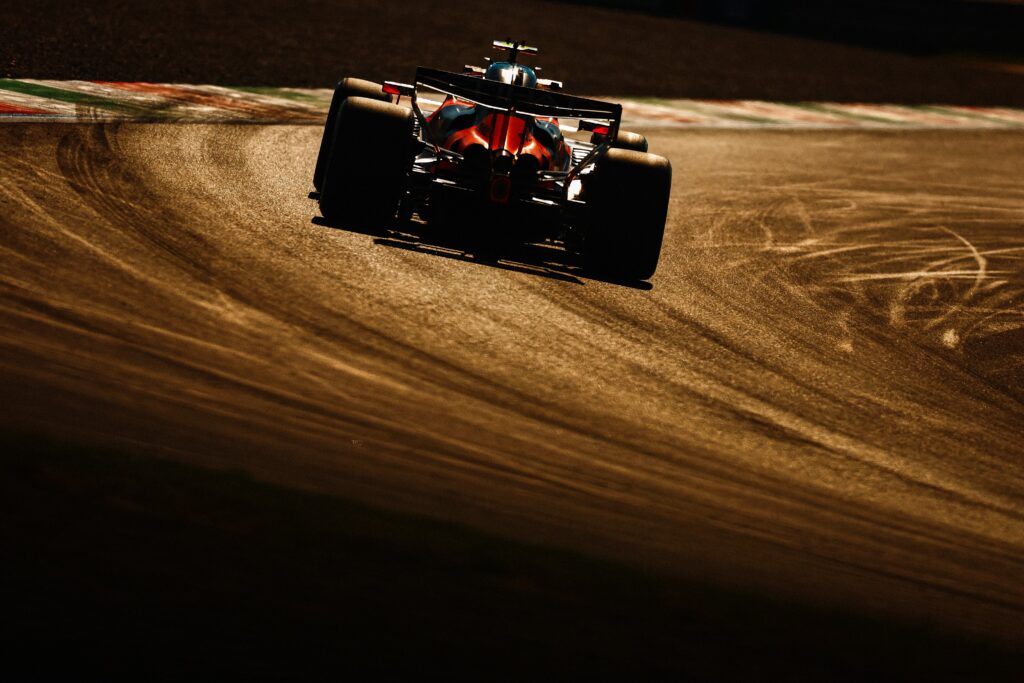
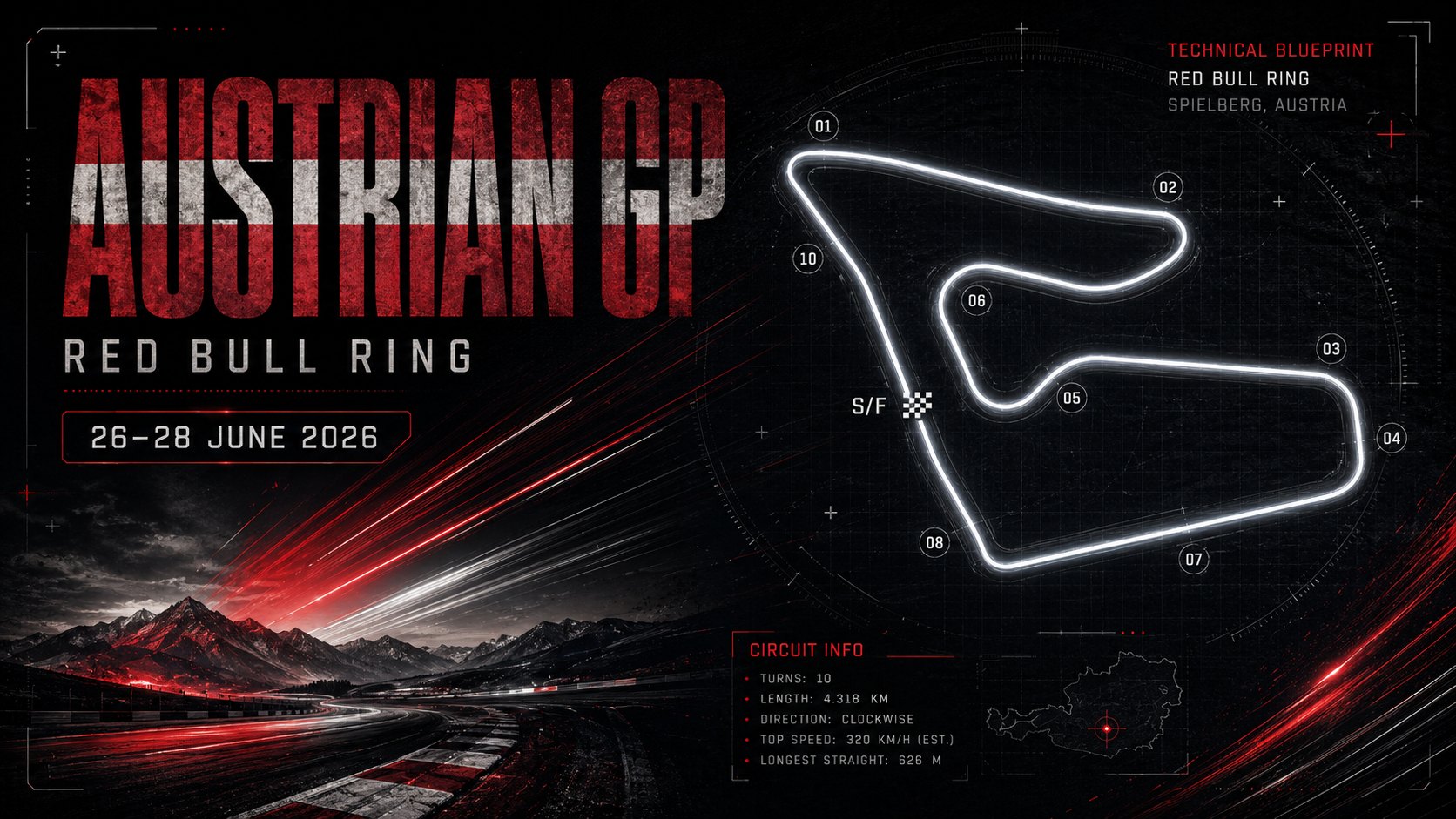
The Austrian round typically runs at Red Bull Ring, a circuit just 4.318 km in length — one of the shorter layouts on the calendar — which compresses action and makes every lap count in the overall race arithmetic. The intensity that compression creates is part of what makes the 2026 Austria helmet set a tight, readable display trio.
What This Race Means for the 2026 Display Calendar
The 2026 Austrian Grand Prix sits at a specific point in the season’s collector timeline: mid-year, post-Canada, pre-Silverstone sprint, with the championship standings still close enough that every result carries genuine weight in the points narrative. Russell’s win was his first since Australia, meaning the gap between those two display-worthy moments — Australia win, Austria win — spans a significant stretch of the 2026 calendar and adds scarcity value to both endpoints.
Antonelli’s podium reinforces that Mercedes has a two-driver collection story running through 2026, not a single headline act. Collectors building a full-season display wall or cabinet have two helmets from the same race, the same constructor colour, and two entirely different race stories to tell side by side.
Next up is Silverstone, confirmed as a sprint weekend. Sprint formats produce qualifying sessions, sprint race results, and full grand prix results within a single event — which means more distinct helmet moments per weekend than a standard race. The 2026 British Grand Prix will almost certainly generate its own display-worthy narrative, particularly given Silverstone’s historical status and the weight the British crowd places on that race. Austria 2026 is therefore the last standard-format race before that sprint weekend intensity, giving it a clean definitional position in the 2026 collection sequence.
For any collector thinking in terms of the full year rather than the single event, Austria 2026 is a round to log: one winner on a dominant pole conversion, one challenger who closed but fell short, one recovery driver who showed the pace to threaten the podium top step with two more laps. Three helmets, one race, three different stories — and all of them display-worthy.
“It was not a straightforward race from my side. The first stint wasn’t where it needed to be and I struggled a bit with the brakes early on. After that, the pace was much better and I was able to get back into the fight. I think if we had a few more laps, it could have been an interesting battle for P2 at the end.”
— Kimi Antonelli, 2026 Austrian Grand Prix
“I’m really pleased with that result. It’s never straightforward around here and we were under pressure for much of the race, particularly in the final stint, so to convert pole into the win is very satisfying. The team did a great job with the strategy.”
— George Russell, 2026 Austrian Grand Prix
“Congratulations to George on the win today. He did a great job managing the race, especially in the final stint under pressure. It’s a strong result for the whole team to have both cars scoring well and bringing home good points.”
— Kimi Antonelli, 2026 Austrian Grand Prix
“I’m looking forward to Silverstone. It’s always a special circuit and, with it being a sprint weekend, it will be important to be on it from the first session.”
— Kimi Antonelli, 2026 Austrian Grand Prix
FAQ
Q: Who won the 2026 Austrian Grand Prix?
George Russell won the 2026 Austrian Grand Prix, converting pole position into a race victory with a 10-second lead over Max Verstappen in the closing stages. It was his first Grand Prix win since Australia.
Q: What was Kimi Antonelli’s result in the 2026 Austrian GP?
Kimi Antonelli finished third at the 2026 Austrian Grand Prix. He lost positions early after running wide, ran long in his first stint, but posted strong pace in the final stint to close onto Verstappen before running out of laps.
Q: What makes the 2026 Austria helmet replicas worth collecting?
The 2026 Austrian Grand Prix produced three distinct podium narratives — a dominant pole-to-win for Russell, a closing pursuit by Verstappen, and a recovery podium by Antonelli — giving collectors three display pieces each with a specific, verifiable race story. Full-size 1:1 display replicas capture those liveries at genuine race scale and are exhibition-quality collector items, not certified for protective use.
Q: How long is the Red Bull Ring circuit where Austria 2026 was held?
The Red Bull Ring measures 4.318 km, making it one of the shorter circuits on the F1 calendar. That compact layout compresses race action and means every lap — and every position change — carries amplified importance in the overall result.
Q: What F1 race comes after the 2026 Austrian Grand Prix?
The next round after the 2026 Austrian Grand Prix is the British Grand Prix at Silverstone, confirmed as a sprint weekend. Antonelli specifically named Silverstone as a circuit requiring immediate readiness from the first session given the compressed sprint format.
Browse F1 Helmet Collection — display-quality 1:1 replicas from the 2026 season, including podium race editions.
Display and collector replicas only. Not certified for protective use. Full-size 1:1 scale.
This article was written with the help of AI tools. Editorial policy