
Blog
Monaco GP Recap: Antonelli’s Breakthrough and Five Display-Worthy Moments
 123Helmets Editorial Team
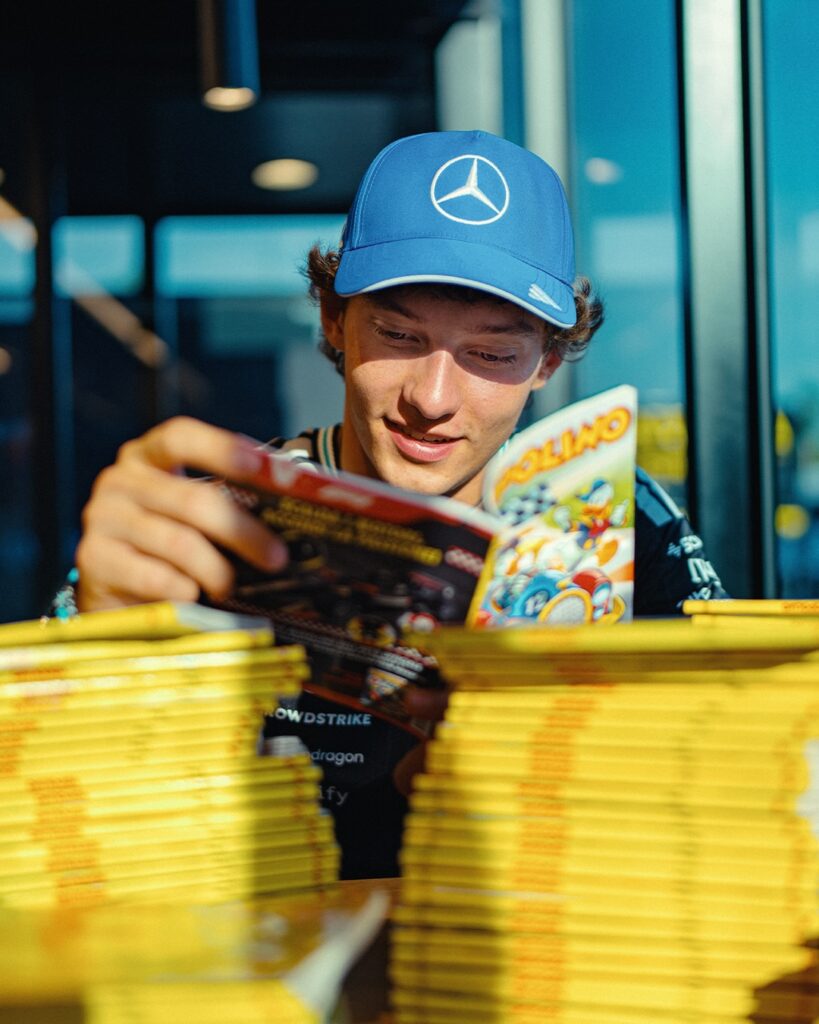
Kimi Antonelli walked into the Principality as a 19-year-old under pressure and walked out as a Monaco Grand Prix winner. The 78-lap procession around the 3.337 km street circuit produced a podium worth framing, helmet liveries worth studying and storylines that collectors will be chasing for years. Here are the five quick takeaways from a weekend that reshaped the title race — viewed through the lens of helmet design, podium visuals and the display pieces this race will leave behind.
Key Takeaways
Antonelli converted a Saturday qualifying lap into a controlled win over 78 laps of the 3.337 km layout
Hadjar took his first podium in Red Bull colours after Verstappen’s race ended early with power unit failure
Russell’s low-speed struggles left him with zero points, swinging momentum firmly toward Antonelli
Monaco’s podium produced three distinct helmet liveries collectors are already tracking for 1:1 display replicas
Antonelli’s Saturday lap set the tone for Sunday
Monaco rewards the driver who can dance on the edge for 19 corners without scuffing a barrier, and Antonelli did exactly that. At 19 years old, on a 3.337 km layout where one wrong steering input ends the weekend, the rookie produced the lap that mattered. Pole position around the Principality is worth more than anywhere else on the calendar — by some estimates over 70 percent of Monaco winners start from the front row — and Antonelli treated the chance accordingly.
The helmet on the pole-sitter
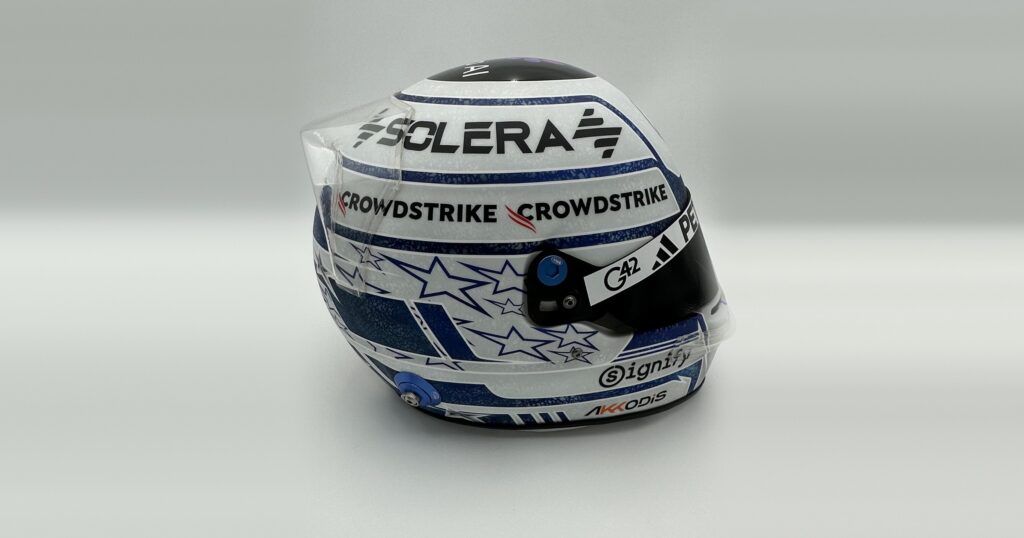
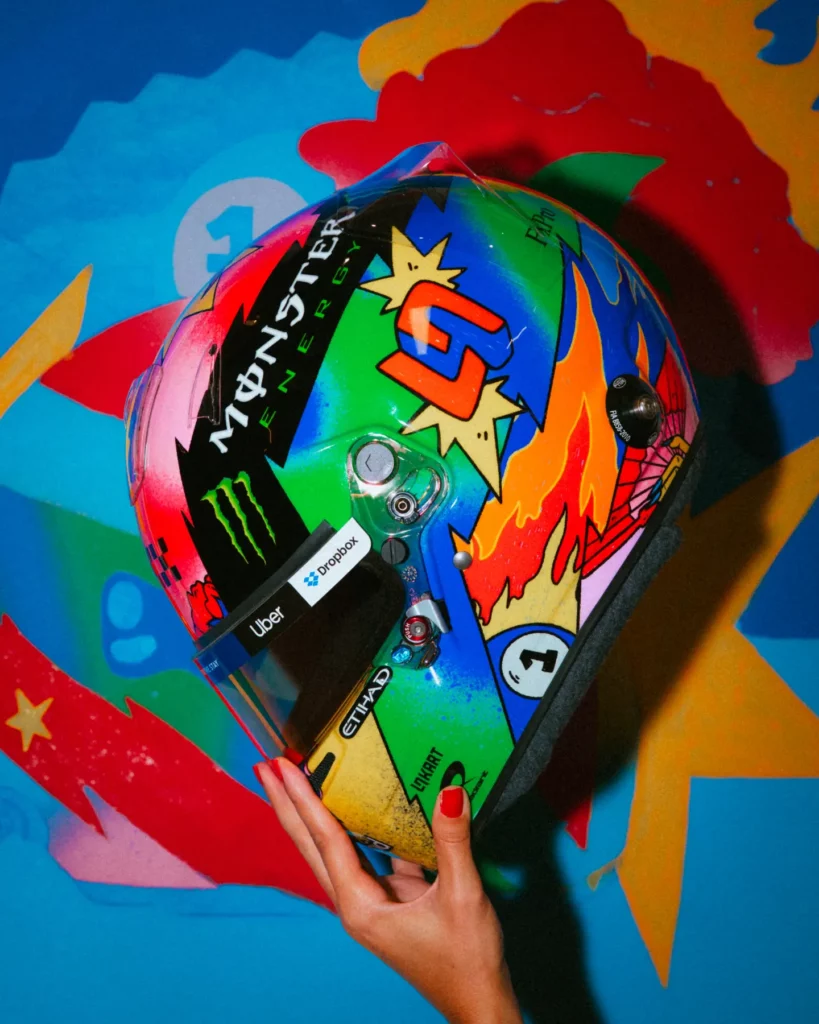
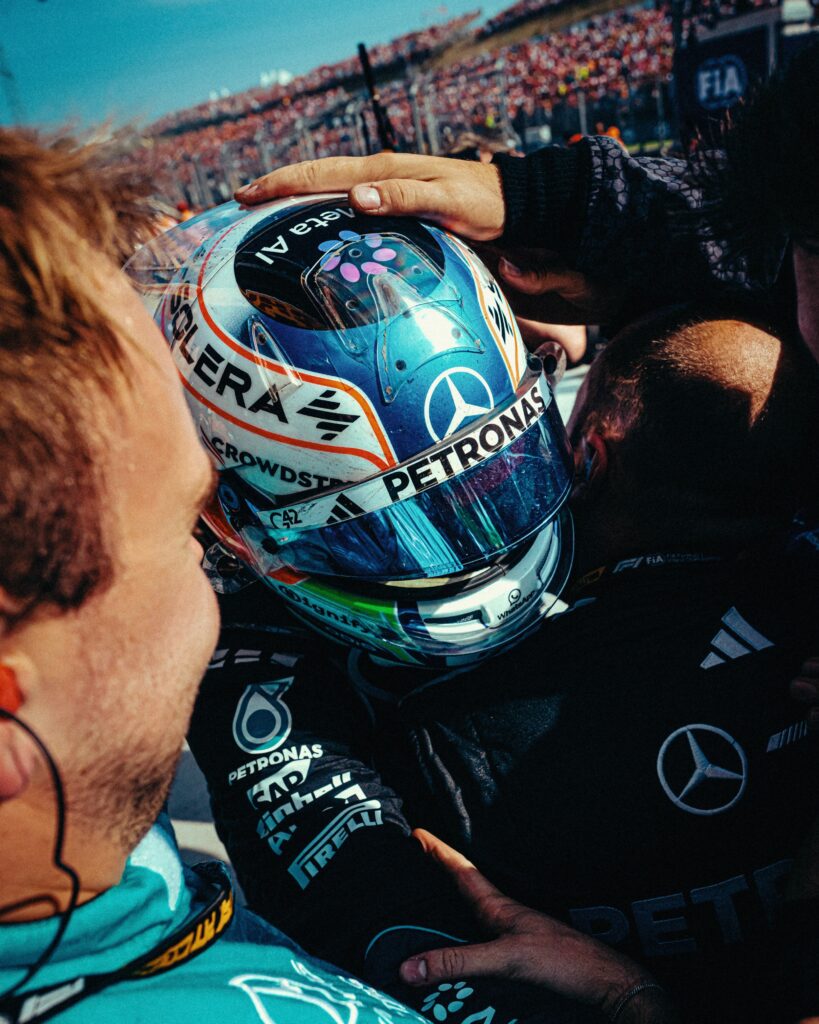
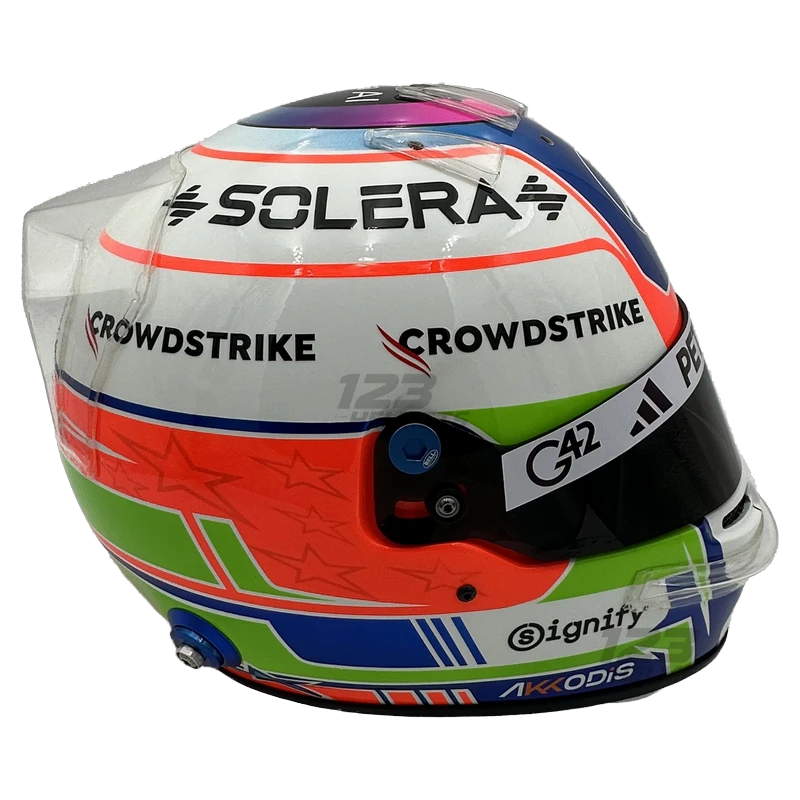
Antonelli’s lid carried a matte base with chrome accents catching the Mediterranean sun on the slow laps to the grid. For collectors, this is the kind of weekend that pushes a specific helmet design into the must-have category for a 1:1 display replica. Monaco-specific liveries tend to age into the most-requested exhibition pieces in any private collection, and a maiden Monaco win lifts the visual significance even further.
The race itself was a 78-lap exercise in tyre management and pit-window discipline. Antonelli’s pace was measured rather than spectacular — exactly what the circuit demands once track position is locked in. The result: a clean victory and a helmet that will be on collector wishlists through the rest of the season.
Hadjar rescues Red Bull’s weekend on the podium
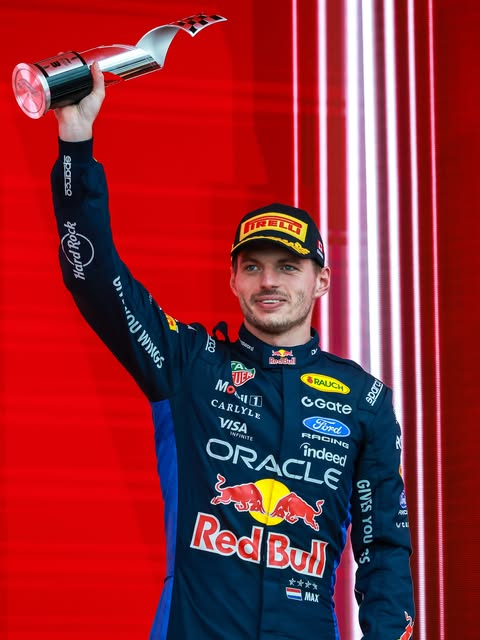
Max Verstappen’s Monaco Grand Prix lasted barely the formation lap. After surprising the paddock by qualifying the RB22 on the front row, the Dutchman reported power unit issues during the warm-up tour, described the pre-start procedure as messy, and lost drive the moment he released the clutch. From front-row optimism to retirement before turn one — a brutal swing for Laurent Mekies’ squad.
Hadjar’s first Red Bull podium
Isack Hadjar inherited the responsibility of saving the weekend, and despite his own vocal radio complaints about power unit niggles, he brought the car home for his first-ever podium in Red Bull Racing colours. Hadjar’s helmet — a French tricolour-influenced design with a high-gloss finish — became the unexpected centrepiece of the rostrum visuals. For collectors who track “first podium” helmets as a category, this is precisely the kind of milestone lid that gains long-term display value.
What made the visual work
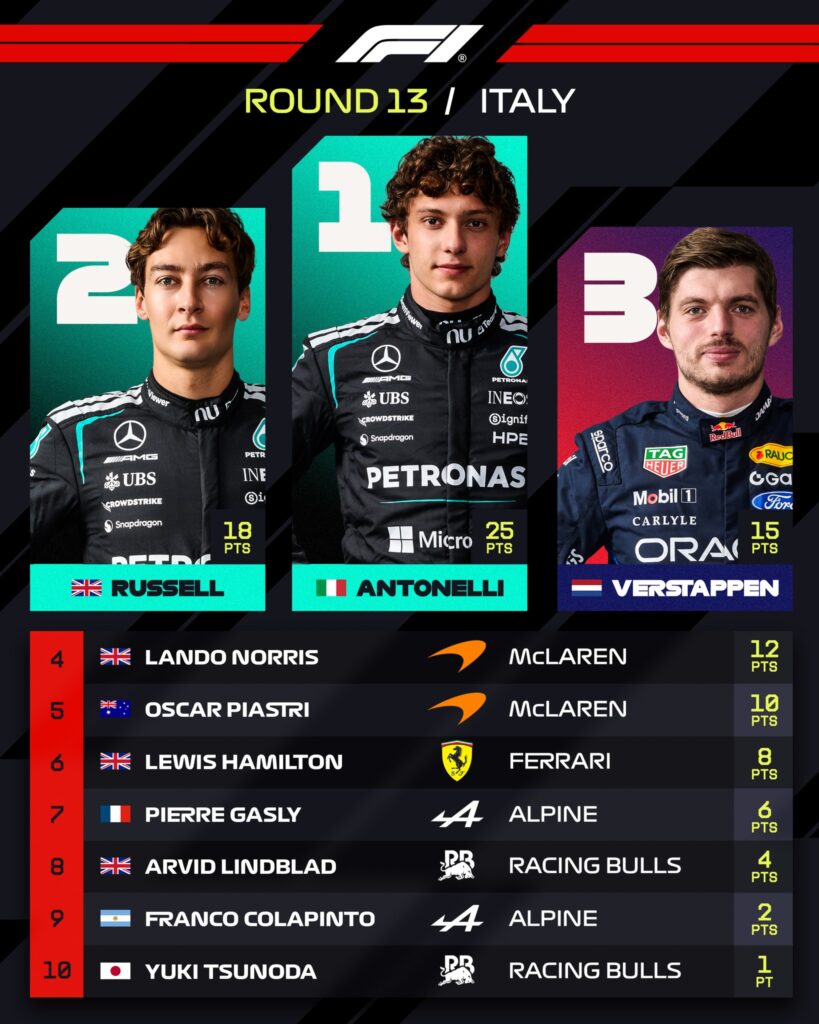
The podium contrast was striking: Antonelli’s chrome-accented lid, Hadjar’s tricolour design, and the third-place helmet completing a three-shot that photographers will replay for months. Three drivers, three colour languages, one frame — the sort of grouping that informs how collectors arrange their helmet shelves at home.
Russell’s miserable Sunday hands Antonelli the title momentum
George Russell arrived in Monaco with pre-weekend mind games aimed at his rookie team-mate. He left with zero points. Low-speed balance issues plagued the Briton through qualifying, and Sunday’s race brought no recovery. For a driver fighting at the front of the championship, a blank Monaco scoresheet is a damaging result — Monaco is worth the same 25 points as any race, but the psychological weight of being beaten here by a team-mate is heavier.
Antonelli now sits in the driving seat for the title fight in a way that looked unlikely three weekends ago. The internal Mercedes battle has tilted, and the helmet collectors are paying attention: a rookie-vs-team-mate championship duel inside the same garage historically produces some of the most collectible helmet variants of any season, because both drivers tend to introduce special editions to mark the rivalry.
Helmet design as a storyline
Antonelli’s lid leans into a contemporary minimalist language — flat panels, restrained graphics, one or two signature colour blocks. Russell’s, by contrast, uses a busier graphic treatment. Two team-mates, two visual philosophies. For a display wall, the pair makes an excellent side-by-side study in modern F1 helmet design direction.
Monaco’s hold-up tactics divide the paddock
Carlos Sainz spent part of his post-race media session criticising what he called “stupid risks” from rivals during qualifying, asking how a veteran like Nico could make those calls. The comments highlight a wider debate: Monaco’s hold-up tactics — drivers deliberately backing up the pack on out-laps to create gaps — have become an entrenched feature of Saturday running.
Anti-racing or ingenuity? The paddock is split. What is not in dispute is that Monaco’s qualifying session remains the single most-watched 60 minutes of any race weekend, and the helmets visible in those onboard shots become the most-photographed lids of the year. For collectors, this is why Monaco-spec display replicas hold their visual value: the helmet appears in more high-quality broadcast frames during one Monaco qualifying than at almost any other event.
The visual signature of Monaco lids
Several drivers run Monaco-specific designs or subtle one-off accents — a tricolour stripe, a Casino Square reference, a Loews hairpin nod. These details are what separate a generic season helmet from a true collector display piece. The 2026-spec lids on show this weekend carried the new aero-influenced shell shape, with deeper rear ducts and a slightly raised crown profile compared to previous generations.
Why this Monaco podium matters for collectors
A Monaco podium with three distinct helmet designs — a rookie winner, a first-time Red Bull podium-getter, and a third placer completing the frame — is the kind of visual moment that drives demand for full-size 1:1 collector replicas. Display pieces tied to historical “firsts” — first win, first podium, first Monaco appearance in team colours — consistently become the most-requested exhibition items in any private collection.
What makes a Monaco helmet collectable
Three factors elevate a Monaco-weekend helmet for display purposes. First, the on-track visibility: Monaco’s slow corners produce more clear helmet camera angles than any other circuit. Second, the livery specificity: many teams run Monaco-only accents that appear on no other weekend of the season. Third, the historical weight: Monaco wins are catalogued separately in F1 history, and the helmet worn on the day becomes part of that catalogue.
Display considerations for 1:1 replicas
Full-size 1:1 helmet replicas are typically displayed at eye level or slightly above, on a single-helmet stand with a depth of around 27 cm to accommodate the rear aero profile. A podium-trio display — three helmets from the same race weekend — requires roughly 90 cm of shelf width to allow visual separation between each lid. The Monaco podium from this weekend would make exactly that kind of three-helmet exhibition piece: Antonelli centre, Hadjar and the third-placer flanking, with the matte and gloss finishes contrasting under directional lighting.
For anyone building a season-long display collection, the Monaco round is the anchor weekend. The helmets seen on this rostrum will define the visual memory of the 2026 season as much as the championship table itself.
“How can a veteran like Nico do this? These are stupid risks.”
— Carlos Sainz on Monaco qualifying tactics
“I felt it during the formation lap. The pre-start procedure was messy and I lost the power unit as soon as I released the clutch.”
— Max Verstappen on his retirement
FAQ
Q: Who won the Monaco Grand Prix?
Kimi Antonelli, age 19, won after converting a strong Saturday qualifying lap into a controlled 78-lap drive on the 3.337 km street circuit.
Q: What happened to Max Verstappen?
Verstappen qualified on the front row but reported power unit issues during the formation lap and lost drive at the start, ending his race almost immediately.
Q: Why is Hadjar’s podium significant?
It was his first-ever podium in Red Bull Racing colours, which makes the helmet he wore on the rostrum a milestone display piece for collectors.
Q: Why are Monaco helmets considered collectable?
Monaco produces more clear helmet broadcast angles than any other circuit, many teams run Monaco-only accent designs, and Monaco wins carry separate historical weight in F1 records.
Q: Are these 1:1 helmet replicas wearable?
No. These are display and collector replicas only, produced as full-size 1:1 exhibition pieces for shelves, cabinets and private collections. They are not intended for any protective or wearable purpose.
Browse F1 Helmet Collection
Display and collector replicas only. Not certified for protective use. Full-size 1:1 scale.
This article was written with the help of AI tools. Editorial policy