Blog
Youngest Monaco GP Winners: Antonelli Joins Lauda and Räikkönen in the Record Books
 123Helmets Editorial Team
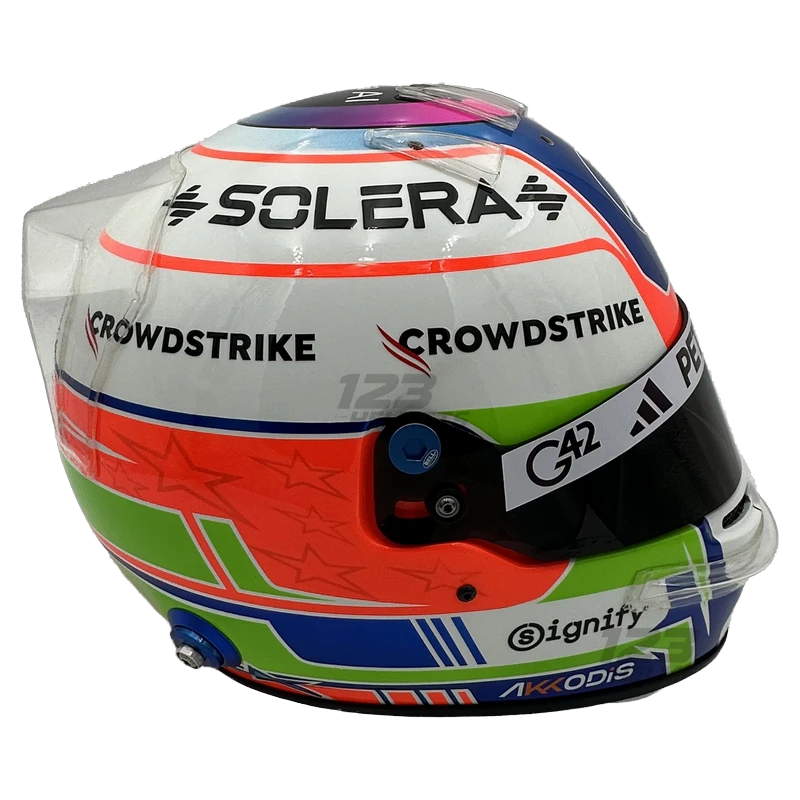
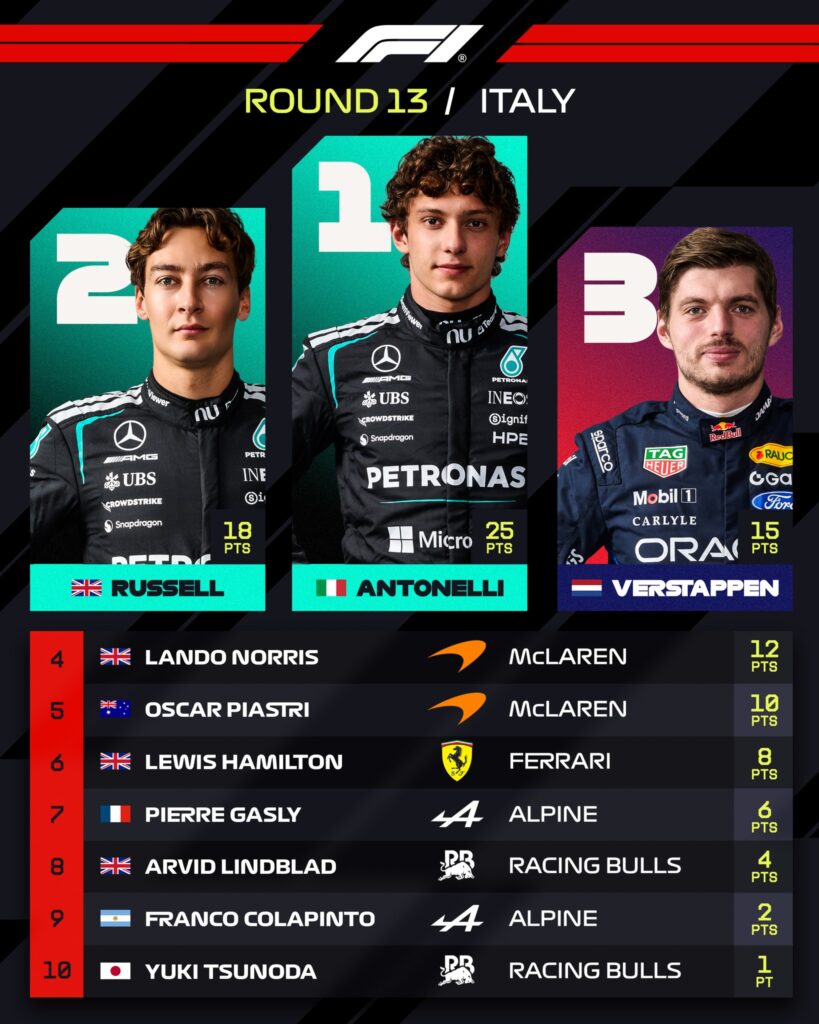
At 19 years old, Kimi Antonelli rewrote the Monaco Grand Prix history books, becoming the youngest driver ever to win on the streets of the Principality. His victory places him alongside Niki Lauda’s 1975 breakthrough and Kimi Räikkönen’s dominant 2005 performance — three wins separated by decades, united by youth, talent, and helmets that now belong on collector shelves.
Key Takeaways
Kimi Antonelli claimed the Monaco Grand Prix victory at 19 years old, the youngest winner in the history of the race
Niki Lauda led 74 of 75 laps in the 1975 Monaco GP aboard the Ferrari 312T, winning by nearly 3 seconds over Emerson Fittipaldi
Kimi Räikkönen led all 78 laps of the 2005 Monaco GP in the McLaren MP4-20, finishing 14 seconds ahead of Nick Heidfeld
Three generations of Monaco-winning helmets — Lauda’s red Ferrari livery, Räikkönen’s ice-blue McLaren design, and Antonelli’s modern Mercedes graphics — make for striking 1:1 display pieces
Antonelli’s Monaco Victory: A New Name in the Record Books
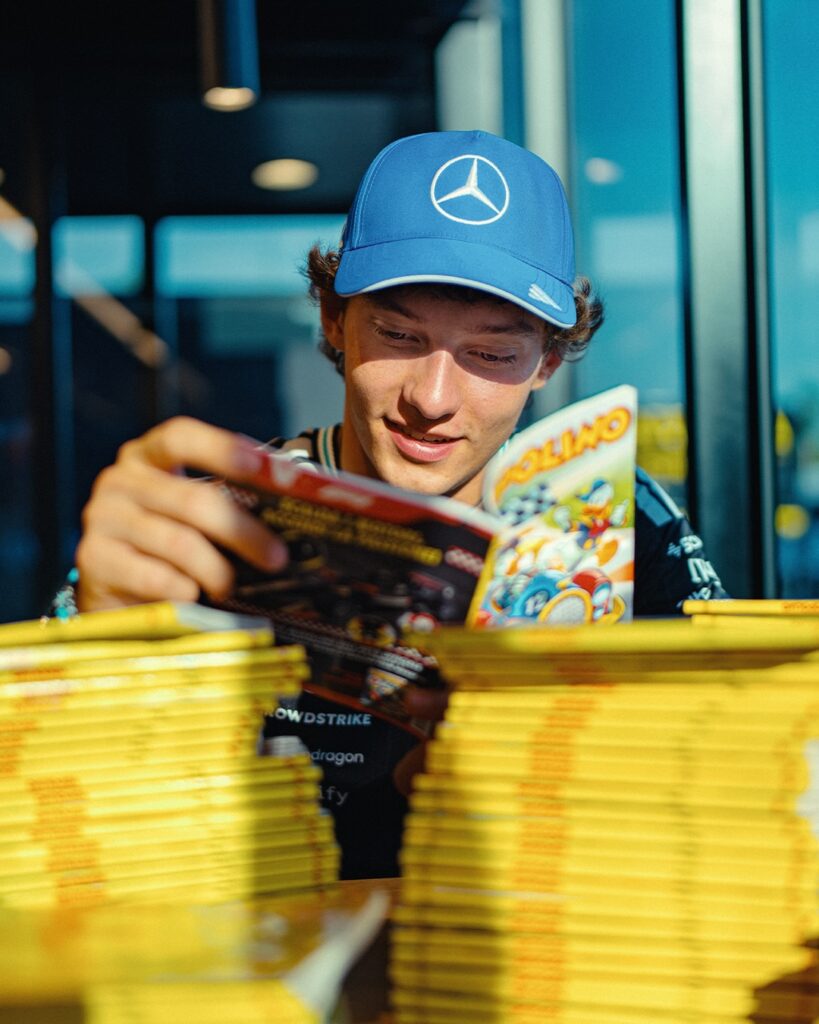
The Monaco Grand Prix has a way of crowning legends early. Kimi Antonelli, the 19-year-old Italian, added his name to that list with a drive that combined patience, precision, and a willingness to attack when others hesitated. The result: the youngest winner in the history of the Monaco Grand Prix, eclipsing a record that had stood for half a century.
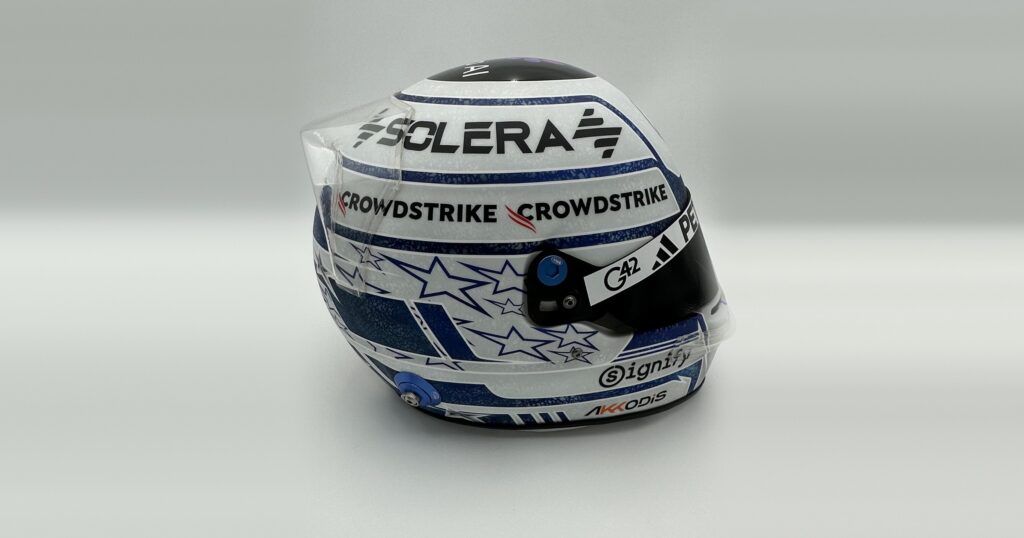
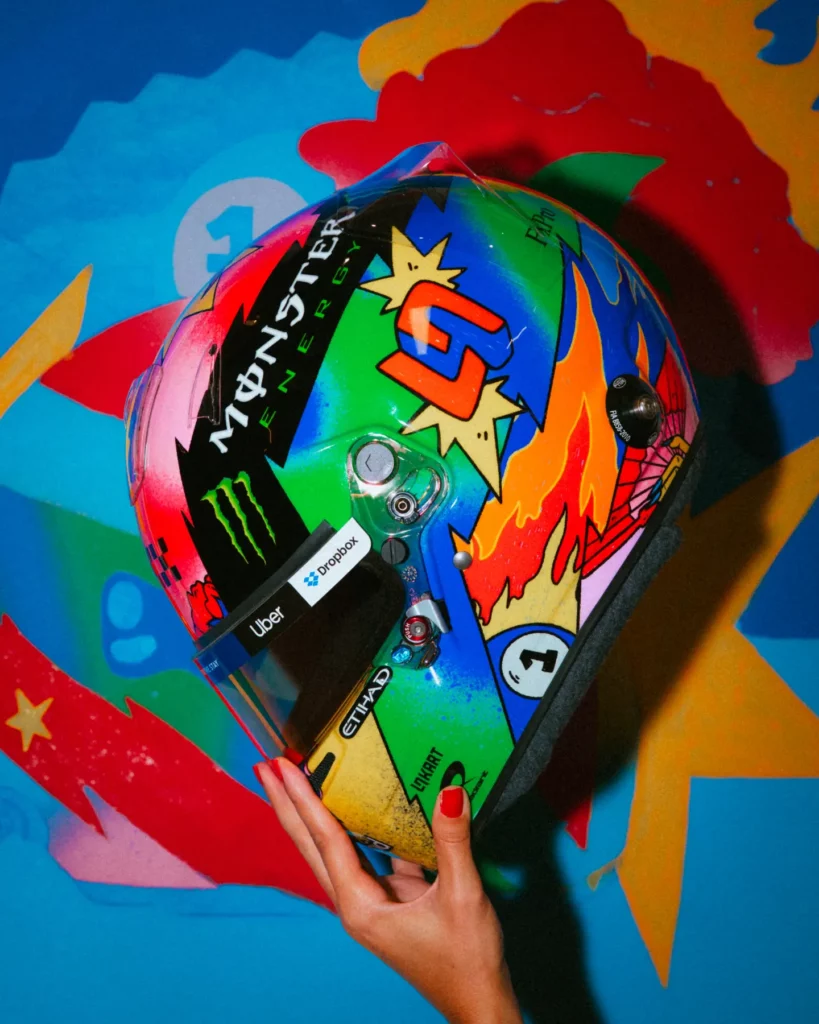
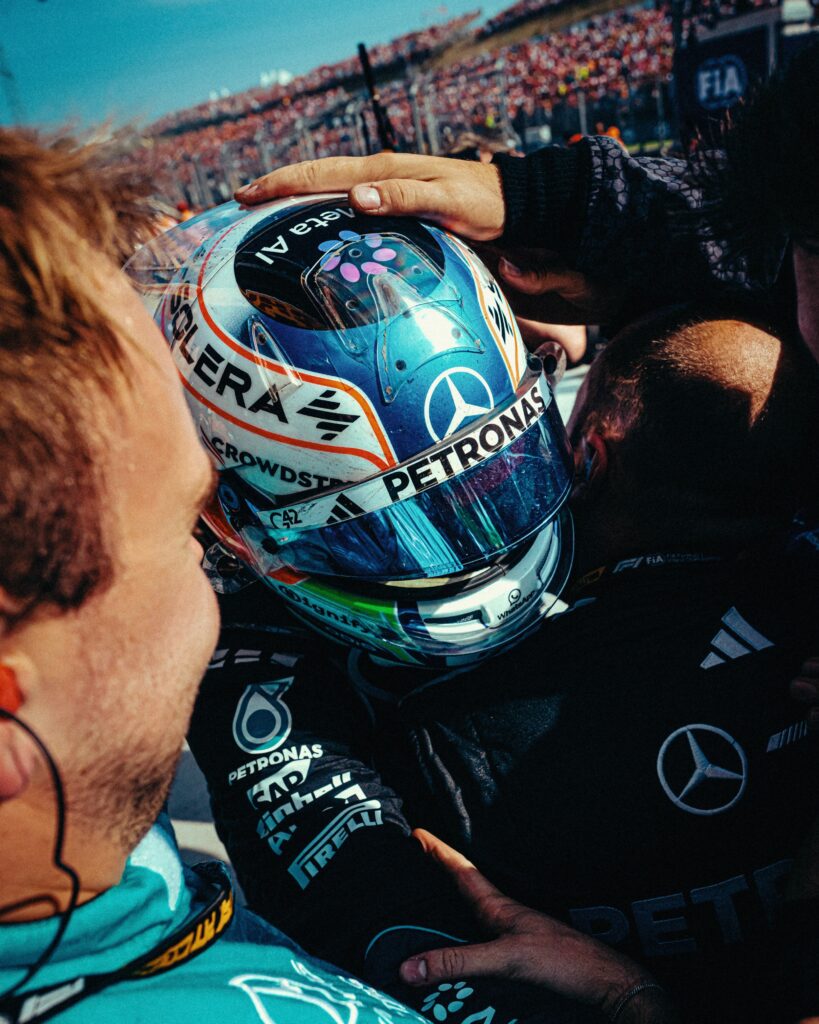
For collectors, this kind of moment is gold. A Monaco win at 19 turns a helmet from a piece of memorabilia into a historical artefact — the kind of full-size 1:1 replica that anchors a display case for decades. Antonelli’s helmet design, with its sharp Mercedes-era graphics and personal touches paying tribute to his Italian roots, is exactly the type of livery that looks remarkable on a lit shelf.
Why Monaco Matters for Helmet Collectors
No other circuit on the calendar forces a driver’s helmet so close to the cameras. The barriers are tight, the run-off is non-existent, and onboard shots frame the visor in a way that turns every paint detail into broadcast material. When a driver wins Monaco, the helmet they wore that weekend becomes one of the most photographed objects in the sport. Replica demand spikes within hours of the chequered flag.
Niki Lauda 1975: The Original Young Monaco King
Before Antonelli’s record-breaking weekend, Niki Lauda held the distinction of being one of Monaco’s youngest winners. The 1975 edition was his first triumph in the Principality and the start of a championship campaign that brought five victories.
The Ferrari 312T’s Dominant Weekend
Lauda took pole position with a margin that left only the Shadows of Tom Pryce and Jean-Pierre Jarier within a second. The race itself, held in wet conditions, became a survival exercise for most of the field. The armco claimed several contenders. Lauda lost the lead only briefly to Ronnie Peterson’s Lotus, then led 74 of 75 laps.
Low oil pressure threatened the closing stages. Emerson Fittipaldi closed the gap with every lap. The two-hour time limit eventually halted the race, and Lauda took the chequered flag with a margin of nearly 3 seconds. He followed Monaco with consecutive wins in Belgium and Sweden, eventually taking the 1975 World Championship — the first of his three titles in a career totalling 25 Grand Prix victories.
The Lauda Helmet as a Display Piece
Lauda’s 1975 helmet — red base, Parmalat sponsorship across the crown, white band around the visor opening — is one of the most recognisable designs in the sport’s history. The pairing with the Ferrari 312T’s gloss red flanks made it a visual signature of the mid-1970s. As a full-size 1:1 collector replica, it offers exhibition-quality presence: deep, layered red lacquer, period-correct decals, and the kind of patina-friendly finish that suits both modern lighting and classic wooden display cases.
Kimi Räikkönen 2005: A Lights-to-Flag Monaco Masterclass
Three decades after Lauda’s Monaco breakthrough, another future record-holder took the chequered flag in the Principality. Kimi Räikkönen’s 2005 Monaco Grand Prix is remembered as one of the cleanest, most dominant performances of his McLaren years.
The MP4-20 in Full Flight
Räikkönen edged Fernando Alonso to pole position by less than one-tenth of a second. From there, the McLaren MP4-20 was untouchable. The Finn led all 78 laps and crossed the line nearly 14 seconds ahead of Nick Heidfeld, with Mark Webber completing the podium. The Williams duo had overtaken Alonso, whose Renault was struggling on worn tyres — the 2005 regulations required a single set of tyres for the full race distance, and Monaco’s abrasive surface combined with its low-speed corners punished anyone who managed them poorly.
The Ice-Blue Helmet
Räikkönen’s helmet from this era — the white crown with the bold blue and red stripes, the signature “Iceman” graphic on the chin bar — is one of the most sought-after designs for collectors of 2000s F1. Mounted alongside an MP4-20 scale model or a Monaco trophy plinth, the 1:1 replica becomes a centrepiece. The paint scheme photographs beautifully under warm display lighting, and the white base brings out the depth of the blue accents.
Despite six further victories that season, Räikkönen lost the championship to Alonso. The Monaco helmet, however, remains one of the most evocative items from his McLaren period.
Three Eras, Three Helmets, One Circuit
Lining up the three helmets — Lauda 1975, Räikkönen 2005, Antonelli — tells the story of how F1 helmet design has evolved across 50 years of Monaco history. The Lauda lid is simple, almost industrial: a few sponsor decals, a clean red base, a narrow visor aperture. The Räikkönen helmet introduces sharper graphic lines, multi-layered paint, and a deeper visor for the wider field of view demanded by modern cockpits. Antonelli’s helmet pushes further: micro-detailed graphics, fluorescent accents, and personal symbols that mean nothing to a casual viewer but everything to the driver.
What Makes a Monaco Helmet a Display Piece
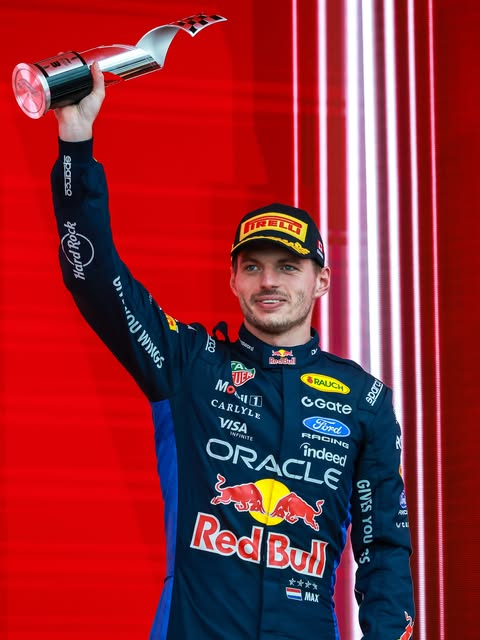
Three factors lift a Monaco-winning helmet above standard collector items. First, the race itself — Monaco is the most photographed weekend of the F1 calendar, so every paint detail has been documented from every angle. Second, the podium visuals — the helmet sits beside the trophy on the royal box podium, framed by the Mediterranean light. Third, the rarity — winners of Monaco at 19 or in their early 20s are vanishingly few, which gives helmets from those weekends a permanent place in collector demand.
A full-size 1:1 replica captures all of this. The shell dimensions match a real driver’s helmet, the visor mechanism replicates the original, and the paint depth — often 5 to 7 layers for a competition-accurate finish — recreates the gloss and richness seen on broadcast.
Display Considerations for Monaco-Winning Helmets
Collectors building a Monaco-themed display have a few practical decisions to make. Helmet shells average around 1.2–1.5 kg for a full-size replica. The footprint is roughly 29 × 25 × 35 cm on a standard plinth, which means a three-helmet line-up — Lauda, Räikkönen, Antonelli — needs around 90 cm of linear shelf space, with a little extra for breathing room and lighting.
Lighting and Positioning
Warm LED lighting from above brings out the gloss in red and white paint without washing out blue accents. A 3000K bulb works well for Lauda’s red lid; a slightly cooler 3500K suits Räikkönen’s white-and-blue scheme. Antonelli’s modern helmet, with its sharper graphics, responds well to directional light from a 45-degree angle.
Pairing with Scale Models
Each of these helmets pairs naturally with a 1:18 or 1:8 scale model of the winning car. The Ferrari 312T, McLaren MP4-20, and Antonelli’s current Mercedes form a visual timeline of the sport. A glass cabinet with three internal shelves — one per era — keeps the display organised and prevents dust accumulation on the paint surfaces.
Display and collector replicas only. Not certified for protective use. Full-size 1:1 scale.
“Monaco does not reward the careful. It rewards the driver who can be careful and brave at the same time.”
— F1 paddock commentary
FAQ
Q: Who is the youngest winner of the Monaco Grand Prix?
Kimi Antonelli, at 19 years old, became the youngest winner in the history of the Monaco Grand Prix, eclipsing the previous record.
Q: How dominant was Niki Lauda’s 1975 Monaco win?
Lauda led 74 of 75 laps in the Ferrari 312T, losing the lead only briefly to Ronnie Peterson, and won by nearly 3 seconds over Emerson Fittipaldi after the two-hour time limit ended the race.
Q: What was the margin of victory in Räikkönen’s 2005 Monaco win?
Kimi Räikkönen led all 78 laps in his McLaren MP4-20 and finished nearly 14 seconds ahead of Nick Heidfeld, with Mark Webber third.
Q: Why are Monaco-winning helmets popular as display pieces?
Monaco is the most photographed weekend on the F1 calendar, every paint detail is broadcast-documented, and the podium visuals on the royal box make the helmet a permanent visual symbol of that win.
Q: What size is a full-size 1:1 helmet replica for display?
Full-size 1:1 collector replicas typically weigh 1.2–1.5 kg and have a display footprint of around 29 × 25 × 35 cm on a standard plinth.
Browse F1 Helmet Collection
Display and collector replicas only. Not certified for protective use. Full-size 1:1 scale.
This article was written with the help of AI tools. Editorial policy