Blog
Verstappen “Felt Like Myself Again” in Monaco GP Qualifying: Inside a Display-Worthy Saturday
 123Helmets Editorial Team
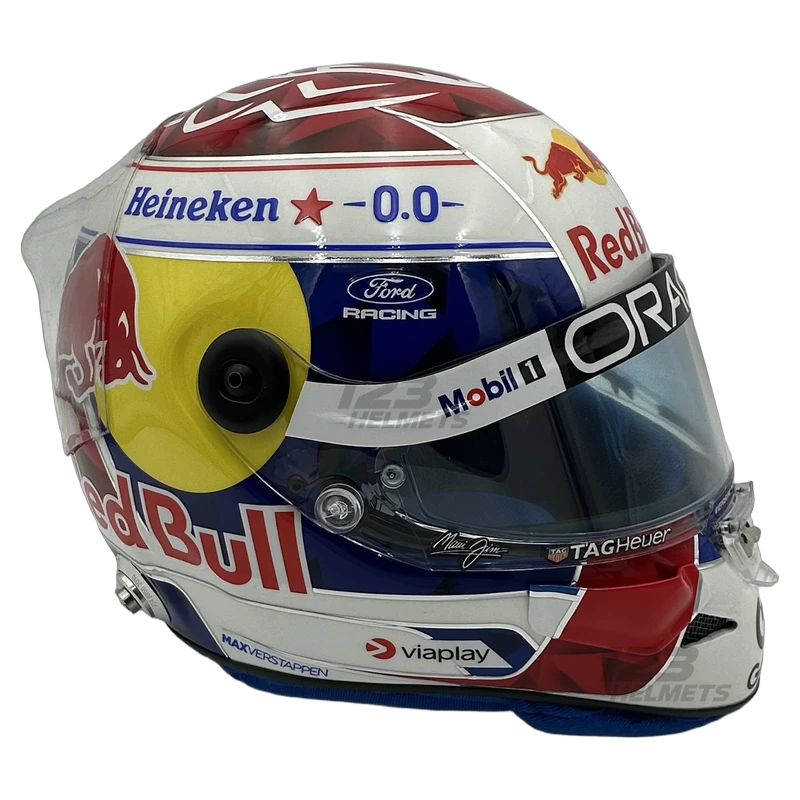
Around the 19-turn streets of Monte Carlo, Max Verstappen rediscovered a driving feel that the 2026 powertrain rules had largely taken away from him. The Dutchman called Monaco Saturday the first session where he “felt like myself again” — and the helmet that emerged from the cockpit afterwards is exactly the kind of piece collectors want under glass.
Key Takeaways
Verstappen says Monaco’s low-speed layout neutralised the 2026 battery-management burden, restoring a natural driving rhythm.
The 53-47 ICE-to-electric split has been Verstappen’s central criticism of the new powertrain era.
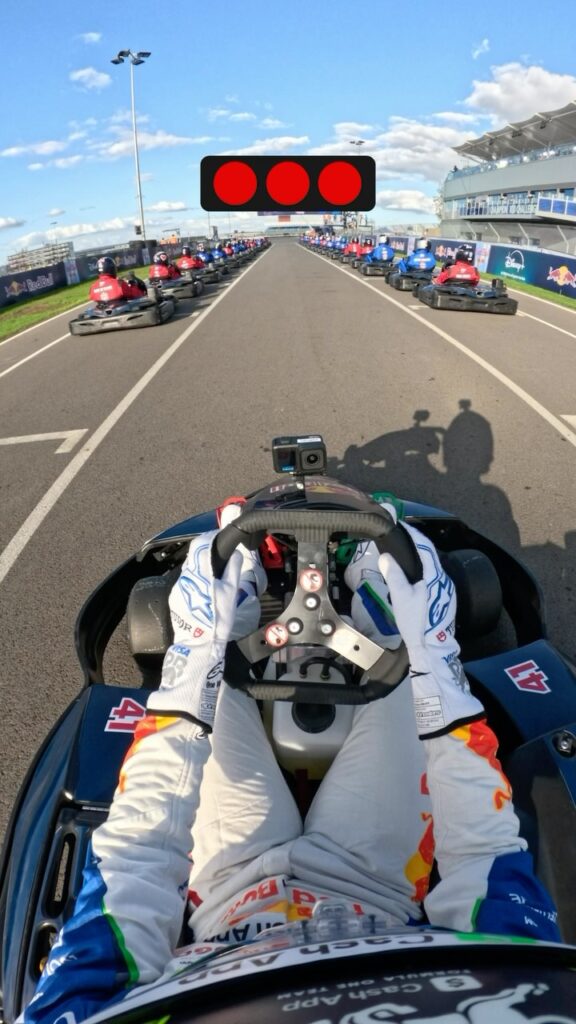
The narrower 2026 chassis improves apex visibility over the front axle — a visual detail mirrored in helmet camera angles.
Verstappen’s Monaco lid is a prime candidate for full-size 1:1 collector display given the circuit’s heritage weight.
A Saturday That Felt Different
Max Verstappen has spent most of the 2026 season delivering pointed commentary on the new powertrain formula. The 53-47 split between internal combustion output and electrical deployment has forced drivers into constant battery management, and on energy-hungry circuits the lap becomes an exercise in saving as much as attacking. Verstappen, never one to hide his opinion, has compared the deployment system to the “mushroom” boost from Mario Kart — a line that has followed him through every paddock interview since round one.
Monaco changed the tone. The 3.337 km layout, with its 19 corners and almost total absence of long full-throttle sections, lets the cars top up the battery naturally through every braking zone. There is no energy deficit to nurse, no lift-and-coast strategy hidden inside a qualifying lap. For the first time in months, Verstappen could simply drive.
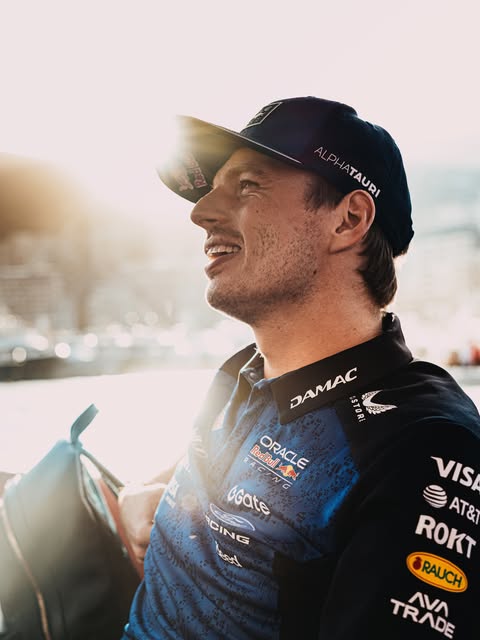
“I finally felt just myself again in the car, let’s say like that, with the way you want to use the gears,” he said after the session. For a four-time World Champion who built his reputation on instinctive car control, that admission carries weight — and it frames the Monaco helmet as a piece tied to a genuine emotional turning point in his 2026 campaign.
Why Monaco Suits the 2026 Car
The 2026 chassis regulations brought narrower bodywork and revised front-wheel furniture. Verstappen has been openly positive about the geometry, even while criticising the power unit side of the rulebook.
“I think the chassis regulation is not bad at all, so I think in general with the cars being a little bit more narrow, I think it was alright,” he explained. “I quite like now the vision on the front axle is a bit better around apexes again, instead of that thing we had above the tyre before.”
That comment matters for collectors. The wheel deflector of the previous era is gone, meaning onboard camera footage now shows a cleaner sightline from helmet to apex — the exact angle reproduced on display stands when a 1:1 replica is mounted at driver-eye height. Monaco’s barriers sit close enough that this visual relationship between helmet, front axle and Armco is sharper here than anywhere else on the calendar.
The Low-Speed Advantage
Monaco has 12 corners taken below 100 km/h. Each one is a harvesting opportunity, which means the deployment maps Verstappen complained about at Spa or Monza become almost irrelevant. The driver picks the gear he wants, gets the response he expects, and the car behaves like a Formula 1 car of old. That is the experience baked into Saturday’s lap — and into the helmet that wore it.
The Helmet: A Monaco Display Piece
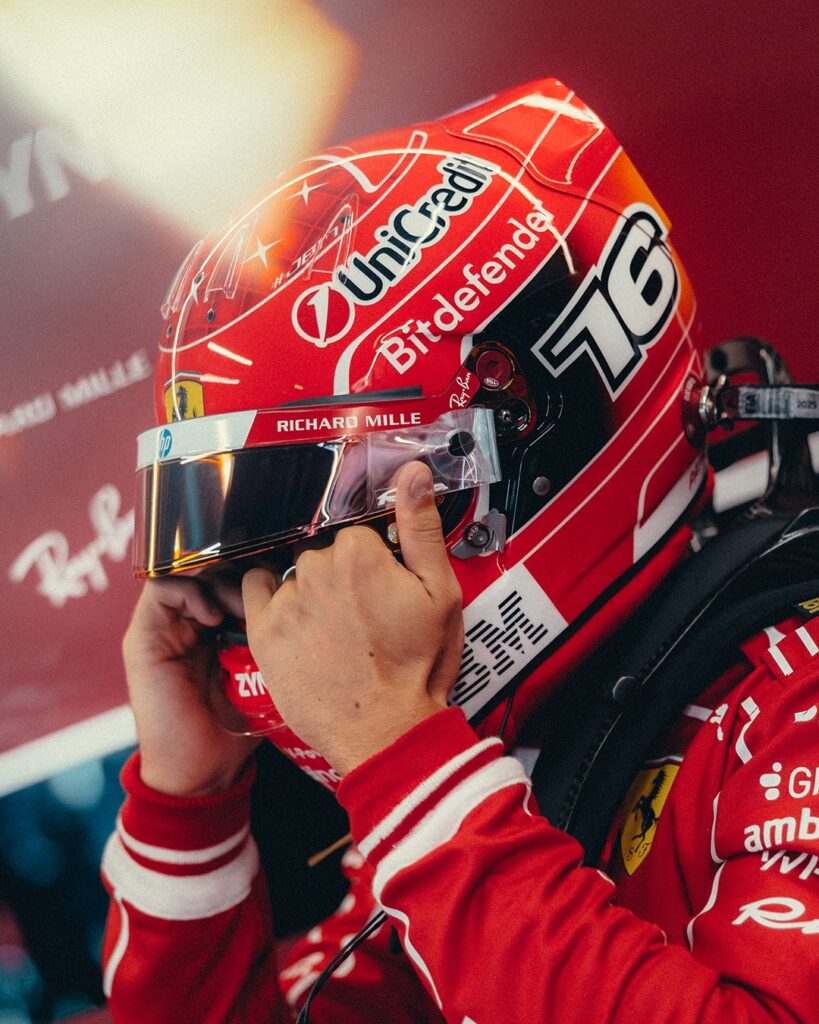
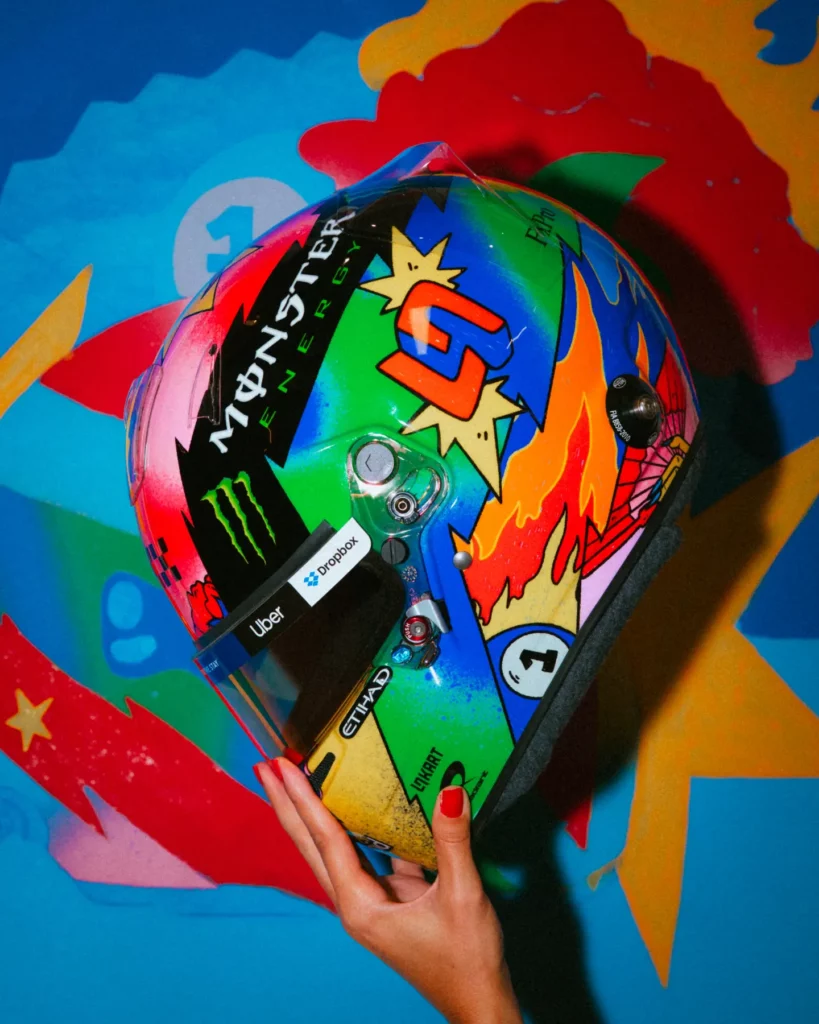
Verstappen’s Monaco lid follows the Red Bull-era template that collectors have come to recognise: deep navy base, the lion crest on the crown, accent flashes in Dutch orange across the temples, and the championship stars marking previous title wins. As a full-size 1:1 replica, the shell measures roughly 29 × 25 × 35 cm on a standard display base, with the visor aperture sitting at the height that matches the cockpit eyeline of the 2026 chassis.
What Makes This Lid Collector-Grade
Three details push the Monaco specification into standout territory for an exhibition shelf:
- Paint depth. Premium replicas use multiple lacquer layers over the base coat, giving the orange flashes the same wet-look gloss seen on broadcast close-ups during Q3.
- Visor tear-off posts. Monaco running typically requires fewer tear-offs than dusty circuits, so the visor on a Saturday-spec replica sits cleaner — better for display photography.
- Aero furniture. The top-of-helmet inlet and rear wickers are reproduced in matching scale, the kind of geometry that reads correctly only on a true 1:1 piece rather than a scaled-down miniature.
A display weight of approximately 1.2–1.5 kg for a fibreglass replica shell sits within the range collectors expect, giving the helmet enough presence on a stand without overloading a glass cabinet shelf.
The Driver’s Verdict on the Lap
Beyond the powertrain commentary, Verstappen’s Saturday was about rhythm. Monaco rewards drivers who can string together corner sequences without being interrupted by deployment prompts on the steering wheel. The Swimming Pool complex, Tabac, the Rascasse hairpin — all sections where the throttle response has to match the driver’s intent immediately.
“If you can go flat out and you can just select the gears that you want to use in the corners, it’s always going to be better,” Verstappen said. That sentence is the cleanest summary of what 2026 has lacked for him at most venues. Monaco gave it back.
What That Means for the Race
A driver who feels at one with the car at Monaco is a dangerous proposition on Sunday. Overtaking around the principality is famously difficult — historically, around 30% of Monaco races finish with the polesitter winning — and any qualifying performance that puts Verstappen near the front of the grid carries outsized weight for the race result.
Livery Notes and Visual Storytelling
The car carried its Monaco-specific livery treatment, with subtle gloss-over-matte contrast that catches the Mediterranean light differently to the standard race-weekend finish. Pair a 1:1 helmet replica with a livery print or scale model from the same weekend and the display narrative becomes coherent: shell, car, circuit, moment.
For collectors building a 2026-season cabinet, the Monaco specification is the obvious anchor piece. It marks the weekend the driver publicly reconciled with at least part of the new rulebook, and it carries the visual identifiers — orange flashes, lion crest, championship stars — that read instantly from across a room.
Mounting Suggestions
Place the helmet on a clear acrylic stand at roughly 110-115 cm from the floor to replicate the driver’s seated eyeline. Backlight the cabinet at 3000K to bring out the navy base, and angle the visor slightly downward toward the viewer so the printed sponsor strip across the upper visor band stays visible. These are the small choices that separate a casual shelf item from an exhibition-quality display.
“I finally felt just myself again in the car, let’s say like that, with the way you want to use the gears.”
— Max Verstappen, after Monaco GP qualifying
“I quite like now the vision on the front axle is a bit better around apexes again, instead of that thing we had above the tyre before.”
— Max Verstappen on the 2026 chassis
FAQ
Q: Why did Verstappen say he “felt like himself again” at Monaco?
Monaco’s low-speed layout lets the 2026 cars harvest battery energy continuously, removing the deployment management that has dominated his racing on faster circuits and letting him drive on instinct.
Q: What is the 53-47 split Verstappen has criticised?
It refers to the 2026 power unit’s output balance — roughly 53% from the internal combustion engine and 47% from electrical components — which has shifted the racing focus toward battery management.
Q: What makes the Monaco helmet a strong collector display piece?
It marks the weekend Verstappen publicly reconciled with parts of the 2026 rules, carries his recognisable navy-and-orange Dutch livery with championship stars, and reproduces the cockpit-eyeline geometry of the new narrower chassis.
Q: What size is a full-size 1:1 replica helmet?
A standard 1:1 collector replica measures approximately 29 × 25 × 35 cm on its display base and weighs around 1.2–1.5 kg in fibreglass form, matching the proportions of the actual race-used shell.
Q: How should I display a Monaco-specification helmet?
Mount it on a clear acrylic stand at 110-115 cm height to replicate driver eyeline, use 3000K backlighting to bring out the navy base, and angle the visor so sponsor printing stays readable from the front of the cabinet.
Shop Max Verstappen Collection
Display and collector replicas only. Not certified for protective use. Full-size 1:1 scale.
This article was written with the help of AI tools. Editorial policy