Blog
Sainz’s 3-Place Grid Penalty Red Flag Proposal
 123Helmets Editorial Team
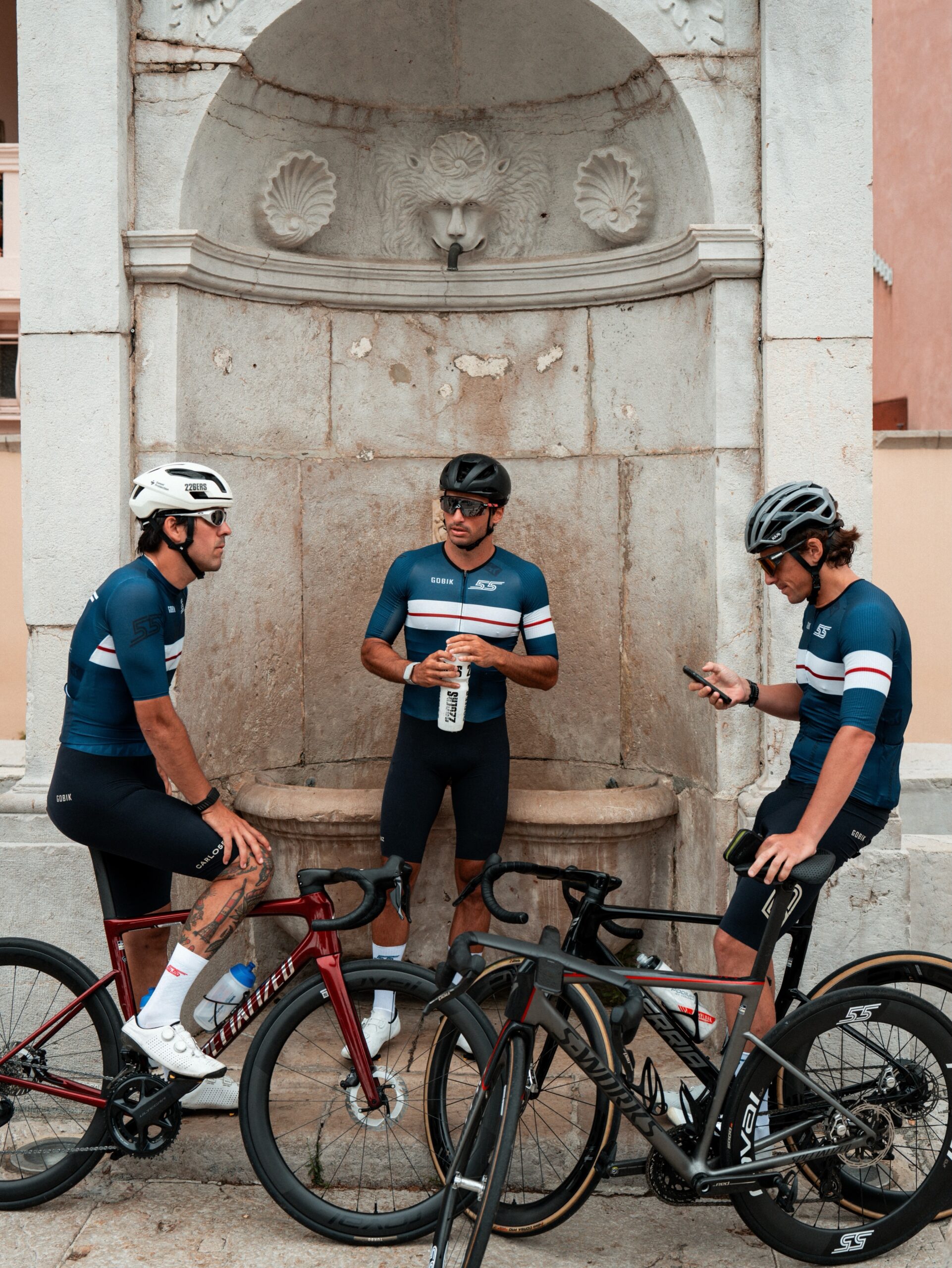
Carlos Sainz wants to change qualifying forever. The GPDA director is set to propose a grid penalty for any driver whose crash triggers a red flag in qualifying — a direct response to the controversy surrounding Max Verstappen’s Austria crash and George Russell’s pole position.
Key Takeaways
Carlos Sainz, as GPDA director, plans to formally propose a grid penalty for drivers who cause red flags in qualifying sessions.
George Russell took pole in Austria after a single yellow flag — which became a double yellow 22 seconds later — was displayed for Verstappen’s crash.
Sainz acknowledged that Russell handled the rules perfectly, but argued the session should have been red-flagged, not just double-yellowed.
Sainz cited his own 2025 Baku qualifying experience — where he was provisionally on pole before Verstappen beat him — as a real-world example of the loophole drivers are aware of.
The Austria Qualifying Incident That Sparked a Rule Debate
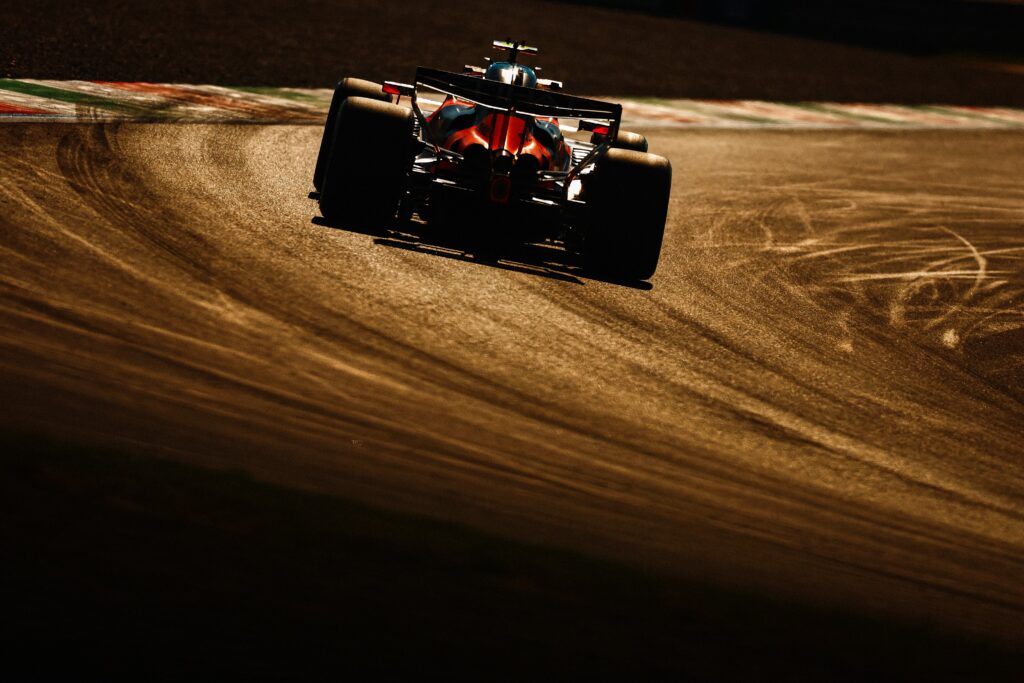
A single waved yellow flag was shown for Max Verstappen’s qualifying crash in Austria before double waved yellows appeared 22 seconds later — a gap that sits at the heart of the current controversy. George Russell, already on a flying lap, lifted sufficiently to comply with the single yellow that was in place as he passed the incident zone and went on to take pole position. The sequence was entirely within the existing rulebook, but it exposed a window that many drivers and observers found uncomfortable.
The core tension is straightforward: a car was beached in a dangerous position, yet the session was not immediately neutralised. Russell’s response to the flags was, by all accounts, technically correct. He reduced speed in proportion to what the single yellow demanded, completed his lap, and secured pole. Whether the flag escalation — from single to double in 22 seconds — should have moved faster to a full red is the question Sainz wants the GPDA to answer formally.
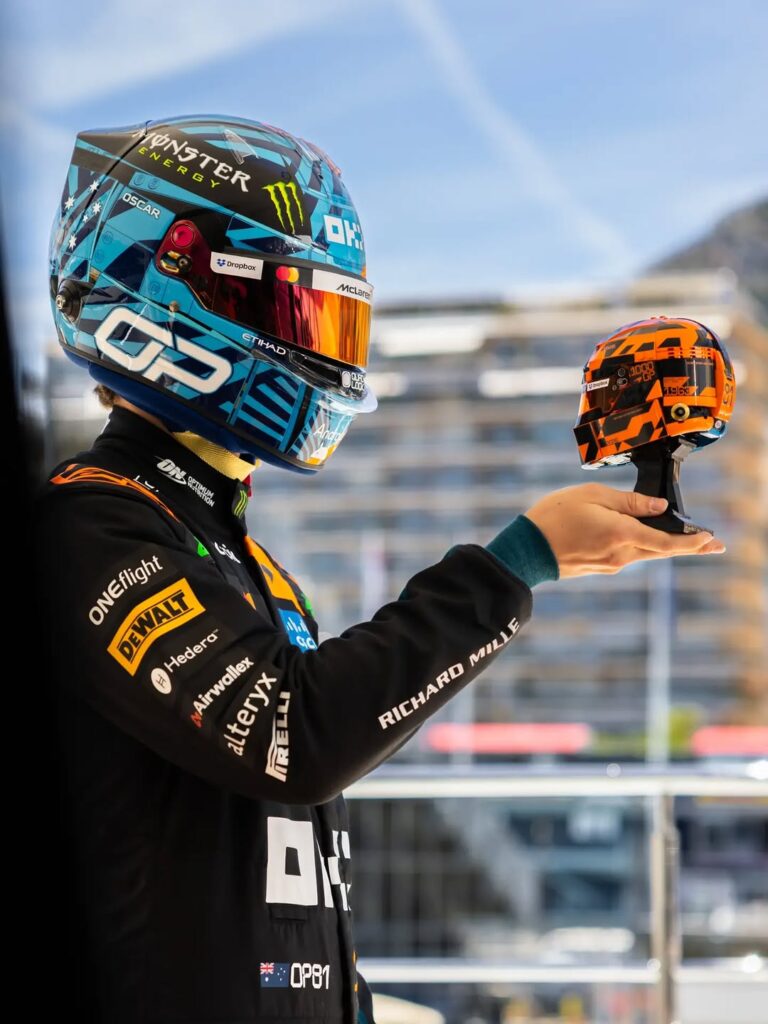
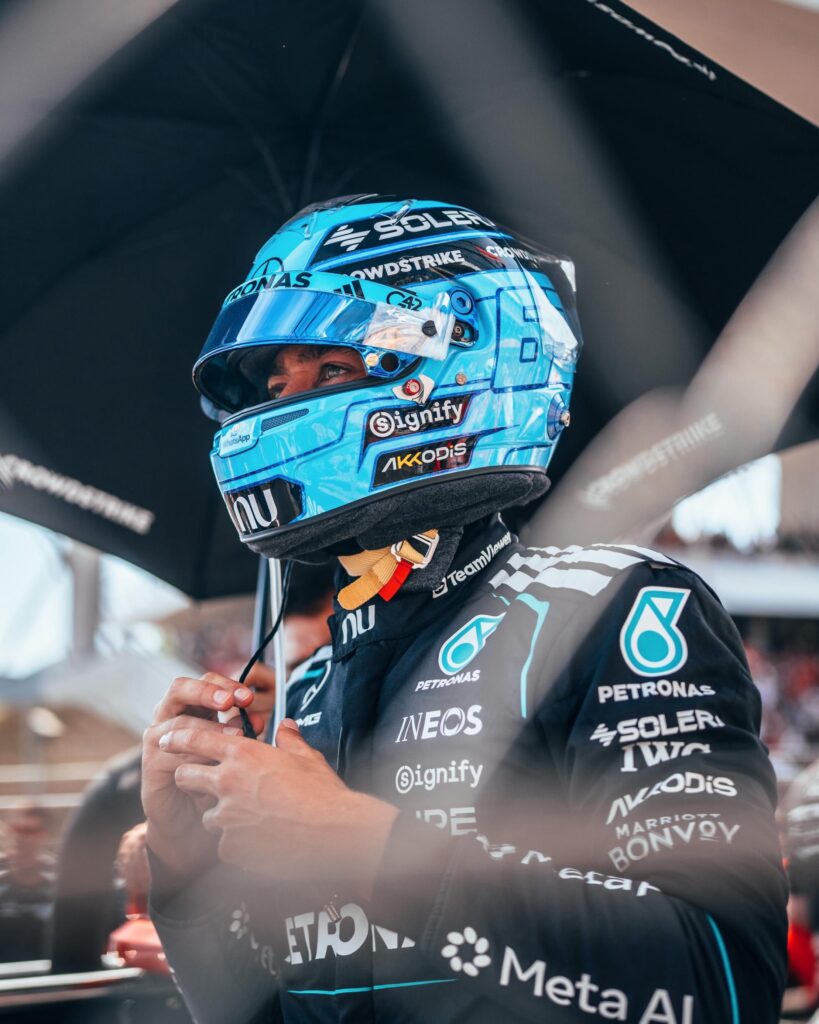
For collectors who follow the visual narrative of a race weekend, Austria qualifying produced a helmet and livery story worth noting. Russell’s pole lap came under the kind of chaotic flag conditions that produce photographs with genuine documentary weight — a driver in full commitment, flags waving in the background, the gap between regulatory compliance and moral expectation written across a single flying lap.
What Sainz Is Actually Proposing
Sainz’s proposal is a grid penalty — his own framing suggests 3 places — for any driver whose on-track incident causes a red flag during a qualifying session. The GPDA director confirmed the idea has not yet been formally discussed among drivers, describing it as a personal position he intends to bring forward. “I have a very personal idea about this that hasn’t been discussed among the GPDA yet, which I will potentially bring forward as an idea,” Sainz explained. “Then we can maybe discuss if it should be the case or not.”
The logic behind the proposal is about removing a perverse incentive. If a driver is already on provisional pole at the end of their first run, a crash that triggers a red flag currently freezes the session at a moment that benefits them — nobody else gets to improve their lap, and the driver who caused the stoppage keeps their best time. Sainz named that scenario explicitly: “If Max would have been on pole in the first run, then he produces that crash, and then everyone is on a red flag and no one improves the lap, I think it would be unfair for George, Kimi [Antonelli] and everyone, because the guy that is on pole is not letting us improve the laptime.”
A grid penalty for the driver causing the red flag would counteract that incentive directly. It would mean that even if a crash freezes the session in your favour, the penalty drops you back enough to remove any net gain — and adds a deterrent against reckless behaviour in the closing stages of qualifying.
The Sprint Weekend Complication
Sainz noted that Austria was a sprint weekend, which compressed the schedule and left less room for a structured GPDA meeting. “I think this weekend because of being a sprint, maybe we don’t have a proper meeting about it. But I think we should,” he said. Sprint weekends run qualifying, sprint shootout, sprint race, and Grand Prix qualifying across a tighter window than standard weekends — meaning the formal driver discussion will likely take place at a subsequent round.
Sainz on Russell and the Ethics of Perfect Rule-Playing
Sainz was unambiguous that Russell deserved the pole position he earned in Austria. “The way George handled it I think was perfect — for what the rulebook allows you to do. He deserved that pole position, because he played the rules to perfection,” Sainz said. The distinction Sainz draws is between what was permissible and what the regulations should have required: “But he should have never been allowed to finish that lap or to close a lap in that kind of dangerous situation.”
This is a nuanced position, and one that matters for understanding the proposed reform. Sainz is not arguing that Russell did anything wrong. He is arguing that the rules failed to produce the correct outcome — and that a red flag, not a double yellow, was the appropriate response to Verstappen’s crash. The penalty proposal targets drivers who cause dangerous situations, not those who capitalise on them within the rules.
For the display replica collector tracking the 2026 season’s key moments, Russell’s Austria pole helmet — worn on a lap that will be debated for the rest of the season — represents exactly the kind of historically loaded artefact that full-size 1:1 replicas are built to commemorate. The visual record of that lap, the flag conditions, and the subsequent rule debate give the helmet context that extends well beyond a single qualifying session.
The Baku Precedent Sainz Raised
Sainz referenced his own 2025 Baku qualifying session as a concrete example of how drivers are already aware of the loophole his proposal would close. At Baku in 2025, Sainz put his Williams on provisional pole as the first car out of the pits, only for Max Verstappen to beat him late in the session. “I said ‘if I crash now I’m on pole’,” Sainz admitted. “We all have these thoughts. We all have the — ” The sentence was left unfinished in the source, but the implication was clear: the temptation exists, drivers know it exists, and the current rules do nothing to penalise acting on it.
The Baku circuit has produced some of the most visually striking helmets and liveries in recent memory — the street circuit’s tight walls and dramatic elevation changes create a backdrop that photographers and collectors both value. Sainz’s Williams livery in 2025 Baku qualifying, sitting provisionally on pole before being displaced, is the kind of moment that frames a season narrative. His 2026 proposal grows directly from that experience.
It is worth noting that Monaco operates under a similar dynamic. Sainz mentioned Monaco specifically: “Like typically in Monaco.” The principality’s narrow streets mean a single stopped car almost guarantees a red flag, and a driver who crashes while on provisional pole currently faces no additional sporting penalty beyond the repair bill and any separate driving conduct investigation.
Why the Current Yellow Flag System Falls Short
The 22-second gap between the appearance of the single waved yellow and the escalation to double waved yellows in Austria is the number that defines the problem. In 22 seconds at qualifying pace, a car can cover a substantial portion of a lap — enough to lock in a sector time or complete a final push. The flag progression from single yellow to double yellow to red flag is not instantaneous; it depends on marshals, race director calls, and communication chains. Sainz’s proposal would bypass the question of whether the flag response was fast enough by adding a direct sporting consequence to the driver who created the situation in the first place.
Qualifying Helmets and Liveries as Display Pieces in 2026
The 2026 F1 season has produced qualifying moments that translate directly into collector-grade visual records. Full-size 1:1 display replica helmets commemorating pole positions carry the specific context of the session in which they were earned — the flag conditions, the controversy, the rule debate that followed. Austria 2026 qualifying is now one of those sessions.
Russell’s pole lap under contested flag conditions, Verstappen’s crash, and Sainz’s public proposal combine to make Austria qualifying a documented moment in the regulatory history of the sport. Collector replicas at 1:1 scale — exhibition quality display pieces, not certified for any protective use — preserve the visual identity of the helmets worn in those moments with the kind of dimensional accuracy that makes them genuine references: full-size, display-only pieces built to the proportions of the originals.
The Carlos Sainz helmet associated with the 2026 season carries the weight of his role not just as a racing driver but as the GPDA director actively shaping the rules of the sport. The George Russell Austria pole helmet sits in a session that will be cited every time the red flag penalty proposal is debated. These are not abstract collector propositions — they are specific moments in a specific season, fixed in the livery and helmet designs of the drivers who were present.
For anyone building a display collection around the 2026 season, Austria qualifying represents a junction point: the moment one of the sport’s most experienced voices decided the rules needed to change, and said so publicly.
What Happens Next with the GPDA Proposal
The GPDA proposal will move forward at a future round where a structured driver meeting is possible — Austria’s sprint weekend format left insufficient time for formal discussion. Sainz confirmed the idea is his own at this stage: it has not yet been put to the full group of drivers, debated, refined, or submitted to the FIA. The path from a personal proposal to a regulatory change involves GPDA discussion, formal submission, FIA technical and sporting working group review, and ultimately a change to the International Sporting Code or the specific F1 Sporting Regulations.
That process typically takes multiple rounds and often multiple seasons. The 2026 season itself will not be run under a revised red flag penalty rule — the proposal is aimed at future regulation. But the fact that it has been stated publicly, by the GPDA director, in direct response to a specific incident, gives it a weight that informal driver grumbling does not carry.
The visual record of the 2026 Austrian Grand Prix weekend — helmets, liveries, flag conditions, pole lap — is already fixed. What changes is what it means in the longer regulatory story of the sport. Full-size 1:1 display replicas of the helmets worn that weekend are display pieces that capture a moment at the intersection of sporting drama and regulatory reform: exhibition quality collector items, built to scale, with the specific markings of drivers who were at the centre of a debate that will run well beyond the 2026 season.
“I have a very personal idea about this that hasn’t been discussed among the GPDA yet, which I will potentially bring forward as an idea. Then we can maybe discuss if it should be the case or not.”
— Carlos Sainz, GPDA Director
“The way George handled it I think was perfect — for what the rulebook allows you to do. He deserved that pole position, because he played the rules to perfection. But he should have never been allowed to finish that lap or to close a lap in that kind of dangerous situation.”
— Carlos Sainz, GPDA Director
“If Max would have been on pole in the first run, then he produces that crash, and then everyone is on a red flag and no one improves the lap, I think it would be unfair for George, Kimi and everyone, because the guy that is on pole is not letting us improve the laptime.”
— Carlos Sainz, GPDA Director
“I said ‘if I crash now I’m on pole’. We all have these thoughts.”
— Carlos Sainz, GPDA Director
FAQ
Q: What is Carlos Sainz proposing for qualifying red flags in F1?
Sainz is proposing a grid penalty for any driver whose crash causes a red flag during a qualifying session. The proposal has not yet been formally discussed with the full GPDA driver group; Sainz described it as a personal idea he intends to bring forward for collective debate.
Q: Why did the Austria 2026 qualifying situation cause controversy?
A single waved yellow flag was shown for Verstappen’s crash before double waved yellows appeared 22 seconds later. George Russell, on a flying lap, lifted for the single yellow in place as he passed the incident and took pole position — entirely within the rules, but in a window many felt should have been a full red flag.
Q: Did Carlos Sainz say George Russell’s pole was illegitimate?
No. Sainz explicitly stated Russell handled the situation perfectly and deserved the pole position for playing the rules correctly. His argument is that the regulations should have neutralised the session with a red flag before Russell completed the lap — not that Russell acted improperly.
Q: What is the collector significance of the Austria 2026 qualifying helmets?
Austria 2026 qualifying is now a documented moment in F1’s regulatory history, combining a contested pole lap with a public rule-reform proposal from the GPDA director. Full-size 1:1 display replica helmets from this session are exhibition quality collector pieces — not certified for protective use — that carry specific historical context beyond the standard race-weekend record.
Q: When will the GPDA formally discuss Sainz’s red flag penalty proposal?
Sainz indicated the sprint weekend format in Austria left no time for a proper GPDA meeting on the subject. A formal discussion is expected at a subsequent round with a standard weekend schedule. Any resulting proposal would then need to go through FIA review before becoming regulation.
Browse F1 Helmet Collection
Display and collector replicas only. Not certified for protective use. Full-size 1:1 scale.
This article was written with the help of AI tools. Editorial policy