Blog
Best Value Early Bets for the Canadian Grand Prix: A Collector’s Visual Recap
 123Helmets Editorial Team
Best Value Early Bets for the Canadian Grand Prix: A Collector’s Visual Recap
Montreal delivered another visually unforgettable weekend at the Circuit Gilles Villeneuve, where the maple leaf graphics, special-edition helmet liveries and rain-streaked podium lights combined into a postcard for any serious F1 display collector. From early-session helmet reveals to the final cool-down lap, this recap focuses on the moments that translate best into a full-size 1:1 replica on a lit shelf — the design choices, the iconic angles, and the early-weekend signals that experienced enthusiasts watch when picking the most display-worthy storylines of a Canadian Grand Prix.
Key Takeaways
Montreal’s lighting and maple leaf graphics make Canadian GP helmet designs some of the most photogenic on the calendar for display.
Early-session helmet reveals often signal the most collectible 1:1 replica candidates of the weekend.
Wet-weather visors, rain beads and damp paddock shots create exhibition-quality reference images for collectors.
Podium framing in Montreal, with the Champions Wall as a backdrop, is among the most replicated visual setups in F1 display culture.
Why Montreal Rewards the Eye of a Collector
The Circuit Gilles Villeneuve sits on the Île Notre-Dame, surrounded by water, low concrete walls and the unmistakable Champions Wall — a backdrop that has framed some of the most iconic helmet shots in modern Formula 1. For a collector evaluating which storylines of the Canadian Grand Prix deserve a permanent place on a display shelf, Montreal is a goldmine. The track’s mix of harsh midday sun, lakeside reflections and frequent passing storms means helmets are photographed under more varied lighting conditions here than at almost any other circuit.
That variety matters. A full-size 1:1 collector replica is judged by how it reads under different light sources at home: warm gallery spots, cold daylight near a window, or a single accent lamp at night. The Canadian Grand Prix weekend, more than most, gives reviewers and collectors the reference imagery needed to predict how a particular helmet livery will perform as an exhibition piece.
The Champions Wall as a Display Frame
Every collector who has spent time arranging a helmet shelf knows the importance of a strong visual frame. The famous wall on the exit of the final chicane, with its painted greeting to past world champions, is precisely that. When a driver’s helmet flashes past it in slow-motion replay, the contrast between the matte concrete and a gloss-clear lacquered shell creates a near-perfect product shot — the kind of reference image collectors revisit when deciding which Canadian GP design to commit to as a 1:1 replica.
Early-Weekend Helmet Reveals: The Most Display-Worthy Signals
Some of the strongest indicators of which Canadian Grand Prix helmets will become long-term collector items appear before a single lap is completed. Thursday media day and Friday’s first installation laps are when special liveries are first unveiled, when painters share close-up shots, and when the design language of the weekend takes shape. Experienced collectors treat these early reveals as the equivalent of a gallery preview night.
What to Watch in the First Reveal Photos
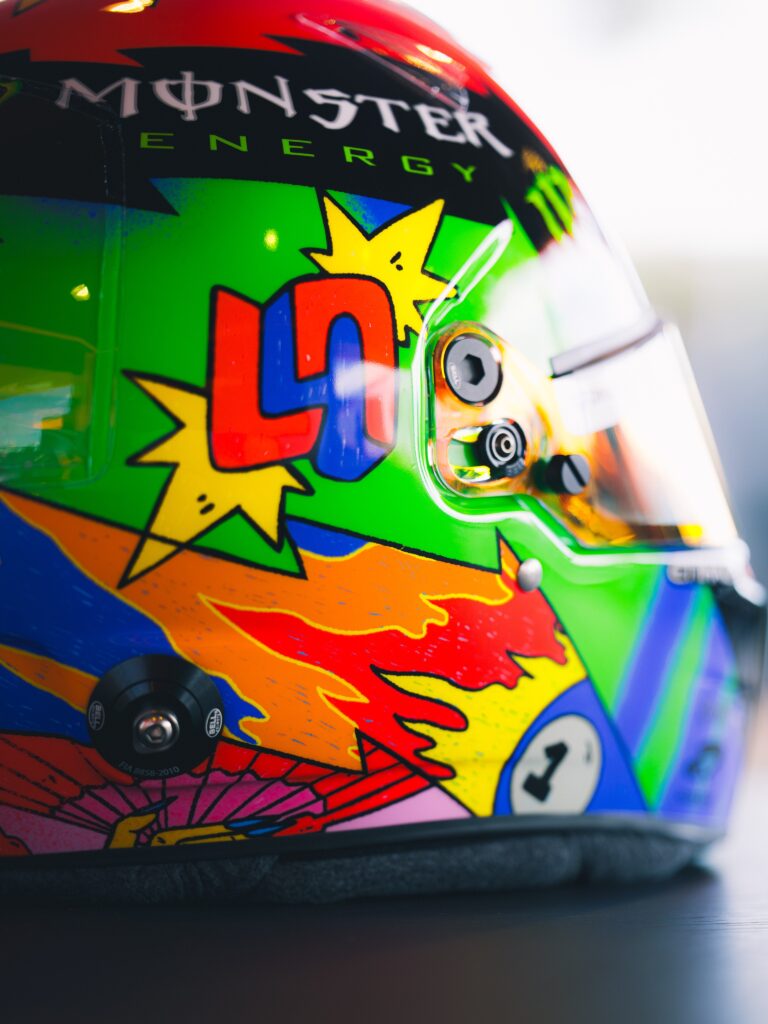
There are several visual cues that consistently predict a display-worthy helmet. Hand-applied maple leaf motifs, fade transitions that respond to natural light, and chrome or candy-coat treatments tend to translate beautifully into 1:1 replicas. Equally important are the small touches: a painted dedication on the chin bar, a sponsor logo rendered in a custom finish, or a subtle nod to a Canadian motorsport legend on the rear of the shell.
Reading the Reveal Like a Curator
When the first paddock photos hit social media, the most useful angle for a collector is the three-quarter front. It shows the visor band, the top crown and the side panel in one frame — the same view most prized in a museum case. If a helmet looks balanced from that angle on a Thursday in Montreal, it will almost certainly look balanced on a lit shelf at home.
Free Practice and Qualifying: Reading the Visual Tells
Free practice in Montreal is rarely quiet. Track surface evolution is dramatic, the city’s weather can shift in minutes, and teams use the running to test setups that often differ wildly from Saturday’s qualifying spec. For the collector chasing the most display-worthy storylines, these sessions provide invaluable reference material: helmets photographed under cloud cover, under harsh sun, in light rain and finally — if the timing is right — under the late-afternoon golden hour that bathes the pit straight in amber light.
Qualifying as a Lighting Test
Saturday qualifying in Montreal often coincides with the day’s most cinematic light. The shadows lengthen across the start-finish line, and the helmets caught in slow-motion reveal exit show their finishes in extraordinary detail. Metallic flake catches the sun, candy reds glow, and matte blacks read as deep velvet rather than flat paint. These are the moments that confirm whether a livery deserves the permanence of a 1:1 collector replica or whether it will fade from memory by Sunday evening.
The Rain Variable
If the weather turns — and Montreal frequently obliges — collectors are treated to one of the most beautiful states a helmet can be photographed in: wet. Water beads on the clear coat, the visor tear-offs glisten, and the entire shell takes on a depth that dry conditions never quite reveal. Wet-weather images from the Canadian Grand Prix are, for many collectors, the definitive reference shots when evaluating exhibition-quality replicas.
Race Day Visuals: Podium Framing and Cool-Down Moments
Race day in Montreal builds toward a podium that, when the weather and light cooperate, ranks among the most photogenic on the calendar. The trophies, the Quebec and Canadian flags, the elevated platform overlooking the pit lane and the crowd packed against the catch fencing all contribute to a setting that flatters whatever helmet has been placed on the front row of the parc fermé display.
The Helmets-on-the-Ground Shot
One of the most collector-relevant images of any Grand Prix is the post-race photograph of the top three helmets lined up in front of their cars in parc fermé. In Montreal, with the white pit wall as a backdrop and the late-afternoon sun raking across the painted shells, this composition becomes a natural still-life. It is, in many ways, the closest a real F1 weekend comes to imitating a curated display at home — three full-size helmets, evenly spaced, lit by directional light, each telling its own story.
Cool-Down Room and Podium Hugs
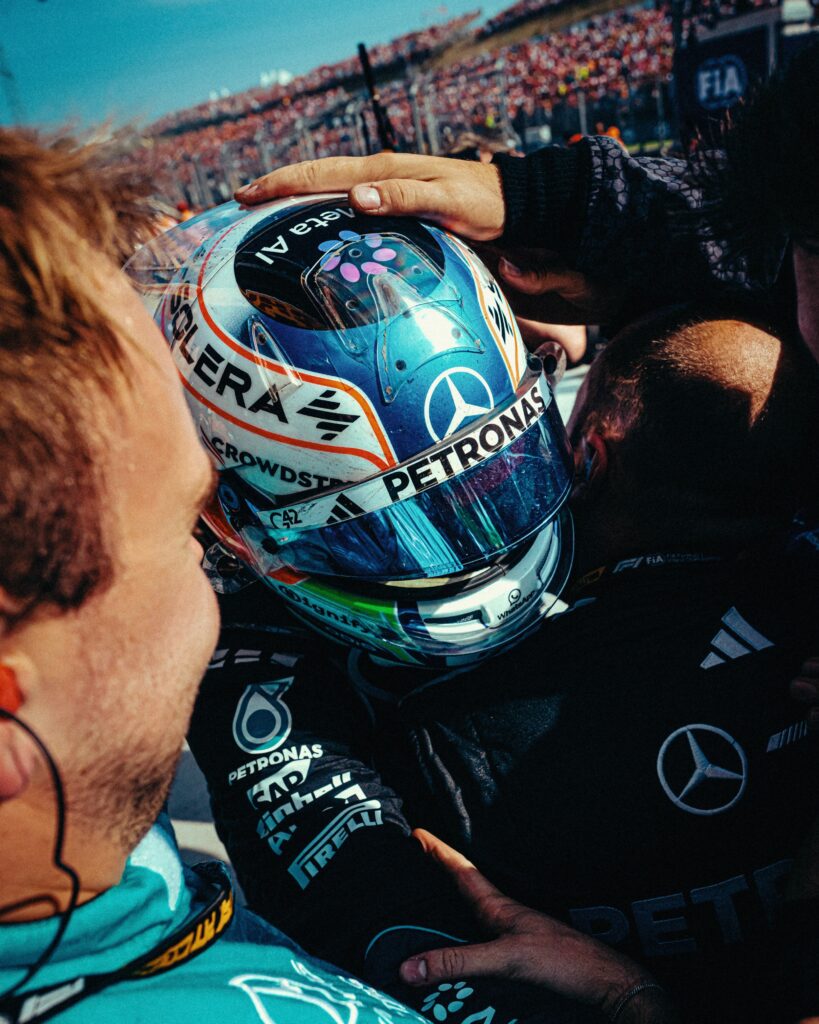
The cool-down room offers a quieter but equally valuable reference for display thinking. Helmets are usually placed on a low bench, often with the visor up, revealing the inner padding and the painted detail around the eye port. For collectors who appreciate the engineering aesthetic of these objects — the geometry, the layering, the curves — these unguarded backstage frames are quietly some of the best material the weekend produces.
Liveries Worth Watching as Future Display Pieces
Not every helmet design from a Canadian Grand Prix becomes a long-term collector favourite, but Montreal has a stronger hit rate than most. The combination of a national-themed weekend, a circuit with deep historical resonance, and the presence of multiple Canadian motorsport tributes encourages painters to take risks. Some of the most celebrated one-off helmets in modern F1 have been unveiled here.
Signals of a Future Classic
A future-classic Canadian GP helmet usually combines three elements: a clear narrative (a tribute, an anniversary, a personal dedication), a confident colour palette that does not chase trends, and finish work that holds up under macro photography. When all three align, the resulting design tends to be the one collectors pursue years later as a 1:1 replica for permanent display.
Why National-Themed Designs Endure
National-themed helmets, like those frequently produced for Montreal, age remarkably well as display pieces. The maple leaf is a graphic shape that reads cleanly from across a room, and red-and-white palettes remain instantly recognisable under any lighting condition. These are precisely the qualities that separate a strong shelf piece from one that fades into visual noise.
Building a Canadian GP Display Corner at Home
For collectors inspired by the weekend’s visuals, the natural next step is translating those references into a coherent display at home. A Canadian Grand Prix corner does not need to be large — a single shelf, a single light source and one carefully chosen 1:1 replica are often more powerful than a crowded cabinet. The goal is to recreate, in miniature, the sense of occasion that Montreal delivers in person.
Light, Backdrop, Spacing
The three variables that matter most are lighting, backdrop and spacing. A warm directional spot at roughly 30 degrees above the helmet replicates the late-afternoon Montreal sun. A neutral grey or deep navy backdrop, echoing the painted walls of the circuit, prevents the shell from competing with its surroundings. And generous spacing — at least the width of the helmet itself between pieces — gives each replica room to breathe, exactly as the podium platform does on race day.
From Race Memory to Permanent Exhibition
Done well, a Canadian GP display corner becomes more than a collection of objects. It becomes a personal archive of the weekend’s most memorable visuals: the rain on the visor, the maple leaf catching the sun, the podium silhouette against the pit wall. A full-size 1:1 collector replica, treated as the exhibition piece it is, anchors that archive and keeps the weekend alive long after the season has moved on.
“Montreal is one of the few weekends where the helmet tells as much of the story as the car. The light, the wall, the rain — everything frames it perfectly.”
— F1 display collector, paddock observation
FAQ
Q: What makes Canadian Grand Prix helmets particularly attractive for display?
Montreal combines a strong national visual identity, dramatic and varied lighting conditions, and an iconic backdrop in the Champions Wall. Helmets photographed during this weekend tend to show their finishes, fades and graphic details with unusual clarity, which makes them excellent candidates for exhibition-quality 1:1 replicas at home.
Q: When during the weekend are the best collector reference images produced?
Thursday and Friday reveals show the design language of the weekend, Saturday qualifying typically offers the best directional lighting, and Sunday’s parc fermé and cool-down room provide the most curated, still-life style frames. Each session contributes a different angle for a collector evaluating display value.
Q: Do special national-themed helmets always become collector favourites?
Not always, but Canadian GP designs have a strong track record because the maple leaf is a graphically clean motif and the red-and-white palette reads well under any lighting. When the design carries a clear narrative and confident finish work, it tends to endure as a display piece long after the race weekend ends.
Q: How should a 1:1 Canadian GP replica be lit at home?
A warm directional spot set roughly 30 degrees above the helmet replicates the late-afternoon Montreal sun and brings out fades, metallic flakes and candy coats. A neutral backdrop and generous spacing around the piece complete the exhibition feel without overwhelming the design itself.
Q: Are these helmets intended for any kind of use beyond display?
No. The replicas discussed here are full-size 1:1 collector and display pieces only. They are produced for exhibition, photography and personal collections, and are not intended or designed for any form of protective or wearable use.
Browse F1 Helmet Collection
Display and collector replicas only. Not certified for protective use. Full-size 1:1 scale.