
Blog
Norris Confident Montreal Is ‘A Track That Suits’ McLaren: A Display-Worthy Canadian GP Story
 123Helmets Editorial Team
Norris Confident Montreal Is ‘A Track That Suits’ McLaren: A Display-Worthy Canadian GP Story
Lando Norris arrived in Montreal with quiet conviction. The McLaren driver told reporters that the Circuit Gilles Villeneuve is ‘a track that suits’ the papaya car, and the weekend’s narrative — from the visual feast of the podium ceremony to the unmistakable papaya glow under the Île Notre-Dame lights — turned every camera angle into a potential display piece for collectors hunting the next iconic full-size 1:1 replica helmet to add to their shelves.
Key Takeaways
Norris publicly backed Montreal as a McLaren-friendly layout, framing the weekend with confidence and quotable optimism.
The papaya livery and Norris’s neon-accented helmet delivered some of the most photographed visuals of the season — pure exhibition-quality reference material.
Podium ceremony moments produced the kind of frame-ready imagery collectors look for when curating a full-size 1:1 replica display.
Montreal continues to act as a stage where helmet design, livery and driver storyline converge into collectible iconography.
Norris Sets The Tone: ‘A Track That Suits’ McLaren
Lando Norris walked into the Montreal paddock with the kind of measured confidence that has defined his recent McLaren chapter. Asked about the Circuit Gilles Villeneuve and how its rhythm would interact with the MCL car, the British driver was unambiguous: this is a layout that suits the team’s strengths. It was not bravado — it was the quiet observation of a driver who has spent enough laps in the simulator and enough Sundays on the podium to recognize when the stars are beginning to align.
The track itself rewards traits McLaren has worked hard to develop: traction out of slow chicanes, stability under heavy braking, and the courage to kiss the Wall of Champions on exit. Norris’s comments framed the weekend’s storyline before a single timing screen lit up, and the broader F1 conversation latched on quickly. For collectors and fans tracking the visual evolution of the papaya project, Montreal was suddenly more than a race — it was a chapter.
Why Montreal Matters In The McLaren Narrative
Montreal is one of those venues where the calendar’s photography is unusually generous. The semi-permanent circuit, framed by trees, water and the iconic pit lane backdrop, produces images that age well. When Norris’s car is the one front-and-center, the resulting frames become reference points for replica makers, illustrators and the collector community that obsesses over how light catches a particular shade of papaya orange.
The Papaya Livery Under Montreal Light
If you ask any helmet collector what they look for in a weekend, the answer often comes back to light. Montreal delivers it in waves: crisp morning sessions, golden-hour qualifying, and that uniquely Canadian dusk where the floodlights begin to take over from the sun. McLaren’s papaya, paired with Norris’s signature neon detailing, behaves differently in each phase — almost luminescent at midday, deeper and more saturated as the evening rolls in.
This is precisely why Canadian GP visuals tend to find their way into the most curated display rooms. A full-size 1:1 replica helmet sitting under a focused spotlight aims to recreate that on-track luminosity. The Montreal weekend, with its varied lighting and clean garage backgrounds, gave photographers and broadcasters dozens of moments that translate beautifully into exhibition-quality reference material for collectors planning their next showcase piece.
Helmet Details Worth Cataloguing
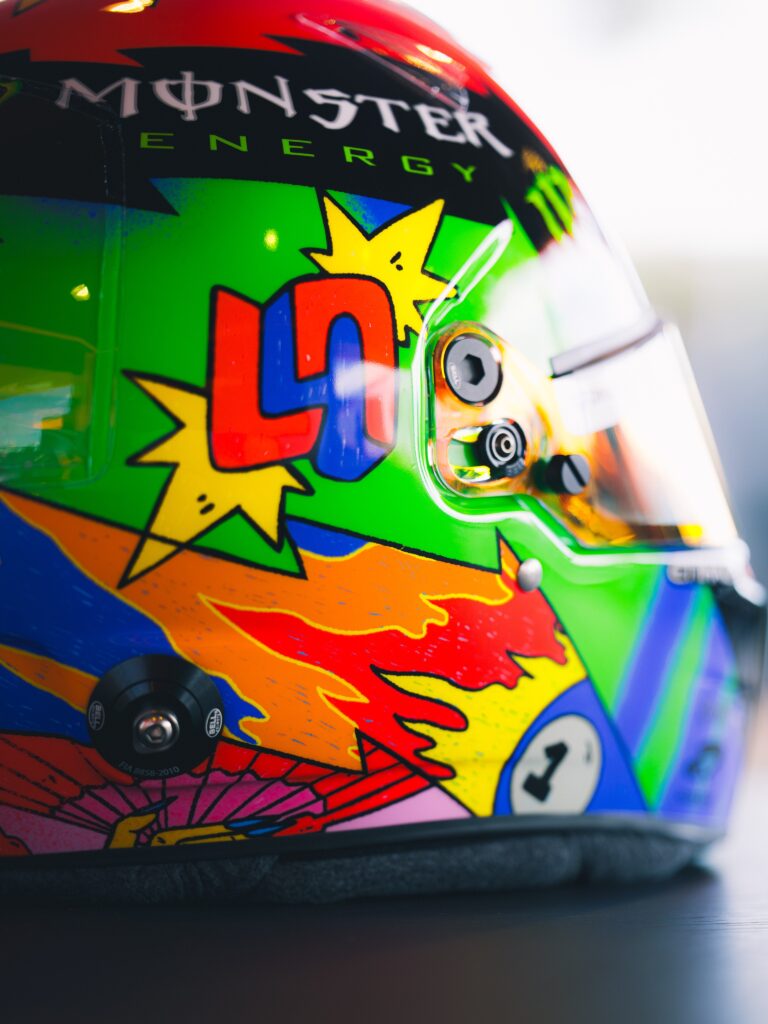
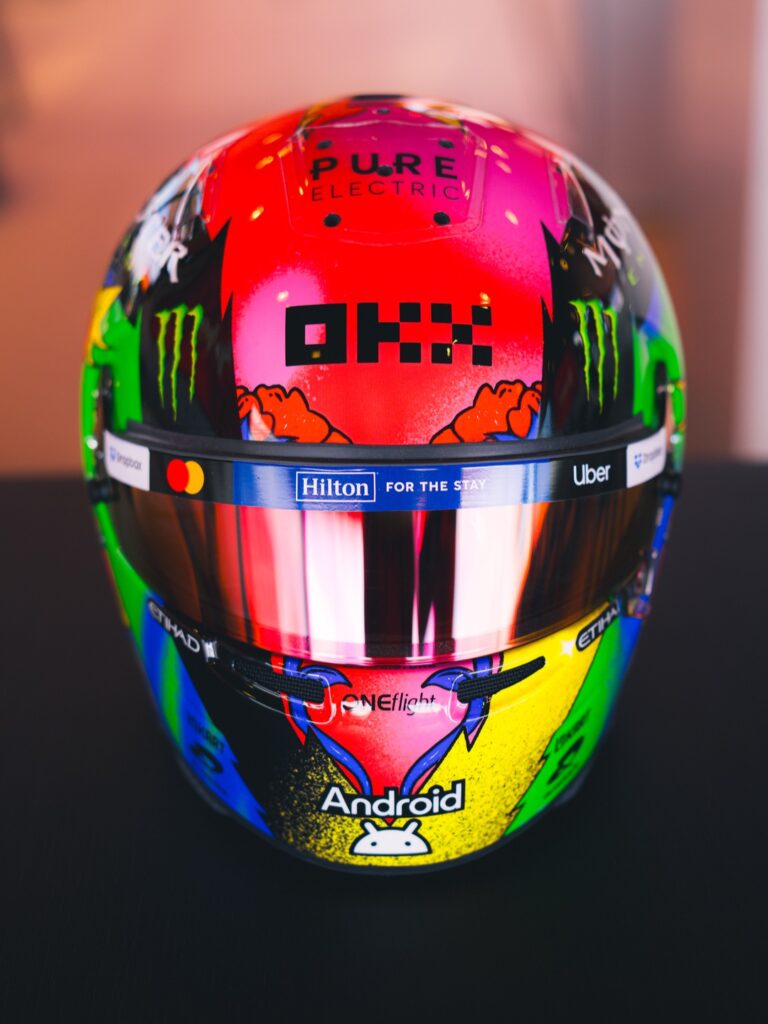
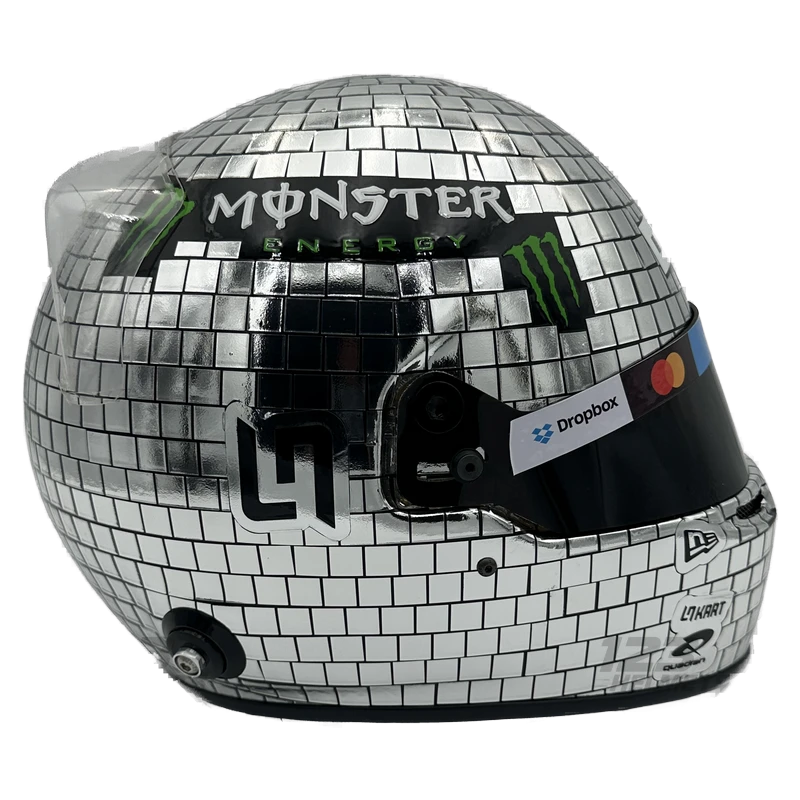
Norris’s helmet program has become one of the most studied in the current grid. The interplay between his fluorescent yellow accents, the deep black base sections and the personal motifs near the visor surround makes every angle a potential display moment. In Montreal specifically, the way the helmet caught reflections from the garage LEDs and the pit-lane signage produced shots that any collector item — whether a framed print or a 1:1 replica on a plinth — would be proud to echo.
For a collector building a themed shelf around the Norris era, Montreal offered a rare combination: a confident driver narrative, a livery in its most photogenic environment, and helmet detailing that reads cleanly even at a distance. That is the trifecta of display-worthy F1.
Podium Visuals: The Frames Collectors Chase
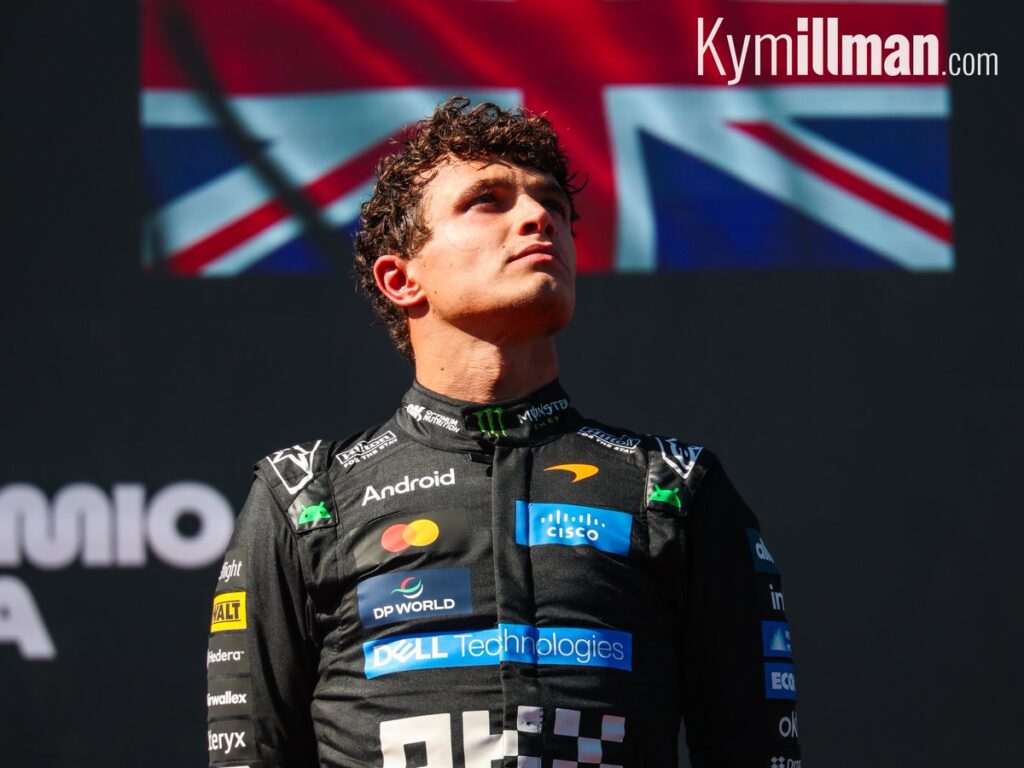
F1 podium ceremonies are choreographed for memory. The trophy lift, the champagne arc, the helmet placed carefully at the edge of the podium — these are the visuals that get printed, framed and recreated. When Norris stood on the Montreal podium, the composition was textbook: papaya overalls against the crowd, the helmet’s neon detailing punching through, and that familiar smile that has become a brand of its own.
Champagne, Trophies And Helmet Iconography
Collectors will tell you that the helmet-on-podium shot is the single most influential image in driving display piece purchases. It is the moment when the helmet stops being a piece of equipment and becomes a symbol. The Montreal podium, with its distinctive backdrop and the lake behind, gives that moment a frame that few circuits can match.
For anyone curating a Norris-focused display, the Canadian GP weekend produced multiple candidates for the ‘hero image’ that anchors a collection. Whether that becomes a wall print behind a full-size 1:1 replica or simply a memory captured in a coffee table book, the visual language was unmistakable: confident driver, suited track, exhibition-grade imagery.
The Storyline Beyond The Result
Norris’s pre-weekend comment — that Montreal suits McLaren — created a self-fulfilling narrative arc for the broadcast. Every overtake, every sector improvement, every garage reaction was filtered through that lens. By Sunday evening, the storyline had matured into something collectors recognize instantly: a weekend that will be remembered, replayed and referenced for years.
Why Montreal Suits McLaren — The Visual Logic
Beyond Norris’s verbal endorsement of the track, the visual logic of why Montreal suits McLaren plays out on screen. The circuit’s mixture of long straights and tight chicanes creates rhythm changes that photographers love. The car appears in dramatic braking poses one moment and full-throttle blurs the next. Each pose highlights a different element of the livery — and by extension, a different angle of the helmet.
From Hairpin To Wall Of Champions
The hairpin offers the slow, intimate shot: the helmet visible, the driver’s eye line readable, the team logos clean. The Wall of Champions exit offers the opposite — speed, commitment, papaya streaking past concrete. For collectors who appreciate the storytelling that a 1:1 replica helmet can carry on a shelf, Montreal supplies both registers in a single weekend.
That dual register is rare. Many circuits emphasize either speed or technicality. Montreal, with its semi-street character and its history of dramatic moments, weaves both into the same frame. When Norris insists the track suits McLaren, part of what he is saying — perhaps without realizing it — is that the track suits how the McLaren story is told visually.
Building A Norris Display Around The Canadian GP
For collectors planning a Norris-themed exhibition corner at home, the Canadian GP offers a natural anchor. A full-size 1:1 replica helmet at the center, flanked by curated prints from the Montreal weekend, with the driver’s confident pre-race quote framed as a caption — that is the kind of layout that turns a hallway into a gallery.
Lighting Your Display The Montreal Way
Replicating the Montreal light at home is simpler than it sounds. A warm-toned spotlight angled at roughly 45 degrees brings out the papaya’s depth without flattening the neon yellow detailing. A secondary cooler light from the opposite side mimics the lake’s reflective quality that photographers love in Canada. Suddenly, a static collector item becomes a living visual reference to the weekend.
Pairing Helmet, Print And Quote
The strongest displays tell a story in three beats: the object (helmet), the moment (print) and the voice (quote). Norris’s ‘a track that suits’ line is short enough to print cleanly, evocative enough to invite conversation, and tied to a specific weekend that produced specific images. It is the kind of detail that elevates a shelf from collection to curation.
For long-time fans, this layering is the difference between owning replicas and building a narrative. Montreal, in this telling, becomes more than a Grand Prix — it becomes a chapter heading.
What This Weekend Means For The Norris Collector Era
Every era in F1 leaves behind a visual vocabulary. The current Norris-at-McLaren era is shaping up to be defined by papaya saturation, neon helmet accents and a driver narrative that mixes vulnerability with growing belief. Montreal contributed strongly to that vocabulary. The ‘a track that suits’ line will likely be quoted long after the championship math is settled, because it captured the moment a driver and a team felt their identity click into place.
The Long-Term Display Value
From a collector’s standpoint, the long-term value of a weekend is rarely just about the race result. It is about how cleanly the weekend translates into images, quotes and helmet design references that hold up over years. Montreal scores high on every axis. The papaya looked excellent. The helmet read cleanly. The driver delivered a memorable line. And the podium ceremony produced frames that will keep circulating in highlight reels.
For anyone building a Norris-focused full-size 1:1 replica collection, this is the kind of weekend that earns a dedicated section on the shelf — not because of statistics alone, but because of how completely it embodied the era’s visual identity.
“It’s a track that suits us, I think. We’ve been strong here in different ways and I’m looking forward to it.”
— Lando Norris, McLaren
FAQ
Q: Why did Lando Norris say Montreal suits McLaren?
Norris pointed to the circuit’s blend of traction zones, heavy braking and rhythm changes — characteristics that align with how the current McLaren has been developed and how the team’s papaya car performs visually and dynamically through Montreal’s distinctive layout.
Q: What makes the Canadian GP weekend particularly photogenic for collectors?
Montreal offers varied light conditions, a semi-permanent track with strong visual backdrops, and a podium setting that frames helmets and liveries beautifully — producing exhibition-quality imagery ideal as reference material for display collections.
Q: What is the visual signature of Norris’s helmet design?
Norris’s helmet typically combines a deep base palette with fluorescent yellow accents and personal motifs around the visor area, creating a high-contrast read that photographs well at any distance and translates cleanly onto a full-size 1:1 replica.
Q: How should collectors light a papaya McLaren replica at home?
A warm 45-degree primary spotlight brings out papaya’s depth, while a cooler secondary light from the opposite side adds dimension to neon detailing — mimicking the lake-reflected light that makes Montreal imagery so striking.
Q: Are 123Helmets.com replicas certified for protective use?
No. All items are display and collector replicas only, produced as full-size 1:1 scale exhibition pieces. They are not certified for any protective, wearable or on-track use and are intended exclusively as collector display items.
Shop Lando Norris Collection
Display and collector replicas only. Not certified for protective use. Full-size 1:1 scale.