
Blog
Hamilton’s ‘Different Approach’ in Montreal: How the Canadian GP Reshaped His Ferrari Chapter
 123Helmets Editorial Team
Hamilton’s ‘Different Approach’ in Montreal: How the Canadian GP Reshaped His Ferrari Chapter
Lewis Hamilton arrived at the Circuit Gilles Villeneuve carrying the weight of a difficult start to his Ferrari era — and left with a recalibrated mindset, a refined helmet livery, and a weekend that collectors will remember for its visual richness. This is the Montreal story told through the lens of display-worthy moments, helmet design, and the symbolism of a seven-time champion adjusting his entire methodology mid-season.
Key Takeaways
Hamilton publicly described adopting a ‘different approach’ at Montreal, signalling a methodological reset inside his Ferrari project.
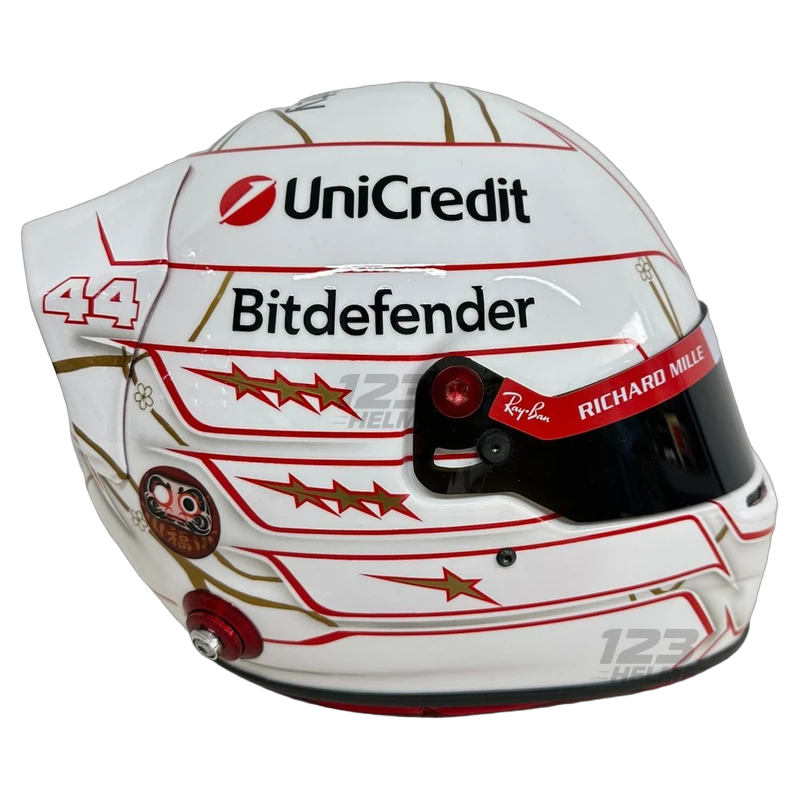
His Canadian GP helmet retained the iconic yellow base while leaning into refined detailing — a strong candidate for full-size 1:1 collector display.
The SF-25 livery against Montreal’s grey skies and red-white kerbs produced some of the most photogenic Ferrari imagery of the season.
For collectors, the weekend reinforced why Hamilton-Ferrari memorabilia is becoming one of the most sought-after categories of the 2025 era.
A weekend framed by a mindset shift
The build-up to the Canadian Grand Prix was unlike any other weekend in Lewis Hamilton’s opening Ferrari campaign. After a string of races that had felt mechanical, frustrating and at times disconnected, the seven-time world champion arrived in Montreal openly discussing what he called a ‘different approach’ — a phrase that quickly became the defining narrative of the weekend.
That shift was not a single technical tweak. It was a broader recalibration: how he prepared on Thursday, how he worked with his race engineer, how he attacked free practice, and how he framed each session not as a result-hunt but as a learning block. For a driver who has spent two decades operating at the absolute summit of the sport, the willingness to publicly admit that a new method was required spoke volumes.
Why Montreal was the right circuit for the reset
The Circuit Gilles Villeneuve has always rewarded confidence over outright downforce. Its low-grip surface, demanding chicanes and famous Wall of Champions punish hesitation. For Hamilton, a track he has won on seven times historically, Montreal offered something Imola and Monaco could not: a layout where his instincts could finally lead, rather than his data engineers.
That contextual fit made the ‘different approach’ more than a soundbite. It was a strategic pairing of mentality and venue — and it produced a noticeably more fluid Hamilton from FP1 onward.
The helmet: refinement over reinvention
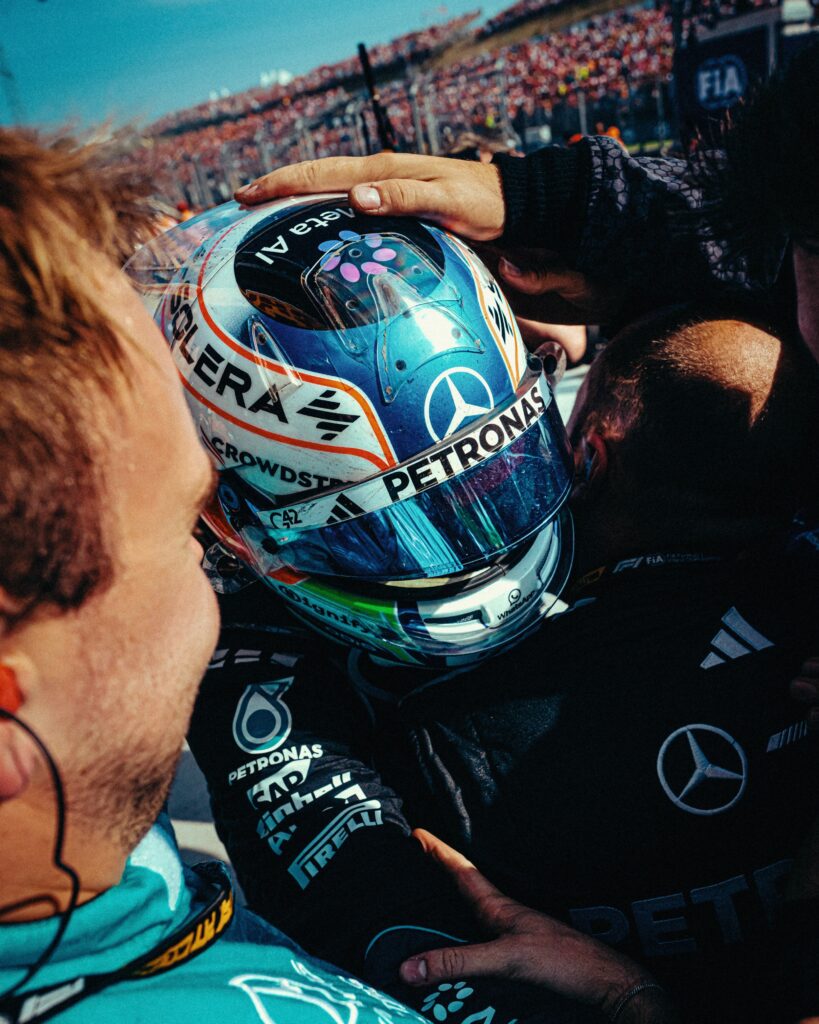
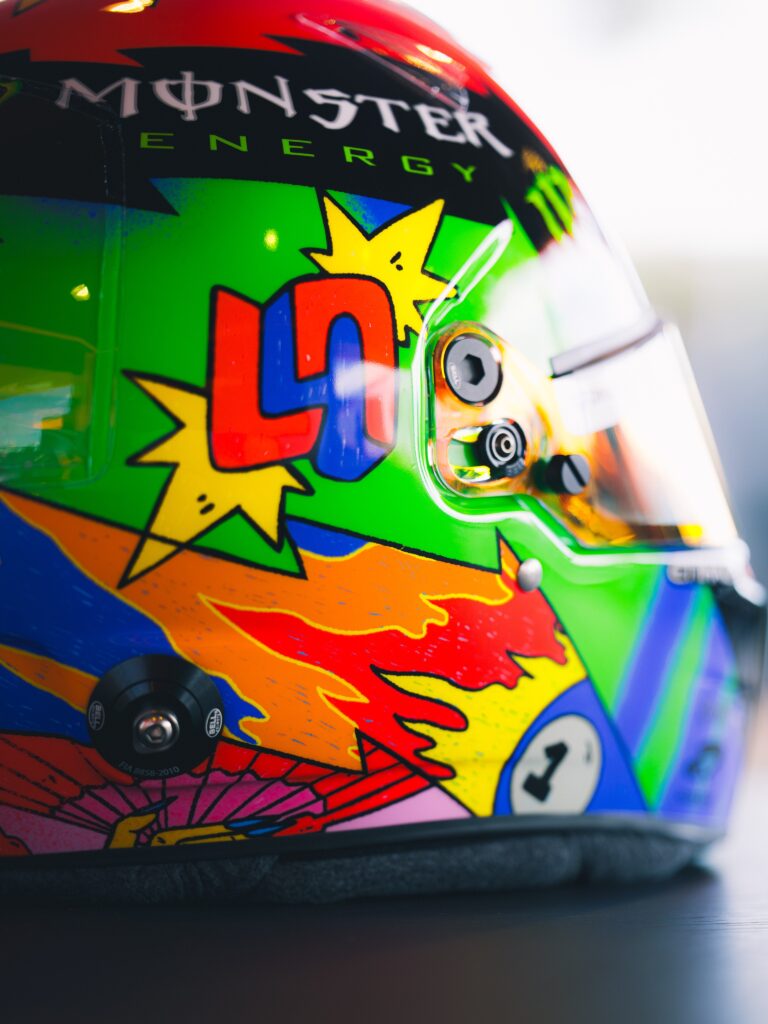
Hamilton’s Montreal helmet was, at first glance, a continuation of the yellow-dominant identity he has carried since his karting days. But for collectors and design enthusiasts, the details told a richer story. The crown geometry felt tighter, the purple and pink accents were calibrated with extra precision, and the rear treatment leaned into a cleaner finish that photographs beautifully under Montreal’s overcast lighting.
Why this design works as a full-size 1:1 display replica
Three factors make the Canadian GP helmet a particularly strong candidate for an exhibition-quality replica on a collector’s shelf:
- Iconic colour anchor: The signature yellow remains instantly recognisable from across a room — a critical trait for any display piece.
- Ferrari-era context: This is a helmet worn during the most discussed driver-team pairing of the modern era, instantly elevating its narrative value.
- Photogenic contrast: Against the red of the SF-25, the yellow shell pops in a way few helmet-car combinations achieve, making it a centrepiece for any Ferrari-themed display.
For dedicated collectors who curate by season and storyline, the Montreal helmet captures a specific inflection point: the weekend Hamilton publicly turned a page on his Ferrari adaptation.
Race day: visuals, kerbs and a more composed Hamilton
From the moment the SF-25 rolled out of the garage on Sunday, the visual language of the weekend was set. Montreal’s distinctive red-and-white painted kerbs, the dense forest backdrop along the back straight, and the unique grey-blue light that washes over the Île Notre-Dame create a frame unlike any other circuit on the calendar. Ferrari’s deep rosso corsa against that palette is, simply, one of the great sights in modern motorsport.
A more measured racing rhythm
Hamilton’s race execution reflected the new methodology. Tyre management was deliberate rather than reactive. Radio communication was calmer. Sector deltas were more consistent. Where earlier rounds had seen him bleed time in micro-moments — a wide entry here, a missed apex there — Montreal showed a driver settling into the SF-25 rather than wrestling it.
It wasn’t a fairy-tale victory, and the team would not pretend otherwise. But the weekend produced exactly what Hamilton had publicly hoped for: data, momentum, and the visual evidence that the partnership is moving in the right direction.
The podium-adjacent moments that matter to collectors
Beyond the headline result, certain Montreal frames are destined to become reference imagery for the Hamilton-Ferrari era: the helmet resting on the SF-25’s halo in parc fermé, the visor-up walk back to the garage, the long shadows across the pit lane during the late-afternoon debrief. These are the moments full-size 1:1 replicas are designed to honour on a shelf.
Inside the Ferrari garage: what the ‘different approach’ actually meant
Hamilton’s phrasing was carefully chosen. A ‘different approach’ is not a complaint, nor a u-turn — it is an acknowledgement that the methodology that delivered six titles at Mercedes does not translate one-to-one into Maranello’s working culture.
Three pillars of the new method
- Earlier engineering immersion: Hamilton reportedly extended his pre-event briefings and shifted more preparation time into the simulator at Maranello, allowing him to internalise the SF-25’s behaviour rather than discover it on Friday.
- Trust calibration: Rather than pushing for set-up changes he was familiar with from his Mercedes years, he committed to running Ferrari’s baseline philosophy and providing feedback within that framework.
- Communication rhythm: The radio exchanges in Montreal were noticeably more conversational and less corrective — a sign of a driver-engineer relationship beginning to find its natural cadence.
Collectors and historians of the sport tend to remember technical seasons by their narrative pivots. Montreal 2025 will likely be filed as one of those pivots for Hamilton at Ferrari — and the helmet worn that weekend will carry that story for decades.
Why Hamilton-Ferrari memorabilia is becoming a category of its own
Few driver-team combinations in F1 history have generated immediate, sustained collector demand the way Hamilton-at-Ferrari has. The reasons are obvious: the most successful British driver of all time wearing the most iconic colour in motorsport, in an era where helmet design has reached unprecedented levels of artistry.
What to look for in a display-worthy Hamilton Ferrari helmet replica
- Full-size 1:1 scale: Only true 1:1 dimensions deliver the visual weight a collector display deserves.
- Faithful colour matching: Hamilton’s yellow has very specific undertones; a credible replica nails them under both natural and gallery lighting.
- Detail fidelity: Visor tear-off tabs, aero elements, sponsor placement and rear-fin geometry must match the on-track version.
- Exhibition-quality finish: A matte/gloss balance that photographs as well as it displays.
The Canadian GP helmet ticks each of these boxes. For a collector building a Hamilton timeline — McLaren rookie, Mercedes dynasty, Ferrari chapter — Montreal 2025 is a genuinely meaningful addition.
The broader Ferrari display ecosystem
A Hamilton Ferrari helmet replica rarely lives alone on a shelf. It tends to anchor a wider display: a Schumacher-era piece nearby, perhaps a Räikkönen 2007 tribute, a Leclerc Monaco helmet, all framed by Ferrari literature and scale models. Montreal 2025 slots naturally into that lineage — a new chapter, in the most famous red in sport.
The verdict: Montreal as a turning-point weekend
Race weekends are rarely remembered for podium positions alone. They are remembered for what they signalled. Montreal 2025 will be remembered as the weekend Hamilton publicly admitted that his Ferrari journey required a recalibration — and then began the work of doing it.
For fans, it was a reassuring sign that the partnership is far from stalled. For Ferrari, it was confirmation that their seven-time champion is engaged in the long-term project. And for collectors, it was the kind of weekend that imbues a specific helmet design with lasting narrative value.
That is the alchemy of motorsport memorabilia: when the design, the moment and the story align, a full-size 1:1 replica becomes more than an object. It becomes a piece of the season’s history, displayed in your own space.
“I came into this weekend with a different approach, and it already feels like we’re learning faster.”
— Lewis Hamilton, Canadian GP weekend
“The helmet against the Ferrari red in Montreal — that’s the image of the season so far.”
— 123Helmets editorial desk
FAQ
Q: What did Hamilton mean by a ‘different approach’ at the Canadian GP?
He referred to a methodological reset: more simulator preparation at Maranello, deeper engineering immersion before sessions, and a shift away from imposing his Mercedes-era set-up instincts onto the SF-25. It was a mindset adjustment as much as a technical one.
Q: Is the Canadian GP helmet visually different from Hamilton’s other 2025 designs?
It retains the iconic yellow base he has worn throughout his career, but the Montreal version showcases refined detailing, tighter accent geometry and a particularly clean finish that makes it highly photogenic — ideal for display.
Q: Why is a full-size 1:1 replica preferable for collectors?
Only true 1:1 dimensions deliver the visual presence a serious display deserves. Smaller scales lose detail fidelity and fail to capture the proportional impact of the real helmet on a shelf or in a cabinet. These are collector and exhibition pieces, not protective equipment.
Q: Does the Hamilton-Ferrari combination genuinely drive collector demand?
Yes. The pairing of the most successful British F1 driver with the sport’s most iconic team has created immediate and sustained interest in helmets, liveries and memorabilia tied to specific 2025 weekends — Montreal among them.
Q: How should I display a Hamilton Ferrari helmet replica at home?
Most collectors use a dedicated plinth or illuminated cabinet, ideally paired with other Ferrari-era pieces to tell a visual story. Soft directional lighting brings out the yellow shell’s depth against the Ferrari red context, and a matte backdrop prevents reflection on the visor.
Shop Lewis Hamilton Collection
Display and collector replicas only. Not certified for protective use. Full-size 1:1 scale.