Blog
The Six-Wheeled Tyrrell Returns: Grand Prix de France Historique Through a Collector’s Lens
 123Helmets Editorial Team
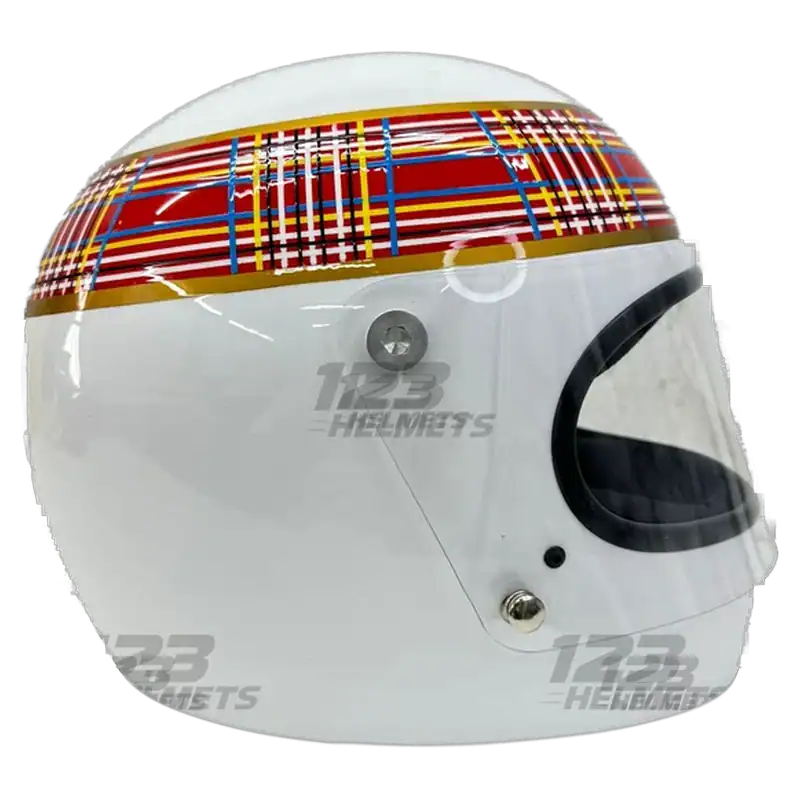
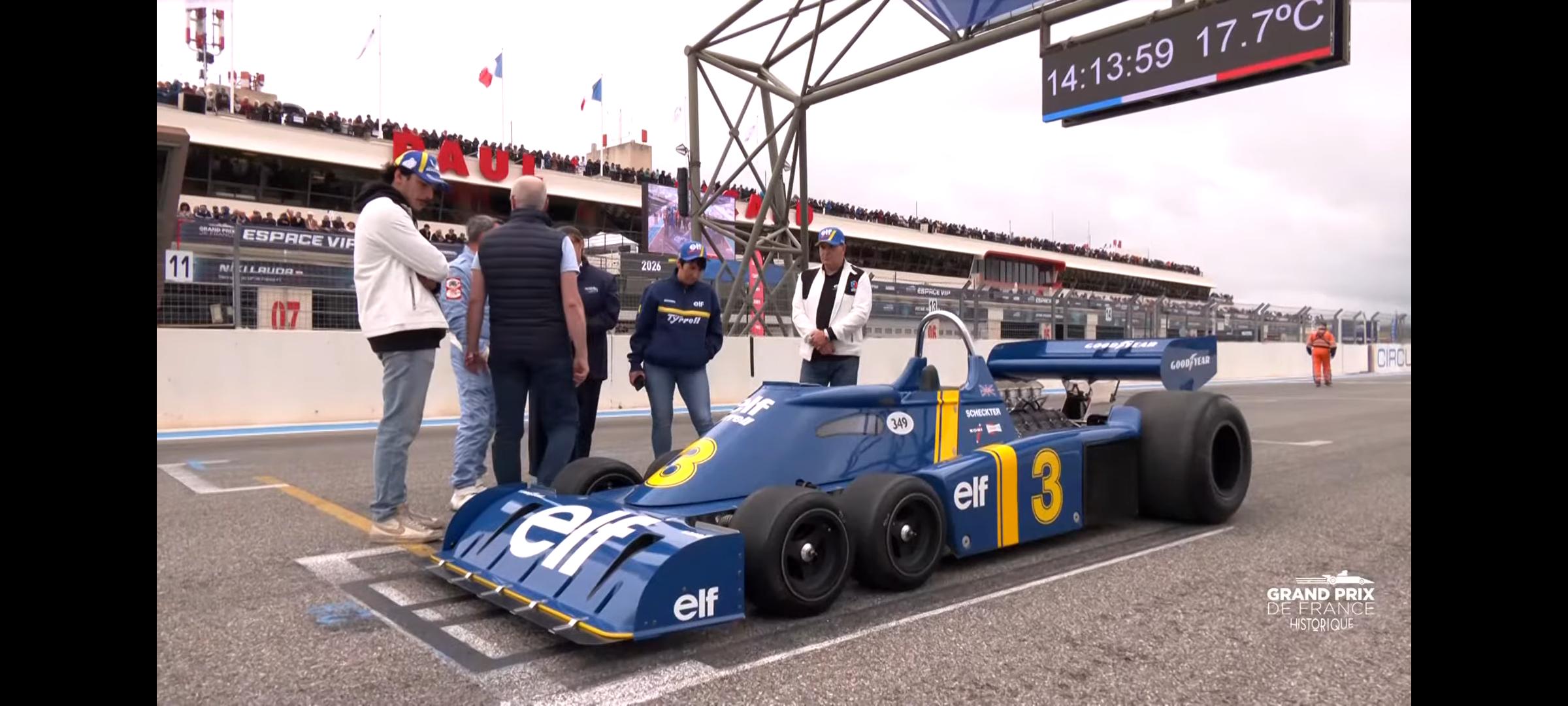
The Six-Wheeled Tyrrell Returns: Grand Prix de France Historique Through a Collector’s Lens
Few sights in motorsport heritage stir the soul quite like a six-wheeled Tyrrell P34 thundering through a French circuit under summer sun. At the Grand Prix de France Historique, the unmistakable silhouette of the most eccentric Formula 1 car ever built once again held centre stage, framed by liveries that defined a generation and helmet designs that have since become icons of collector culture. For enthusiasts of full-size 1:1 replica helmets and exhibition-quality memorabilia, this was a weekend of pure visual gold.
Key Takeaways
The six-wheeled Tyrrell P34 remains one of the most visually striking F1 cars ever built — a centrepiece for any historic grid
Period liveries from the 1970s offer richer collector appeal than many modern designs, with bold sponsor blocks and unmistakable colour palettes
Helmet designs from this era are highly sought after as display pieces due to their hand-painted character and minimalist graphic language
Historic GP events provide unmatched reference material for collectors building themed exhibition spaces around specific decades
A Time Capsule on Four — and Six — Wheels
The Grand Prix de France Historique is more than a vintage demonstration. It is a living archive, a weekend where the visual DNA of Formula 1’s most romantic decades is paraded before audiences who often discover, or rediscover, just how distinct each era looked and sounded. This year’s edition reminded everyone watching — whether trackside or through grainy YouTube uploads — that the modern grid, for all its technical brilliance, has lost something the 1970s and early 1980s possessed in abundance: character.
Nowhere was that character more concentrated than in the appearance of the Tyrrell P34, the six-wheeled marvel that remains one of the most photographed and replicated cars in F1 history. Watching it move under its own power, with its quartet of tiny front tyres carving into the French tarmac, is the kind of moment that converts casual viewers into lifelong enthusiasts of historic motorsport.
Why the P34 still stops conversations
The Tyrrell P34 was conceived in 1976 as a radical aerodynamic solution. By using four small front wheels instead of two conventional ones, designer Derek Gardner sought to reduce frontal area and improve front-end grip. The car achieved a famous one-two finish at the 1976 Swedish Grand Prix and remains the only six-wheeled car to win a Formula 1 race. Its commercial and emotional legacy, however, far exceeds its statistical record.
For collectors, the P34 is the ultimate conversation piece. Whether represented in 1:1 scale models, period photography, or in the form of replica helmets worn by its drivers — Jody Scheckter, Patrick Depailler, Ronnie Peterson — the car functions as a gateway artefact. Mention it, and decades of F1 storytelling unfold naturally.
Liveries That Modern F1 Cannot Replicate
One of the most repeated observations from viewers of the Grand Prix de France Historique is how visually superior the older cars appear compared with their contemporary descendants. This is not nostalgia talking — it is design fact. The liveries of the 1970s and early 1980s were built around large, confident blocks of colour, hand-applied sponsor decals, and a graphic language that prioritised silhouette recognition over photographic complexity.
The colour palette of a golden era
The deep navy and gold of John Player Special Lotus. The brilliant red and white of Marlboro McLaren. The Elf blue gradient on the Tyrrells. The yellow-and-black Renault. The crisp Martini stripes on the Brabham. These were not merely sponsorship arrangements — they were identities. Each car could be recognised from a single still frame, often from a single quarter of the bodywork.
Contemporary F1 cars, by contrast, frequently rely on dark base colours and intricate matte finishes that read beautifully in 4K close-ups but vanish at distance or under variable light. For collectors building a display wall or themed exhibition corner, the older liveries simply photograph better, frame better, and pair more naturally with full-size 1:1 replica helmets from the same era.
What this means for display curation
If you are designing a collector space — whether a private study, a brand showroom, or a dedicated memorabilia room — the visual lessons of historic F1 are invaluable. Period helmets, with their hand-painted finishes and limited colour palettes, integrate seamlessly with the bold liveries of their era. A 1:1 replica of a 1976 Scheckter helmet, for instance, sits in immediate visual dialogue with the blue Tyrrell P34 and the broader Elf graphic identity. Modern helmets, while technically more elaborate, often require neutral or carefully controlled backdrops to read clearly as display pieces.
The Helmet Designs That Defined the Era
The helmets paraded at the Grand Prix de France Historique are, for many collectors, the true centrepieces of the weekend. The 1970s and 1980s produced a generation of designs that have aged remarkably well — partly because they were drawn rather than rendered, and partly because their creators worked within the limits of paint, masking tape, and a steady hand.
Scheckter, Depailler and the Tyrrell identity
Jody Scheckter’s helmet, with its bold yellow base and contrasting stripe, became inseparable from the image of the P34 in motion. Patrick Depailler’s design, more restrained but instantly recognisable, completed a pairing that remains one of the most reproduced in collector circles. Both helmets, rendered as full-size 1:1 exhibition replicas, are exactly the kind of pieces that anchor a serious historic-themed display.
Why hand-painted designs translate so well to replicas
The simplicity of period helmet graphics is a gift to the modern replica craftsman. Clean geometric divisions, limited colour counts, and clearly defined edges allow exhibition-quality reproductions to capture the original character with extraordinary fidelity. Compare this to certain contemporary helmets that incorporate dozens of micro-elements, fluorescent zones, and gradient transitions — all of which can be reproduced, but rarely with the same instinctive recognisability.
For a collector item destined to live on a shelf, plinth, or illuminated case, a 1970s-era replica often delivers more visual impact per square centimetre than its modern counterparts.
The Six-Wheeled Mystique: What Made the P34 Different
Among the most common questions from new fans encountering the P34 for the first time is what it must have felt like to drive. Period accounts from Scheckter and Depailler describe a car that initially offered remarkable front-end grip and braking stability, thanks to the increased contact patch and reduced aerodynamic drag at the nose. Cornering response was, in the words of contemporary reports, unusually direct.
The technical curiosity behind the legend
The four small front tyres — just 10 inches in diameter — were custom-developed by Goodyear specifically for the project. When tyre development priorities shifted elsewhere later in the programme, the P34 lost its competitive edge, and Tyrrell returned to a four-wheel configuration for 1978. But during its brief active life, the car achieved fourteen podium finishes and remains the only six-wheeled machine to score points in the World Championship.
For historians and collectors, the P34 represents something more important than its results: it is proof that Formula 1 once permitted genuine technical experimentation at the highest level. That spirit, captured in every photograph, every replica, and every full-size 1:1 helmet from the period, is precisely what makes the era so enduringly collectible.
Building a Historic-Themed Display Around This Era
Watching the Grand Prix de France Historique is the perfect catalyst for collectors considering a 1970s or early-1980s display project. The era offers an unusually coherent visual vocabulary: bold liveries, hand-painted helmets, distinctive car silhouettes, and a roster of drivers whose individual identities were inseparable from their visual presentation.
Recommended pairings for exhibition spaces
A successful display from this period typically combines three core elements. First, a full-size 1:1 replica helmet representing a marquee driver of the era — Scheckter, Lauda, Hunt, Peterson, Andretti. Second, supporting period imagery, ideally large-format prints with clear sightlines to the car and livery. Third, contextual objects — programme covers, race posters, or scale references — that frame the helmet as the focal point rather than an isolated artefact.
Lighting and presentation
Period helmets, with their matte and semi-gloss finishes, respond particularly well to warm directional lighting. Avoid cold white LEDs, which flatten the hand-painted character of the design. A 3000K spotlight angled from above and slightly forward will reveal the brushwork detail that distinguishes a serious exhibition-quality replica from a generic souvenir. For collectors investing in a 1:1 piece, the quality of presentation often determines how visitors perceive its value.
“The six-wheeled Tyrrell is proof that Formula 1 once allowed pure imagination to reach the grid — and that legacy is what every serious display piece tries to preserve.”
— 123Helmets Editorial
FAQ
Q: What was the six-wheeled Tyrrell P34?
The Tyrrell P34 was a Formula 1 car raced in 1976 and 1977, designed with four small front wheels and two conventional rear wheels. It remains the only six-wheeled car to win a Grand Prix, achieving victory at the 1976 Swedish Grand Prix with Jody Scheckter.
Q: Why do the 1970s liveries look better than modern F1 designs?
Liveries from that era used bold blocks of colour, large sponsor graphics, and clear silhouette identity, making each car instantly recognisable. Modern liveries often use complex finishes and dark base tones that read well in close-ups but lack the immediate visual impact of period designs.
Q: Are 1970s F1 helmets popular as collector replicas?
Yes. Helmets from this era are among the most sought-after as display pieces because their hand-painted designs, limited colour palettes, and clean geometric divisions translate exceptionally well into full-size 1:1 exhibition replicas.
Q: What helmets were worn in the six-wheeled Tyrrell?
The most famous were those of Jody Scheckter and Patrick Depailler in 1976, followed by Ronnie Peterson and Depailler in 1977. Their designs are now considered iconic representations of the era and are popular subjects for collector replicas.
Q: Where can I see the Tyrrell P34 in action today?
The Tyrrell P34 frequently appears at historic motorsport events such as the Grand Prix de France Historique, the Goodwood Festival of Speed, and the Monaco Historique. These gatherings provide excellent reference material for collectors building themed display spaces.
Browse F1 Helmet Collection
Display and collector replicas only. Not certified for protective use. Full-size 1:1 scale.