
Blog
The Wall of Champions: Montreal’s Legendary Concrete Trap and the Drivers Who Met It
 123Helmets Editorial Team
The Wall of Champions: Montreal’s Legendary Concrete Trap and the Drivers Who Met It
At the exit of the final chicane at the Circuit Gilles Villeneuve, a stretch of unforgiving concrete has humbled three world champions in a single afternoon — and countless others since. The Wall of Champions is more than a barrier; it is a piece of Formula 1 mythology, a backdrop to some of the sport’s most iconic helmets and liveries colliding with destiny. For collectors who treasure display-worthy moments, this Montreal landmark has produced an entire gallery of unforgettable visuals.
Key Takeaways
The Wall of Champions earned its name at the 1999 Canadian Grand Prix when Hill, Schumacher and Villeneuve all crashed there on the same day.
Located at the exit of the final chicane at Circuit Gilles Villeneuve, the wall punishes the smallest lapse in precision.
Multiple world champions and race winners have left helmet liveries on display against its painted concrete face.
For collectors, every Montreal incident is a chance to revisit iconic helmet designs and team colours frozen in time.
A wall born from a single, infamous afternoon
The Circuit Gilles Villeneuve, threaded along the Île Notre-Dame in Montreal, has always been a circuit of contrasts: long straights interrupted by tight chicanes, walls that sit close enough to brush the sidewalls of a tyre, and a final corner that demands absolute commitment. The barrier that would become known as the Wall of Champions sits just on the outside of the exit kerb of the final chicane, where drivers fire the throttle as they unleash the car towards the start-finish straight.
The wall received its nickname on 13 June 1999. During the Canadian Grand Prix, three Formula 1 World Champions — Damon Hill, Michael Schumacher and Jacques Villeneuve — all crashed at the same spot, kissing the same painted concrete on the same day. The image was so striking, and the coincidence so improbable, that the wall was christened almost instantly. A local sponsor later added the now-famous painted message: Bienvenue au Québec — “Welcome to Quebec” — a cheeky greeting to any driver unfortunate enough to read it from the wrong angle.
For helmet collectors and livery enthusiasts, that 1999 race is a treasure trove. Hill’s Jordan-blended royal blue Arai, Schumacher’s red Ferrari-era Bell with the cap of Italian tricolore detailing, and Villeneuve’s bright BAR colour-split design all came to rest within metres of each other. Three champions, three iconic helmets, one wall.
Why this corner, of all corners?
The final chicane is deceptive. It looks like a simple left-right flick onto the main straight, but the kerbs are aggressive, the camber unforgiving, and the exit demands a precise sweep that brings the right rear wheel within centimetres of the concrete. Lift too little and the car snaps wide; carry too much kerb and the rear steps out. There is no run-off, no gravel trap — only the wall, waiting.
The 1999 trio: three helmets that defined an era
Few photographs are more cherished by collectors than the images of those three retirements. Each driver carried a helmet design that has become a benchmark of late-1990s F1 aesthetics — designs that today form the heart of any serious 1:1 replica display collection.
Damon Hill — the legacy of a London blue
Hill’s helmet that weekend continued the family tradition: the dark navy base with vertical white feathered stripes inspired by his father Graham Hill’s London Rowing Club colours. It is arguably one of the most recognisable lids in Formula 1 history, and seeing it parked against the Montreal wall remains a poignant visual — a 1996 World Champion in the twilight of his career, defeated by the same chicane that would later claim so many others.
Michael Schumacher — Ferrari red, German precision
Schumacher’s 1999 Bell helmet displayed the now-classic blue band across the top with the German flag accents, complemented by Ferrari sponsorship. For a driver renowned for his almost mechanical consistency, the Wall of Champions error was startling — and it humanised him in a way few moments in his career ever did. The image of that distinctive blue-and-red helmet emerging from a wrecked F399 became one of the season’s defining frames.
Jacques Villeneuve — the home hero’s heartbreak
Villeneuve, racing on the very circuit named after his late father Gilles, wore his BAR-era helmet with its split white-and-charcoal halves and the famous Player’s-derived design heritage. Crashing at his home race, on the wall that would soon bear his championship status, added a layer of cruel poetry. The crowd’s silence as the yellow-and-white BAR slid to rest is part of Montreal folklore.
After 1999: the wall keeps collecting champions
The naming was prophetic. In the years that followed, the Wall of Champions continued to claim its tributes from drivers of every generation. Each crash added another helmet to the wall’s unofficial gallery, another livery briefly frozen against the white concrete.
Jenson Button, 2005
Button’s BAR-Honda made contact in qualifying, and the image of the white-and-red car against the wall is a reminder of how even the smoothest, most composed drivers can be undone by Montreal’s most ruthless metre of concrete. Button’s helmet of that era — with its blue base and red-and-white star detailing — is a favourite for collectors who admire understated elegance.
Nico Rosberg, 2014
The German tagged the wall during the Canadian Grand Prix weekend, his Mercedes silver arrow scuffed but rescued. Rosberg’s helmet, with its sharp geometric pattern and the German flag, would go on to become a defining image of the hybrid era — and his Montreal moment is part of that story.
Sebastian Vettel and the modern era
Vettel had several scares at the chicane during his career, each one adding to his catalogue of Montreal memories. His Arai helmets — whether in Red Bull’s deep navy or Ferrari’s scarlet — are some of the most collected designs of the 2010s, and any image of them at the Wall of Champions instantly becomes a piece of memorabilia heritage.
Lance Stroll, the home driver’s curse
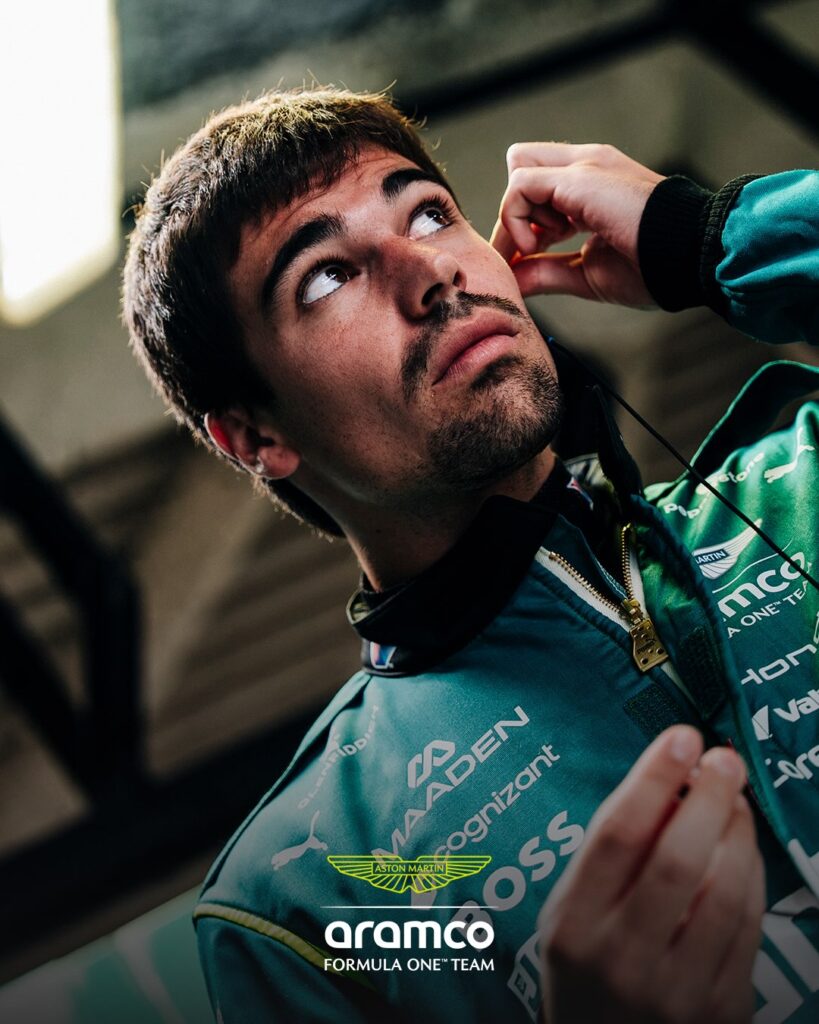
Even Canadian drivers are not spared. Stroll’s encounters with the wall during practice sessions have been part of recent Montreal weekends, his maple-leaf-themed helmet designs offering a fresh chapter in the Wall of Champions story.
The wall as a stage for podium-adjacent drama
What makes the Wall of Champions unique is that it is not just a crash site — it is a narrative device. A Sunday at the Canadian Grand Prix is rarely complete without the wall playing some role: a brush in qualifying that compromises a front-row start, a near-miss in the final laps that decides a podium, a Safety Car deployment that rearranges strategy.
The podium ceremony at Montreal, with the Saint Lawrence River as a backdrop and the city skyline behind, has often been shaped by what happened a few hundred metres earlier at the chicane. Drivers stepping onto that podium with their helmets in hand — Hamilton’s yellow, Vettel’s predominantly white-and-red Ferrari design, Verstappen’s Red Bull lion — frequently carry stories that began or ended at the wall.
Why this matters for display collectors
For anyone who builds a 1:1 collector helmet display, the Wall of Champions provides context. A full-size replica of Schumacher’s 1999 Bell, or Hill’s iconic Arai, or Villeneuve’s BAR lid, becomes more than a beautiful object — it becomes a chapter in a story. Pair it with a printed image of that infamous Sunday, and the display piece transforms into an exhibition-quality narrative.
Helmets and liveries that belong in any Wall of Champions tribute display
If you are curating a display around Montreal’s most famous corner, here are the helmet aesthetics that any serious collector should consider as full-size 1:1 replica display pieces — purely as exhibition items, of course, never for protective use.
The late-1990s classics
Hill’s London-blue feather design, Schumacher’s blue-banded Ferrari-era Bell, and Villeneuve’s split BAR helmet form the holy trinity of Wall of Champions visuals. Together they define the look of late-90s F1 — an era of bold sponsorship blocks, hand-painted detailing, and helmets that doubled as personal manifestos.
The mid-2000s aesthetic
Button’s blue-and-red Arai, Kimi Räikkönen’s polar bear and ice cream-themed special editions for Canada, and Fernando Alonso’s evolving Renault and McLaren-era designs are all worthy additions. The mid-2000s was a golden period for helmet artistry, before standardised sponsor placements took hold.
The hybrid era and beyond
Rosberg’s geometric patterns, Hamilton’s yellow tributes to Senna, Vettel’s chameleon-like seasonal designs, and Leclerc’s Monegasque red all carry forward the Wall of Champions tradition into the modern age. Each one, displayed as a 1:1 collector replica, brings exhibition quality to any F1 room.
The wall today: still standing, still painted, still waiting
The Wall of Champions remains exactly where it was on that 1999 afternoon. The painted greeting has been refreshed, repositioned and occasionally redesigned, but the wall itself is unchanged. Every June, when the F1 circus returns to Montreal, drivers walk the track and pause at the chicane. Engineers point. Rookies listen. Champions smile and remember.
And every year, almost without fail, the wall claims at least one new victim — another helmet, another livery, another image to add to the gallery. For the collector, the curator, the F1 obsessive who appreciates the intersection of machinery, design and human drama, the Wall of Champions is the perfect symbol: a piece of concrete that holds more stories than most entire circuits.
A corner that built a legend
Few corners in motorsport have a name that captures their essence so perfectly. The Wall of Champions is not metaphor or marketing — it is literal. It has, repeatedly, collected world champions. It will continue to do so. And as long as it does, the helmets that brush its painted face will continue to find their way into the collections, displays and exhibition rooms of fans around the world.
“It is the kind of corner that punishes you instantly. One small mistake and you are a passenger.”
— Common driver sentiment about Montreal’s final chicane
FAQ
Q: Where exactly is the Wall of Champions located?
It sits on the outside of the exit of the final chicane at the Circuit Gilles Villeneuve in Montreal, just before the start-finish straight. The wall is unmistakable thanks to the painted ‘Bienvenue au Québec’ greeting that has become part of its identity.
Q: Why is it called the Wall of Champions?
The nickname was born during the 1999 Canadian Grand Prix, when three Formula 1 World Champions — Damon Hill, Michael Schumacher and Jacques Villeneuve — all crashed at the same wall on the same day. The coincidence was so striking that the name stuck immediately.
Q: Has anyone else famous crashed there besides the 1999 trio?
Yes — Jenson Button, Nico Rosberg, Sebastian Vettel, Lance Stroll and many others have made contact with the wall over the years, either in qualifying or during the race. It remains one of the most consistently active crash sites on the F1 calendar.
Q: What makes the final chicane so difficult?
The combination of aggressive kerbs, tight geometry, an unforgiving exit camber and the absence of any run-off area means drivers must thread the car perfectly. Any small error on entry or exit puts the rear wheel directly in line with the wall.
Q: Which helmet replicas best capture the Wall of Champions story?
For a display-focused collection, full-size 1:1 replicas of Damon Hill’s London-blue Arai, Michael Schumacher’s 1999 Bell, and Jacques Villeneuve’s BAR helmet are the foundation. Add Button, Rosberg and Vettel helmets from their respective Montreal incidents to build a complete exhibition piece.
Browse F1 Helmet Collection
Display and collector replicas only. Not certified for protective use. Full-size 1:1 scale.