
Blog
Canadian Grand Prix Decoded: How F1 Drivers and Strategists Tame Île Notre-Dame
 123Helmets Editorial Team
Canadian Grand Prix Decoded: How F1 Drivers and Strategists Tame Île Notre-Dame
From the Wall of Champions to safety car roulette, the Canadian Grand Prix at Circuit Gilles Villeneuve remains one of the most strategically demanding rounds on the calendar — and one of the most visually striking for helmet and livery collectors.
Key Takeaways
Circuit Gilles Villeneuve rewards aggressive braking, kerb-riding precision and razor-sharp safety car calls.
Special Montreal helmet designs frequently honor Gilles Villeneuve, making them prime targets for display collectors.
Tyre degradation and rain swings turn pit-wall strategy into a high-wire act every June.
Podium liveries and helmet finishes in Montreal often become some of the season’s most photographed exhibition pieces.
The Montreal Puzzle: A Circuit That Punishes Hesitation
Few venues compress so much drama into so little asphalt as Circuit Gilles Villeneuve. Built on the man-made Île Notre-Dame, the 4.361 km layout looks deceptively simple on paper — a stop-and-go ribbon of chicanes, two long straights and a notorious final corner. In reality, it is one of the most punishing tracks for both car and driver, and one of the most rewarding for fans who appreciate the artistry of helmet livery design.
Drivers arrive in Montreal knowing that the margin between a heroic lap and a weekend-ending mistake is measured in centimetres. The walls are close, the kerbs are aggressive, and the braking zones are some of the heaviest of the year. Strategists, meanwhile, prepare contingency trees that can stretch into dozens of branches — because Canada has a habit of rewriting the script in the final laps.
Why The Layout Matters For Race Craft
The circuit demands a unique car balance: low-downforce wings for the back straight, but enough mechanical grip to attack the slow chicanes. Engineers spend Friday hunting that compromise, while drivers calibrate brake-by-wire feel for the heavy stops into Turns 1, 10 and 13. Get it wrong, and the Wall of Champions is waiting.
Strategy Wars: Why Montreal Is A Pit-Wall Nightmare
The Canadian Grand Prix is, statistically, one of the most safety-car-prone races on the calendar. That single variable transforms strategy from a pre-race plan into a live, ever-shifting calculation. A virtual safety car at the wrong moment can erase a 20-second lead; a full safety car at the right moment can save a free pit stop and flip the podium order.
Tyre Management And The One-Stop Temptation
Pirelli typically brings the softer end of its compound range to Montreal, and the smooth surface paired with cool June temperatures often makes a one-stop race tempting. But the long pit lane loss — combined with the constant threat of a neutralization — means teams frequently split their drivers onto different strategies to hedge their bets.
Key Strategic Levers
- Undercut windows are razor thin because traffic on out-laps is unforgiving.
- Overcut opportunities open up when leaders manage tyres conservatively in clean air.
- Weather radar dictates compound choice: a 30% rain probability can swing the entire grid’s plan.
For collectors and fans watching at home, the strategic chaos translates into something tangible — unexpected podium combinations, and with them, unexpected helmet and trophy moments that become collectible memories.
Helmet Highlights: Montreal’s Tradition Of Tribute Designs
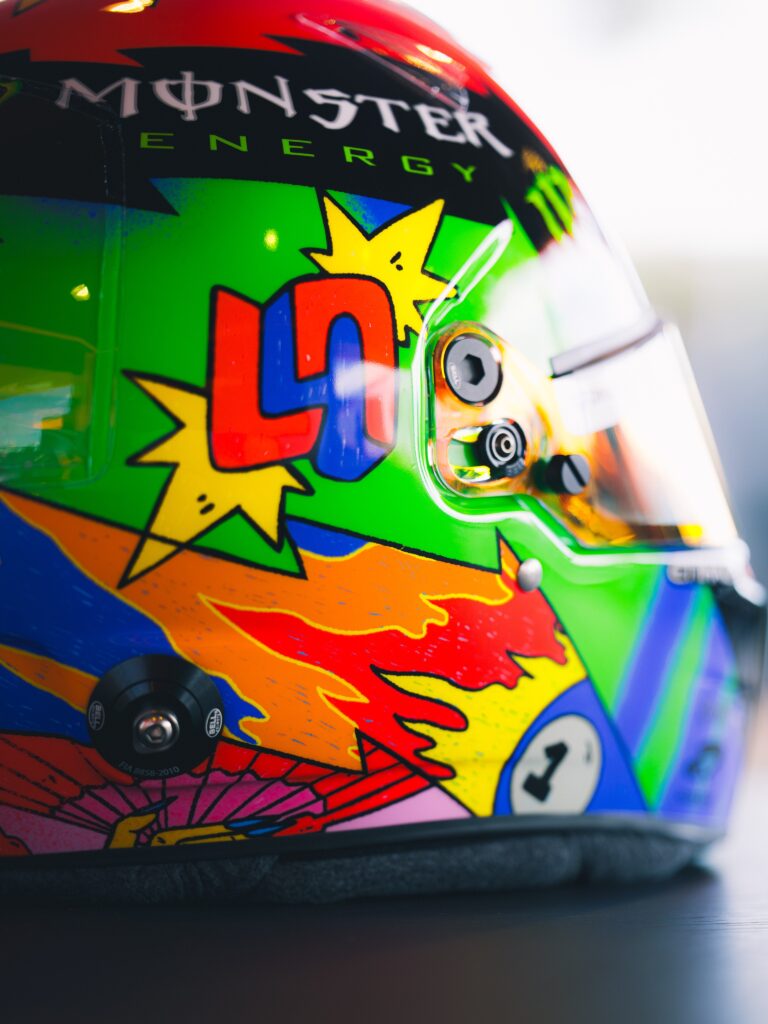
Few Grands Prix inspire as many bespoke helmet designs as Canada. The legacy of Gilles Villeneuve — the fearless Ferrari driver whose name adorns the circuit — looms over every Montreal weekend, and drivers across the grid regularly commission one-off designs that pay homage to Canadian motorsport heritage.
Recurring Visual Themes
Maple leaves, the red-and-white of the Canadian flag, and the iconic number 27 associated with Villeneuve are recurring motifs. Designers play with chrome accents, brushed-metal effects and matte-versus-gloss contrasts that photograph beautifully on the podium and on shelf displays alike.
For collectors of full-size 1:1 replica helmets intended for exhibition, Montreal weekends are gold mines. The tribute helmets are typically produced in extremely limited runs, and the photography from the parc fermé, podium and post-race interviews creates a visual archive that fuels collector demand for years afterward.
What Makes A Montreal Helmet Display-Worthy
- Bold contrast palettes that read clearly from across a room.
- Tribute graphics with clear narrative meaning — names, dates, flag elements.
- Finish quality: lacquer depth, decal alignment and metallic flake density.
- Documented provenance tying the design to a specific race weekend.
These are the details that elevate a replica from a memorabilia object to a centerpiece of a serious collection — and they explain why Canadian Grand Prix designs frequently top collector wish-lists.
Podium Visuals: Liveries Under The Montreal Sun
Beyond helmets, the Canadian Grand Prix is a showcase for full-livery photography. The combination of the riverside setting, the dramatic concrete walls, the green Île Notre-Dame foliage, and the late-afternoon light produces some of the most cinematic race imagery of the year.
Why Liveries Pop In Montreal
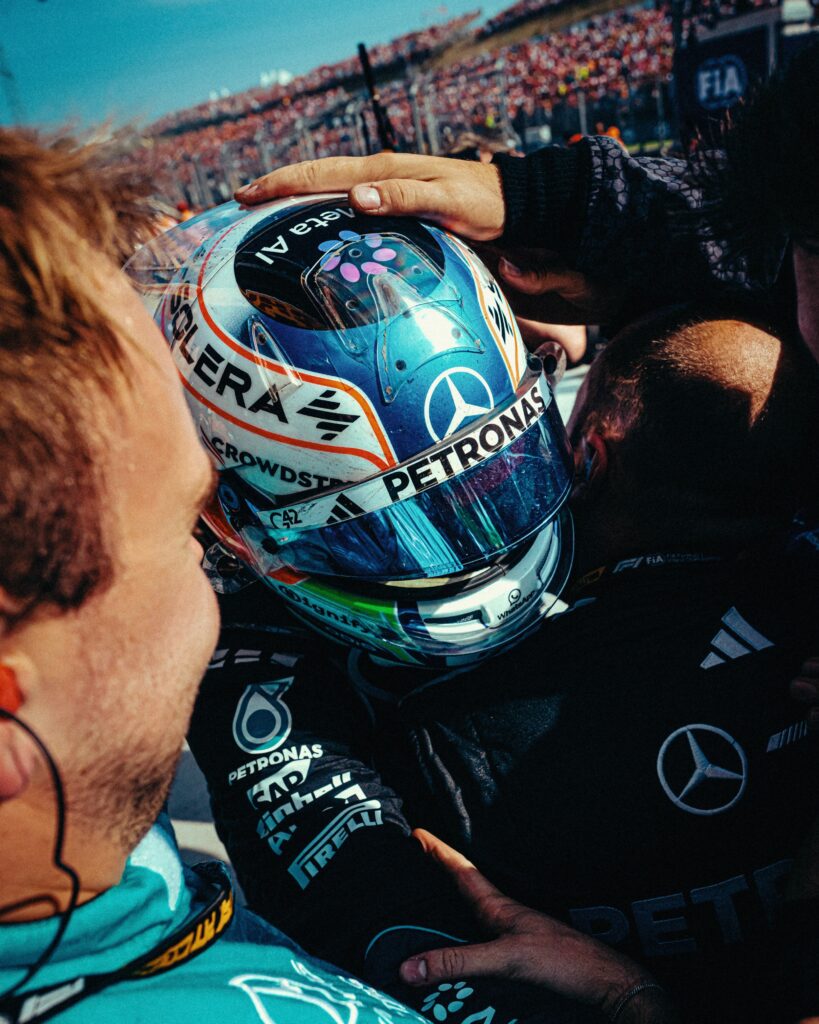
The cool, often overcast Quebec weather softens harsh shadows and lets metallic flake and pearl finishes show their true depth. Team photographers know this — and the resulting podium shots, with three drivers raising trophies in front of the crowd, become reference images for years of merchandise, posters, and yes, replica helmet projects.
For display collectors, this matters more than it might seem. A helmet on a shelf is, in the end, an exercise in visual storytelling. When the world’s image of a particular livery is forged at a track like Montreal, owning a faithful 1:1 replica of that design connects the collector directly to that moment in racing history.
Iconic Visual Moments From Recent Editions
- Champagne sprays catching the low Quebec sun on the elevated podium.
- Helmets held aloft with circuit branding visible behind.
- In-car onboard frames showing helmet graphics in razor focus during long straights.
Driver Craft: What It Takes To Conquer The Île Notre-Dame
Ask any driver and they will tell you Montreal is a confidence circuit. The braking zones are committed; the chicane exits demand full throttle within centimetres of unforgiving concrete. The legendary Wall of Champions earned its name because it has caught out world champions across multiple eras — proof that experience offers no immunity here.
The Mental Game
Drivers describe Montreal as requiring a specific rhythm: aggressive braking, precise turn-in, patient throttle application, then full commitment on exit. Break the rhythm and the lap is gone. Maintain it for 70 laps under safety car pressure and changing weather, and you have a contender’s drive.
This is also a circuit where overtaking is genuinely possible — the long back straight into the Turn 10 hairpin is one of the best passing zones on the calendar. DRS trains, late-braking lunges and slipstream battles produce the kind of wheel-to-wheel racing that defines a memorable Grand Prix.
How Strategists Support The Drive
Pit-wall communication is constant: tyre temperatures, gap deltas, weather updates, safety car probabilities. The best strategists translate that data into simple, actionable calls the driver can execute without breaking concentration. In Montreal, where one lap can flip the race, that clarity is everything.
From Race Day To Display Shelf: Curating A Canadian GP Collection
For collectors building a themed display around the Canadian Grand Prix, the storytelling potential is enormous. The race spans decades of memorable moments: Villeneuve’s home heroics, dramatic wet-weather classics, controversial finishes and unexpected podium debuts.
Building A Themed Exhibition
A focused Montreal-themed display might combine full-size 1:1 replica helmets featuring tribute liveries, framed podium photography, and circuit maps highlighting key passing zones. The goal is exhibition quality — pieces that invite closer inspection and reward it with detail.
Display Tips For Collectors
- Use directional lighting to bring out metallic flake and pearl finishes.
- Group helmets by era or by tribute theme rather than purely by team.
- Include contextual elements — race programmes, circuit diagrams — to deepen the narrative.
- Rotate pieces seasonally to keep the display fresh and engaging.
A well-curated Canadian Grand Prix display is more than memorabilia. It is a visual essay on a circuit that has shaped Formula 1 for nearly half a century — and on the drivers, designers and strategists who have left their mark on it.
“Montreal forgives nothing. The walls are right there, and the strategy can flip in a single lap — that’s why we love it.”
— Veteran F1 race engineer
FAQ
Q: Why is the Canadian Grand Prix considered so strategically complex?
Montreal combines a high probability of safety car interventions, fast-changing weather, a long pit lane loss and tempting one-stop tyre strategies. Each variable interacts with the others, forcing pit walls to recalculate plans constantly throughout the race.
Q: What makes Montreal helmet designs so popular with collectors?
Drivers frequently commission one-off tribute helmets honoring Gilles Villeneuve and Canadian motorsport heritage. These limited designs feature distinctive maple leaf, flag and number 27 motifs that translate beautifully to full-size 1:1 display replicas.
Q: What is the Wall of Champions and why is it famous?
It is the concrete wall on the exit of the final chicane at Circuit Gilles Villeneuve. The name comes from a single 1999 race weekend in which three world champions crashed into it, and it has continued to catch out top drivers ever since.
Q: How does the Montreal layout influence car setup?
Teams typically run lower downforce levels for straight-line speed while still needing strong mechanical grip and braking stability for the chicanes. Finding that balance is one of the weekend’s biggest engineering challenges.
Q: Are Canadian GP replica helmets suitable for display only?
Yes. The replicas referenced here are full-size 1:1 collector and display pieces intended for exhibition and shelf presentation. They are not certified for protective use of any kind.
Explore tribute liveries, podium-grade finishes and Montreal-inspired designs in our curated showcase. Browse F1 Helmet Collection at /shop/ and bring the drama of Île Notre-Dame to your display shelf.
Display and collector replicas only. Not certified for protective use. Full-size 1:1 scale.